
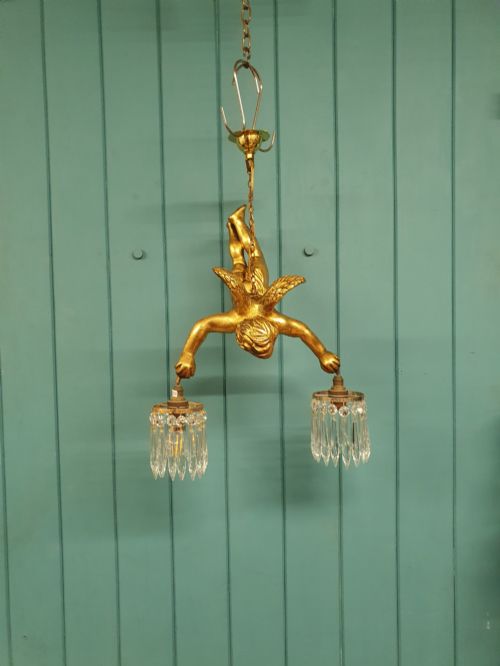
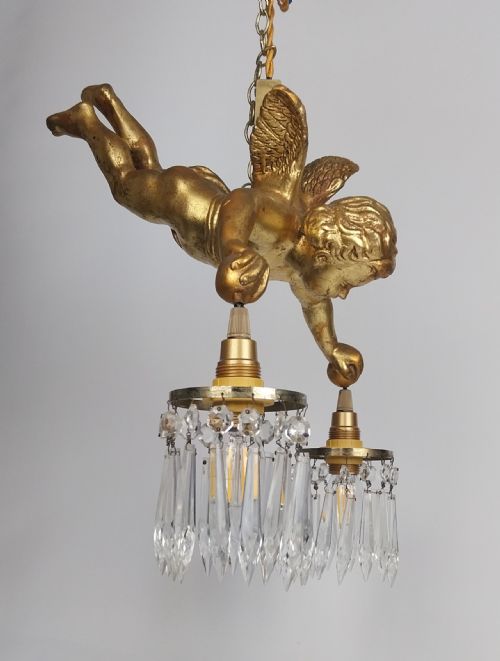


Cherub Ceiling Pendant
These cherub ceiling pendant fixtures bring sculpted figures and suspended illumination together, offering a decorative focal point that defines a room.
Cherub Ceiling Pendant
A cherub ceiling pendant combines suspended lighting with figurative metalwork, presenting winged figures and putti integrated directly into the frame. When searching for a cherub ceiling pendant, buyers encounter forms ranging from single light fixtures to multi-armed chandeliers spanning the nineteenth century through the early twentieth century.
The objects on this page primarily take the form of chandeliers and ceiling lights, reflecting periods such as the nineteenth century, Edwardian era, and the 1920s and 1930s. Stylistic influences span French Rococo Revival, Rococo Revival, Neo-Classical, and Victorian designs, originating from both English and French workshops.
Materials and construction methods
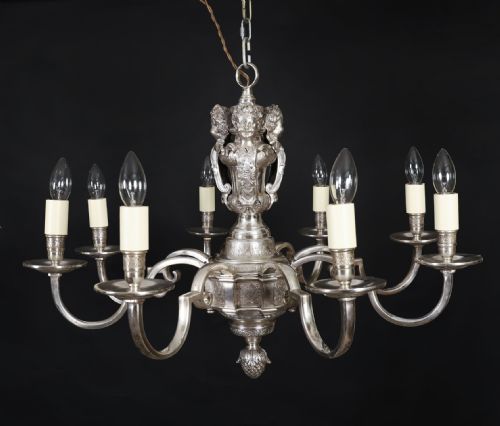
Makers utilised cast and chased metals including brass, bronze, gilt bronze, and gilt metal to form the structural arms and figurative cherubs. Silver-plated finishes and gilt spelter also appear across the listings, showing how different workshops achieved varied metallic tones for their ceiling lights.
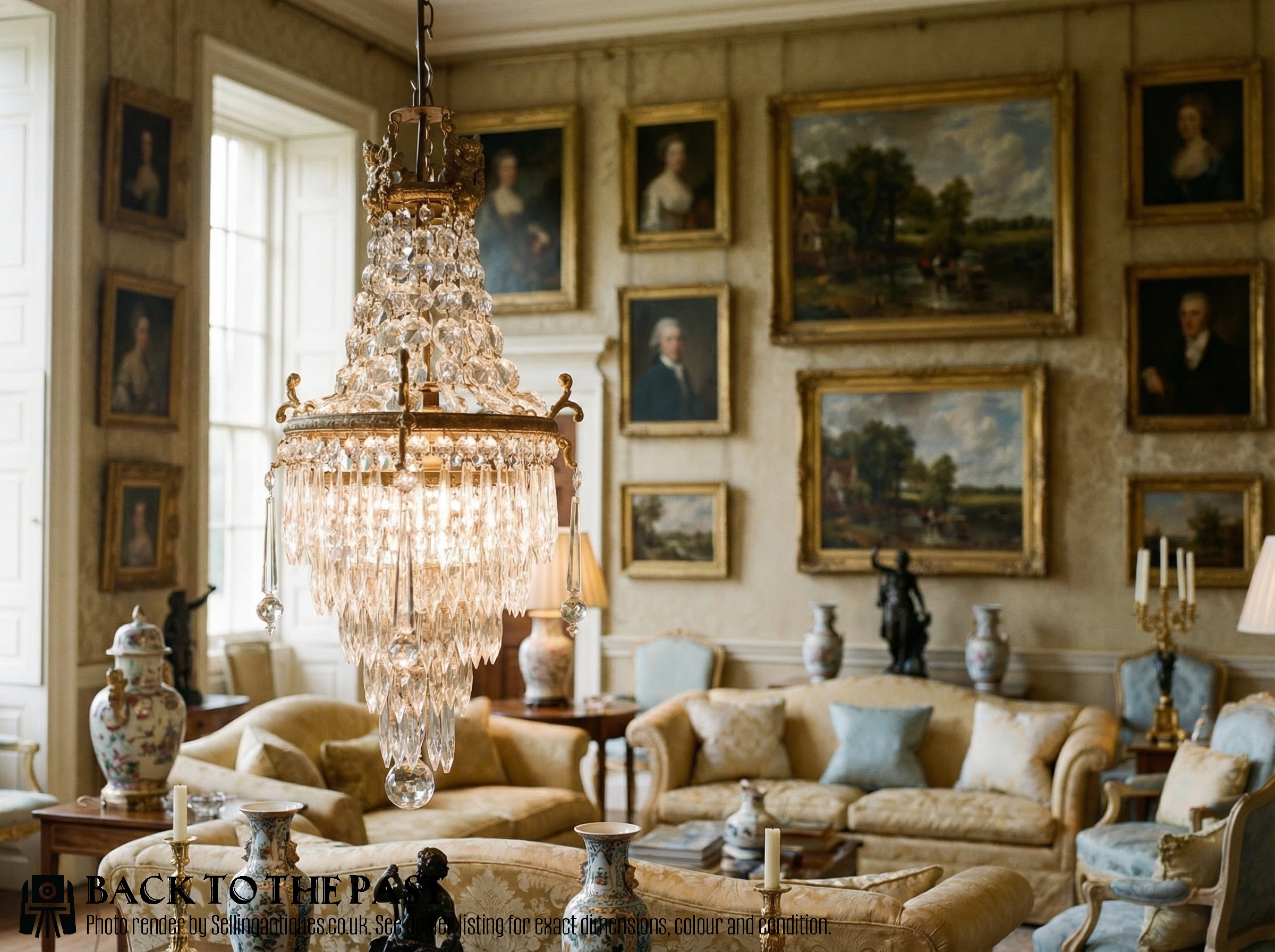
Lighting assemblies incorporate glass, cut glass, and crystal elements, including crystal spikes and icicle shades suspended from the main metal bodies. These transparent and refractive components work alongside the metal castings to diffuse light throughout the room.
Flying cherubs share ceiling space with sharp crystal spikes and icicle shades.
Distinctions in quality and execution
Material selection also dictates quality, with heavy gilded bronze and solid brass frames holding greater presence than lighter gilt metal or spelter alternatives. The integration of cut glass crystals and the complexity of the arm configuration further separate standard production pieces from elaborate salon fixtures.
The Cherub Ceiling Pendant Glossary
- Cherub
- A winged celestial being, frequently depicted in art and decorative metalwork. In these lighting fixtures, they are often cast as supporting figures or decorative arms.
- Putto
- A plump, naked male child figure commonly found in classical and revival art. These figures appear frequently on French and English chandeliers of the nineteenth century.
- Ormolu
- Gilded bronze, produced by applying a finely ground high-carat gold-mercury amalgam to a bronze object. This technique creates a rich, durable surface finish seen on French pendant lights.
- Spelter
- An alloy of zinc, often used as a less expensive substitute for bronze or brass in decorative castings. It accepts gilt finishes well but possesses a lighter weight.
- Chandelier
- A branched ornamental light fixture designed to be suspended from the ceiling. These pieces hold multiple candles or electric lamp holders supported by arms.
Cherub Ceiling Pendant: Frequently Asked Questions
What periods do these ceiling lights come from?
The pieces span the nineteenth century, the Edwardian era, and the early decades of the twentieth century. Specific dates recorded include the 1850s, 1900, 1910, 1920, and 1930.
Stylistic movements associated with these dates include French Rococo Revival, Neo-Classical, and Victorian designs. Both English and French origins appear within the selection.
How are the cherubs incorporated into the fixtures?
Cherubs and putti appear as structural arms, flying figures, or decorative attachments on the main body of the chandelier. They are typically cast in brass, bronze, or gilt metal.
Some pieces feature winged figures holding lamp arms, while others position putti amidst crystal spikes or icicle shades.
What materials make up these chandeliers?
Primary materials include brass, bronze, gilt bronze, and gilt metal, alongside silver-plated brass and gilt spelter. Metal components provide the structural support and decorative figures.
Secondary materials consist of glass, cut glass, and crystal, forming hanging spikes, prisms, and icicle shades that accompany the metalwork.
Are these fixtures suitable for standard ceiling heights?
Ceiling heights determine the drop required for pendant lighting, with compact fixtures and multi-armed chandeliers requiring appropriate clearance. Some listings specify physical dimensions, such as overall span or length.
Installation specifics depend on the individual weight and wiring requirements of each bronze, brass, or silver-plated fixture.