



Chelsea Style Porcelain Figurines
Chelsea style porcelain figurines offer the theatrical charm of eighteenth-century models, bringing vibrant pastoral scenes and classical deities to any mantelpiece.
Chelsea Style Porcelain Figurines
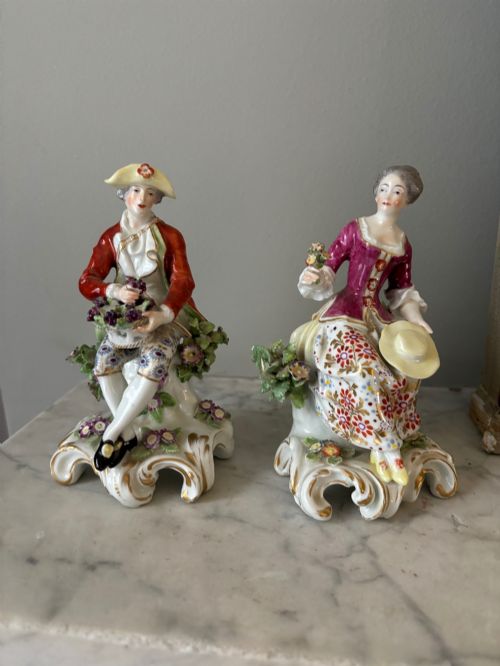
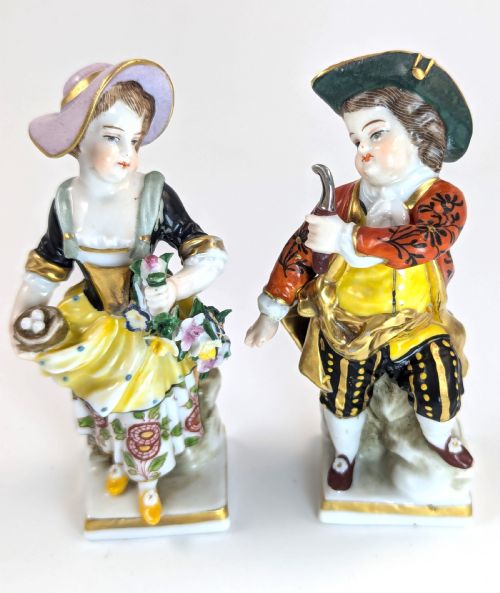
When you search for chelsea style porcelain figurines, you enter a vibrant world of nineteenth-century revival ceramics that emulate the famous English manufactory. These decorative objects capture the theatrical spirit of earlier models, depicting shepherds, gardeners, cherubs, and classical figures amidst naturalistic settings.
You are most likely to meet Victorian interpretations on this page, particularly pieces produced in Paris by workshops such as Samson, alongside continental German porcelain. These nineteenth-century works frequently adopt the elaborate scrollwork of the Rococo Revival style, framing pastoral figures with gilded accents and painted enamel details.
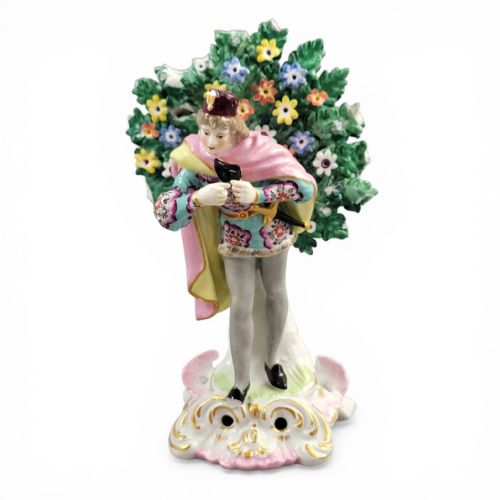
The forms range from single allegorical figures to paired actors, putti with goats, and elaborate bocage groupings surrounded by foliage. Each piece reflects the nineteenth-century fascination with eighteenth-century aesthetics, rendered in hard-paste porcelain rather than the soft-paste bodies of the original models.
Materials and methods
These figures are shaped from hard-paste porcelain, a dense ceramic material that allows for sharp detail in facial expressions and drapery. Makers utilised press moulds to form the complex figures, adding hand-modelled elements such as foliage and sheep to create varied bocage backgrounds.
The surface decoration relies on painted enamel colours combined with gold leaf, gilt, and gilding to highlight garments and scroll bases. Modelmakers frequently applied anchor marks in imitation of the original factory, grounding the nineteenth-century Paris productions in historical precedent.
Nineteenth-century ceramicists occasionally populated pastoral scenes with enthusiastic sheep that look remarkably well-groomed for farmyard animals.
Judging quality and execution
The application of gilding and gold leaf also distinguishes the range, with superior works featuring precise, burnished highlights rather than flat, dull finishes. The articulation of hands, garments, and accompanying animals reveals the skill of the nineteenth-century ceramicist working in the manner of the earlier manufactory.
Edme Samson·Samson Paris·Samson of Paris
The Chelsea Style Porcelain Figurines Glossary
- Bocage
- A background of applied ceramic foliage and flowers enclosing a figure. This technique creates a dense, garden-like setting behind pastoral characters.
- Hard-paste porcelain
- A durable ceramic body composed of kaolin and petuntse fired at high temperatures. It provides a smooth, vitreous surface ideal for detailed enamel painting.
- Rococo Revival
- A nineteenth-century design movement characterised by asymmetrical scrollwork, C-scrolls, and natural motifs. This style heavily influences the bases and framing of these figures.
- Gilt
- A thin layer of gold applied to the porcelain surface for decorative enrichment. It frequently highlights the rococo scrolls and garment edges of the figures.
Chelsea Style Porcelain Figurines: Frequently Asked Questions
What are chelsea style porcelain figurines?
These are nineteenth-century ceramic decorative objects produced in imitation of eighteenth-century English models. Makers in Paris and Germany recreated the pastoral and allegorical subjects popular in earlier ceramic history.
They capture the theatrical poses and decorative sensibility of the original factory while employing the materials and techniques available to Victorian ceramicists.
Who made these nineteenth-century figures?
Many of these pieces originate from Parisian workshops, most notably the firm of Samson, which specialised in recreating historic ceramic styles. Other examples stem from German porcelain manufactories producing pastoral subjects.
These makers frequently applied imitation anchor marks to pay homage to the original English works they emulated.
How do I identify the period?
Pieces typically date to the nineteenth century, particularly the Victorian era around eighteen-fifty to eighteen-eighty. They utilise hard-paste porcelain and Rococo Revival styling rather than the specific soft-paste bodies and neoclassical transitions of the actual eighteenth century.
The presence of nineteenth-century Paris porcelain characteristics helps separate these revival works from genuine eighteenth-century models.
How were they used?
These figures served as decorative objects for nineteenth-century domestic interiors, often displayed on mantelpieces or within cabinet collections. They provided visual interest through brightly painted enamels and gilded scrollwork.
Their pastoral and allegorical themes reflected Victorian tastes for romanticised rustic life and classical mythology.