


Chased Silver Cup
A chased silver cup brings weight and intricate hand-wrought texture to the table, uniting solid metal with deep decorative relief.
Chased Silver Cup
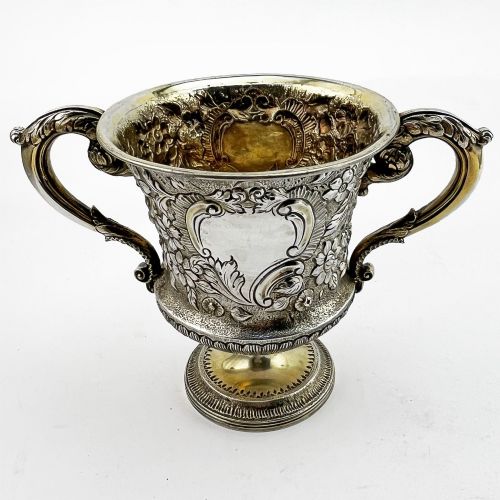
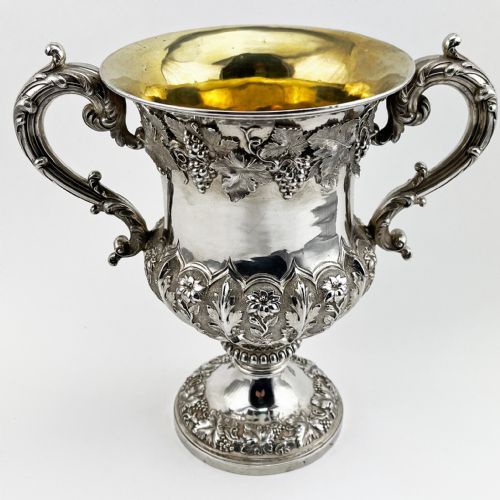
When you search for a chased silver cup, you encounter a varied selection of drinking vessels, beakers, mugs, and trophies spanning several centuries. The examples on this page range from small christening mugs and beakers to large two-handled trophy cups and elaborate wager cups.
The assortment draws together pieces from the Georgian, Victorian, and Edwardian eras alongside distinct regional styles such as Chinese Export, Anglo-Indian, and German work. Most items follow familiar domestic and ceremonial forms, including campana shapes, chalices, and cylindrical tankards.
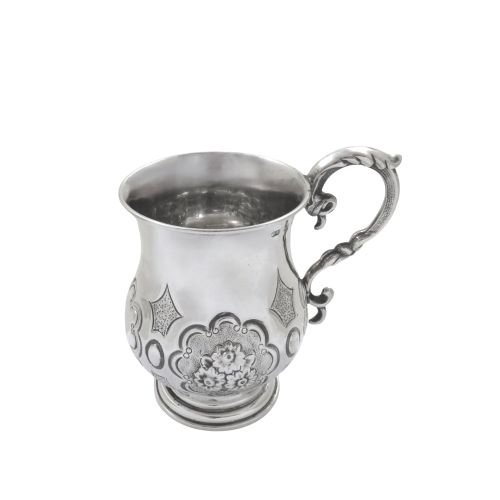
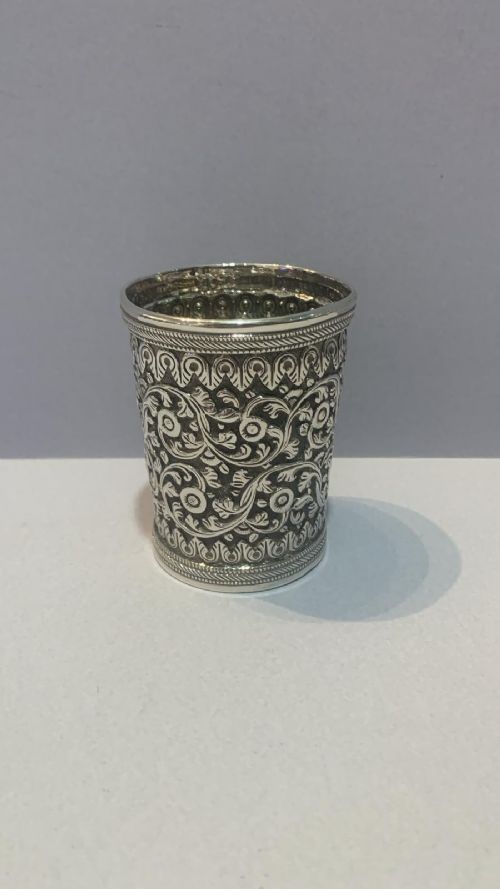
Buyers are most likely to meet Victorian sterling silver mugs and nineteenth-century beakers on this page, often decorated with floral scrolls or chased foliage. These vessels served practical and commemorative roles, functioning as presentation pieces, christening gifts, or household drinking vessels.
Materials and Techniques
Silversmiths formed these vessels primarily from sterling silver, standard silver, and silver-gilt, supplemented by occasional silver-plated examples. Working from sheet metal or cast blanks, makers shaped the bodies of beakers, mugs, and campana cups by hammering and turning.
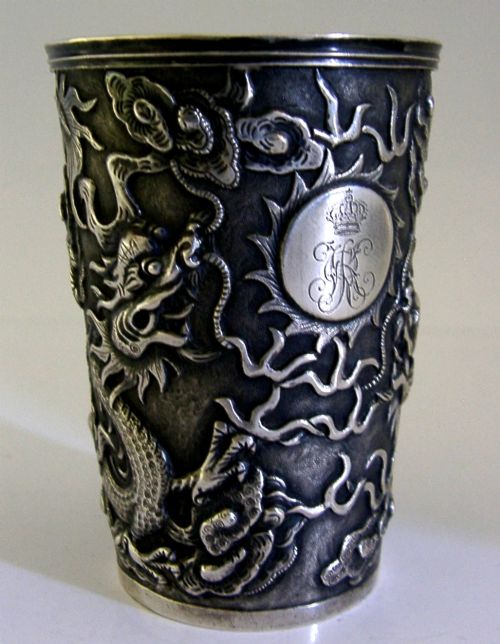
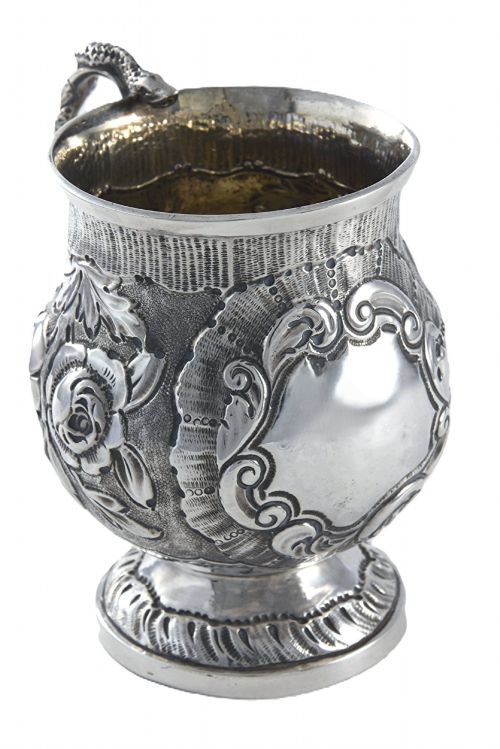
Decoration relies heavily on chasing, where the silversmith displaces metal from the front using hammers and punches rather than cutting it away. This technique creates raised floral scrolls, laurel leaves, and figural dragons in high relief, supported by internal pitch fillings during the tooling process.
Chased Silver Cup Retail Price Guide 2026
Typical asking prices for chased silver cup among the pieces listed under this phrase on Sellingantiques today, from the lower quarter to the upper quarter. They describe what is for sale here now, not the wider market.
Materials span sterling silver, standard silver, silver-gilt, vermeil, and silver plate across forms ranging from wager cups to christening tankards.
Judging Quality
Quality rests upon the crispness and depth of the chased ornament, distinguishing heavily worked relief from shallow, stamped imitation. Superior pieces maintain sharp detail in foliage, scrolls, and crests without thinning the vessel wall excessively during the hammering process.
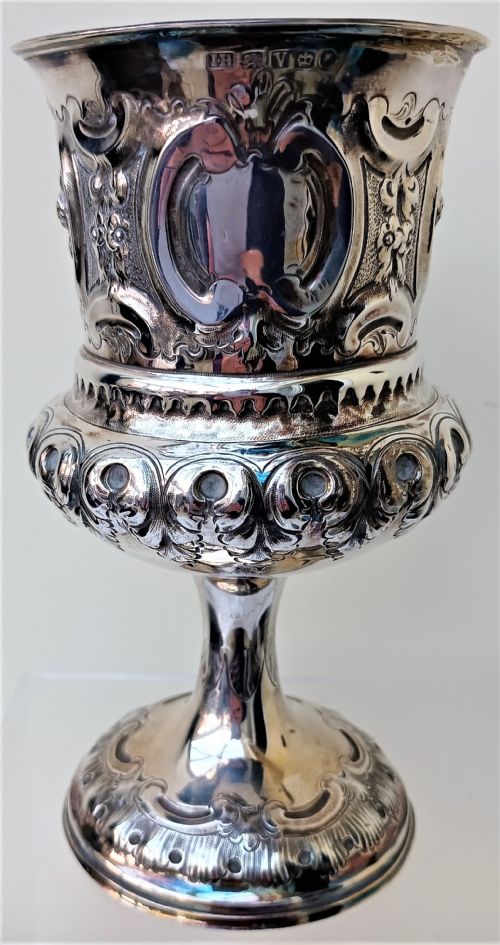
The weight of the metal and the balance of handles, stems, or feet separate ordinary production from finer workshops. Maker marks, clear hallmarks, and structural integration of handles on large trophies or campana cups further indicate the standard of the piece.
Wang Hing And Co·Bernard Muller·D And J Wellby
The Chased Silver Cup Glossary
- Chasing
- A metalworking technique where details are hammered into the front surface of metal to create raised decorative relief.
- Campana
- A bell-shaped vessel form commonly found on classical trophy cups and wine coolers.
- Wager cup
- A double-cup hinged so that a bride or guest could drink from both bowls simultaneously without spilling.
- Silver-gilt
- Silver that has been coated with a thin layer of gold on its surface, also known as vermeil.
- Hallmark
- An official stamp applied to precious metals to indicate purity, place of assay, and date of manufacture.
Chased Silver Cup: Frequently Asked Questions
What is a chased silver cup?
A chased silver cup is a drinking vessel or trophy decorated by hammering the metal from the exterior to raise ornamental patterns of flowers, scrolls, or figures. These pieces range from small christening mugs to large two-handled presentation cups.
The surface work gives each vessel a tactile, dimensional quality that sets it apart from plain polished silver. They reflect the decorative tastes of periods from the eighteenth century onwards.
How were silver wager cups used?
Silver wager cups, often taking the form of a small figure holding a pivoted swinging cup, served as drinking games at historical banquets and weddings. Guests attempted to drink from both the large main bowl and the small swinging cup without spilling a drop.
These pieces were conversation items designed to test dexterity and bring amusement to gatherings. Their intricate construction makes them distinct collector items today.
How do I identify a Victorian silver mug?
Victorian silver mugs are identified through standard hallmarks indicating assay offices and dates, alongside characteristic decorative motifs such as heavy floral chasing and cartouches. They often appeared as christening gifts or presentation pieces.
The weight of the sterling silver and the specific style of the handle and foot rim help separate them from later reproductions or earlier Georgian forms.
Can I use these cups for drinking?
Many silver beakers, mugs, and goblets remain structurally sound for holding cool beverages, though historic gilt interiors or fragile chased relief require gentle handling. Owners often choose to use them for special toasts or display them as cabinet pieces.
Hand washing with mild soap and soft cloths is essential to preserve the finish and prevent damage to the chased surface.
What is Chinese export silver?
Chinese export silver refers to items produced by Chinese silversmiths in Western forms for foreign markets during the nineteenth and early twentieth centuries. These pieces often feature traditional Chinese motifs such as dragons combined with European vessel shapes.
Maker marks on these items frequently imitate Western hallmarks or consist of distinct artisan signatures in character or script.