
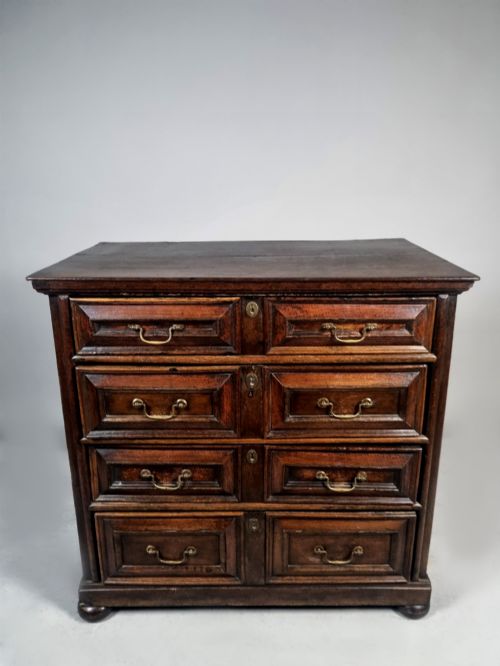
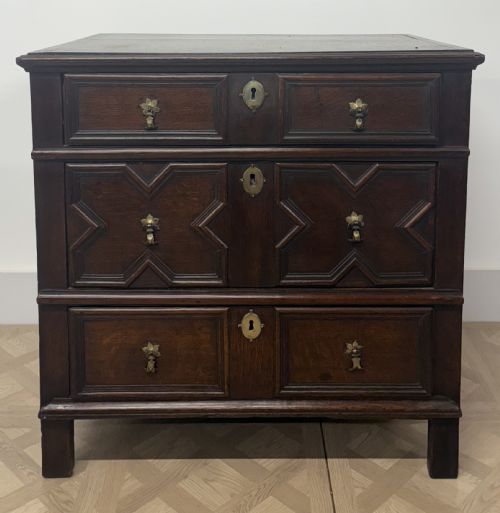
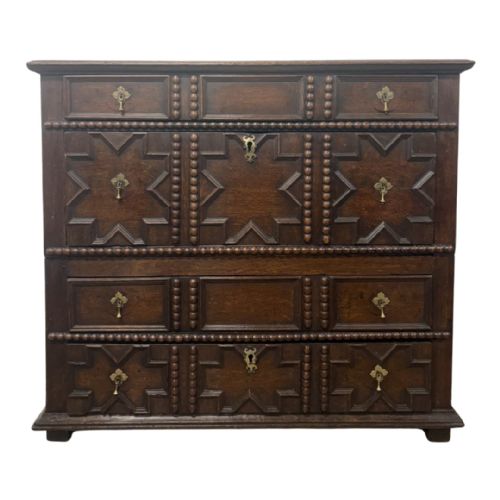
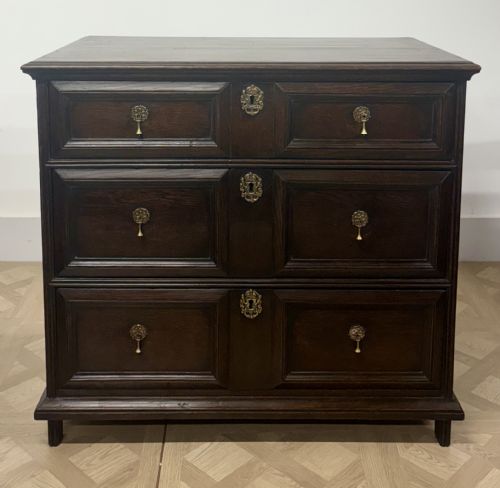
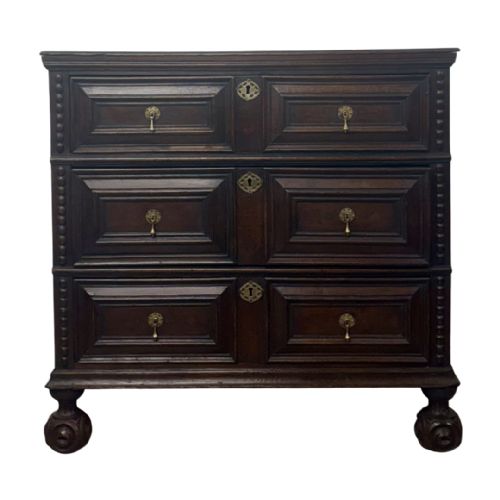
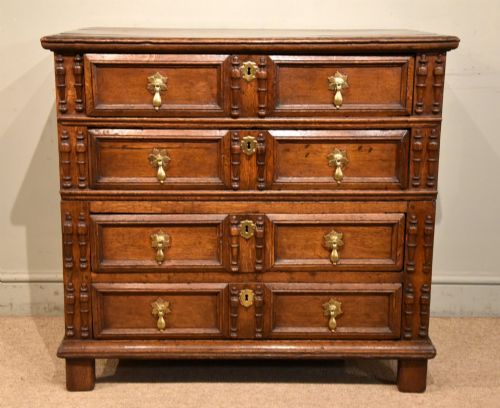
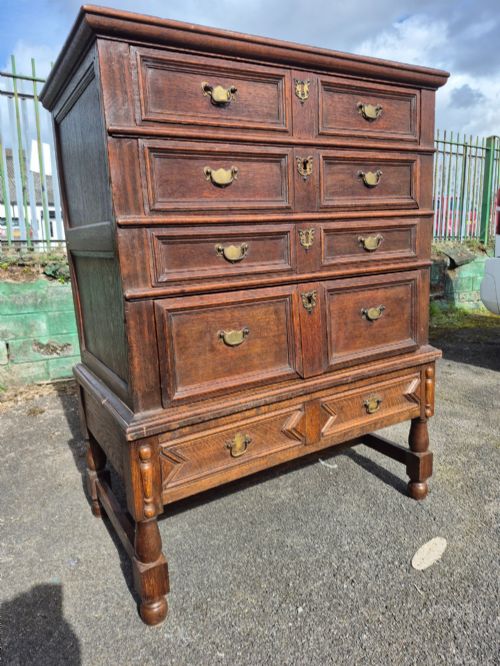
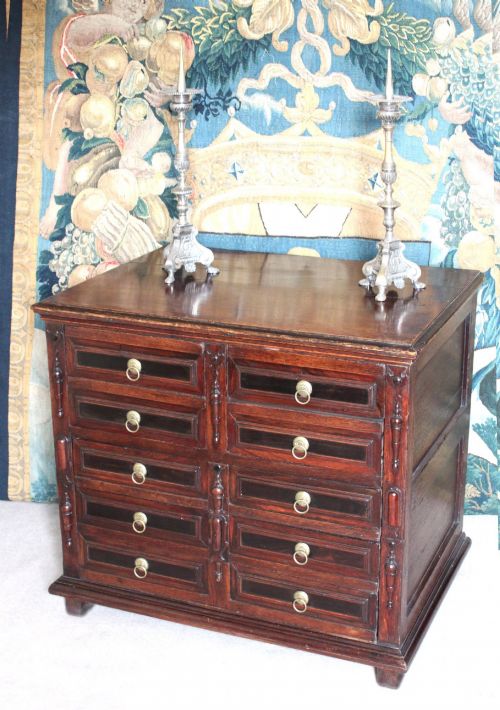
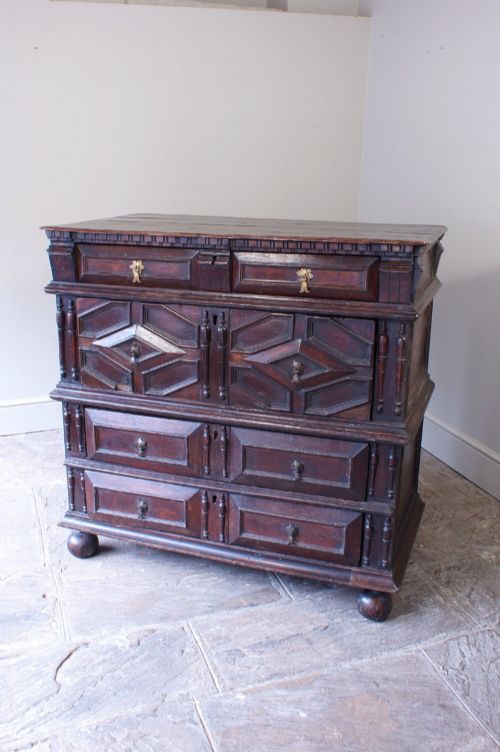
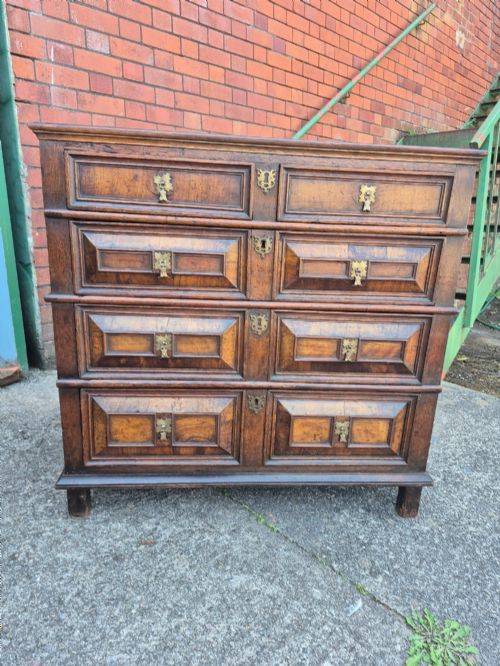
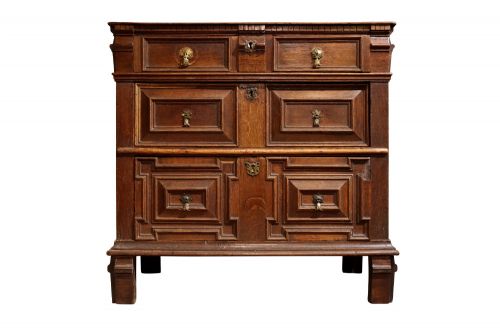
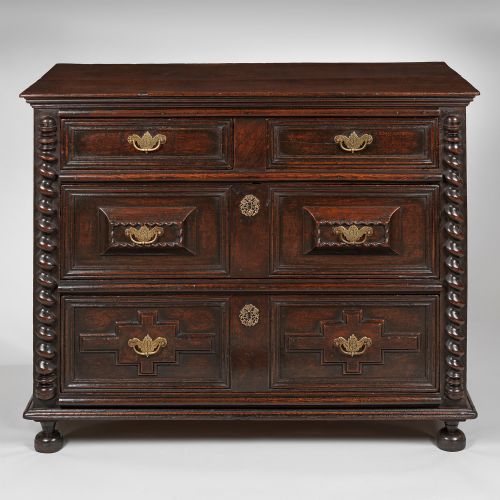


Charles II Geometric Furniture
Charles ii geometric furniture comprises seventeenth-century case pieces built with layered wooden mouldings that reward close inspection.
Charles II Geometric Furniture
Charles ii geometric furniture brings together seventeenth-century case pieces defined by surface relief and structured drawer fronts. When you search for charles ii geometric furniture, you encounter robust storage items constructed primarily during the seventeenth century under Jacobean, Carolean, and Charles II styles.
The chests of drawers and dresser bases appearing here take the form of two-part chests and moulded front designs. These forms reflect the domestic interior requirements of the late seventeenth century, providing compartmentalised storage using solid timbers.
How they were made
Cabinet makers constructed these items predominantly from oak and walnut, incorporating fruitwood, cedar, brass, and iron details. Timber selection balanced structural strength with the capacity to hold crisp geometric mouldings across drawer facades.
Joinery techniques relied on pegged frames and panel construction to accommodate seasonal timber movement. Geometric patterns were created by applying small lengths of moulded wood directly onto drawer fronts in rectilinear and octagonal arrangements.
Current listings feature seventeenth-century case pieces utilising oak, walnut, cedar, fruitwood, brass, and iron across various chests and dresser bases.
What varies in quality
Quality rests in the precision of the applied geometric mouldings and the uniformity of the timber selection. The finest examples maintain crisp mitre joints and integrated secondary woods that complement the primary carcase.
Proportion and surface integrity dictate the distinction between ordinary utility items and superior cabinet work. Original hardware, such as brass drop handles and iron hinges, elevates the historical cohesion of a piece.
The Charles II Geometric Furniture Glossary
- Geometric moulding
- Applied wooden strips arranged in repeating patterns across drawer fronts to create architectural relief. This technique defined case furniture during the late seventeenth century.
- Two-part chest
- A storage piece constructed as two separate box sections stacked vertically, often supported on a lower stand or base. This arrangement facilitated transport in seventeenth-century homes.
- Carolean
- The artistic style spanning the reign of King Charles II, characterised by rich ornamentation and Flemish influence. Furniture from this period frequently displays elaborate surface carving and mouldings.
- Dresser base
- A low utilitarian table fitted with drawers and cupboards, used for food preparation and storage in seventeenth-century households. Surviving examples demonstrate heavy oak construction.
Charles II Geometric Furniture: Frequently Asked Questions
How do I identify a seventeenth-century chest?
Look for construction methods such as hand-cut dovetails, pegged mortise and tenon joints, and timber shrinkage appropriate to seventeenth-century oak and walnut.
Examine the backboards and drawer linings to confirm the use of period secondary woods and traditional hand-tool marks.
Where were these pieces used in houses?
These case pieces served primary storage functions in bedchambers, parlours, and great halls of seventeenth-century domestic properties.
Their substantial construction made them permanent fixtures within rooms rather than easily movable furniture.
How do I care for antique oak furniture?
Maintain stable relative humidity levels in your room to prevent timber splitting or movement in the historic wood.
Apply traditional beeswax occasionally to nourish the surface without building up synthetic residues that dull the grain.
What is a two-part chest?
A two-part chest consists of an upper and a lower case built to sit securely one upon the other for domestic storage.
This modular format helped occupants transport heavy furniture through narrow stairwells and doorways in seventeenth-century buildings.