

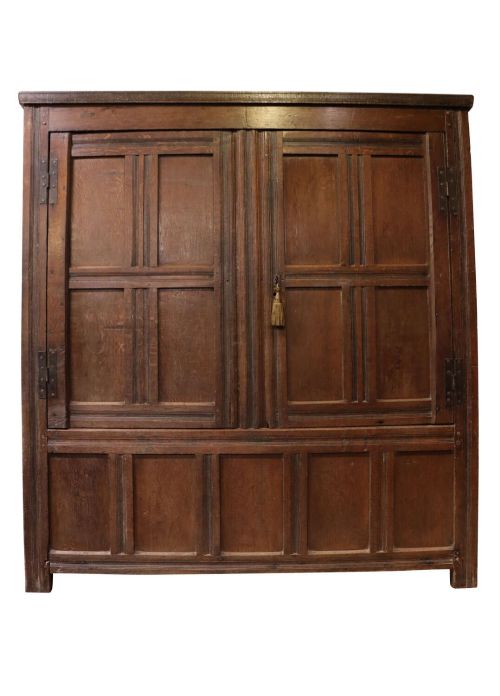
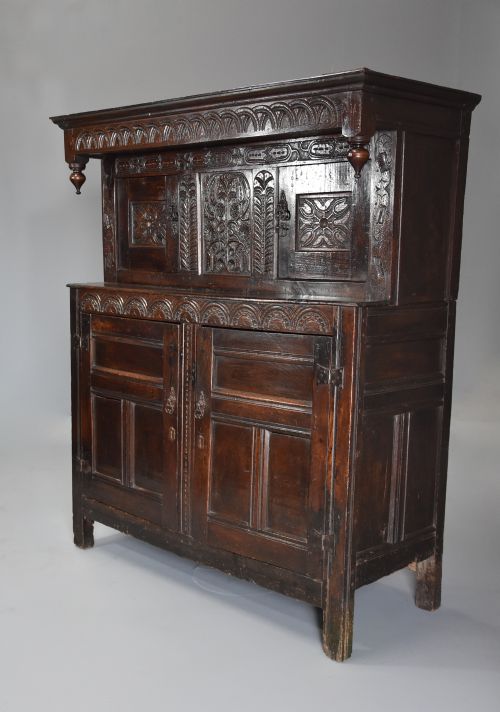


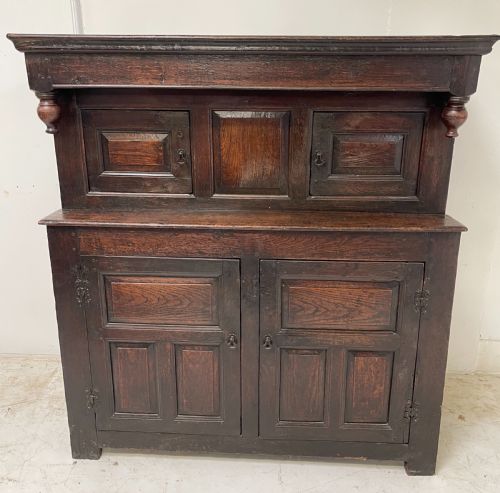


Charles I Press Cupboard
A charles i press cupboard is a heavy timber storage piece built to anchor a seventeenth-century interior with substantial presence and historic utility.
Charles I Press Cupboard
A charles i press cupboard belongs primarily to the seventeenth century, appearing across periods labelled as Jacobean, Charles II, Carolean, and seventeenth century. These sturdy forms encompass press cupboards, court cupboards, buffet cupboards, joined cupboards, and deuddarn variants.
Most examples found here date from the mid to late seventeenth century, often showing regional English and Welsh origins such as Lancashire, the West Country, Westmorland, and Wales. The construction is typically heavy and architectural, designed for domestic storage and display.
Related forms on this page include chests of drawers combined with later cupboards, alongside standard court and press cupboards. These pieces reflect the heavy timber framing traditions of seventeenth-century joinery.
What varies in quality
Quality rests in the survival of original untouched surfaces and the crispness of seventeenth-century carved detailing. Pieces retaining their initial patination and early construction without extensive replacement hold greater integrity.
The sophistication of regional joinery and the presence of dated inscriptions or fruitwood inlay distinguish finer examples. Alterations, such as chests mounted on later cupboards, alter the original unified form of the piece.
Charles I Press Cupboard Retail Price Guide 2026
Typical asking prices for charles i press cupboard among the pieces listed under this phrase on Sellingantiques today, from the lower quarter to the upper quarter. They describe what is for sale here now, not the wider market.
Some cupboards bear initials and dates carved directly into the oak, preserving the proud stamp of seventeenth-century joiners.
The Charles I Press Cupboard Glossary
- Court cupboard
- A heavy seventeenth-century storage and display piece with enclosed upper and lower sections, often featuring carved panels. This form served to display plate and store domestic goods.
- Press cupboard
- A large timber wardrobe or linen press utilised for storing folded textiles and garments. These pieces split into upper and lower compartments.
- Deuddarn
- A traditional Welsh two-part court cupboard dating from the seventeenth century. It provides substantial storage capacity within an architectural oak frame.
- Jacobean
- The stylistic period spanning the early seventeenth century, characterised by rigid symmetry and geometric carving in oak. This style precedes the Carolean and Charles II eras.
- Patina
- The surface sheen and colour developed by aged oak through centuries of handling and polishing. Original patination is a key indicator of untouched historical condition.
Charles I Press Cupboard: Frequently Asked Questions
What is a charles i press cupboard?
A charles i press cupboard is a heavy seventeenth-century timber storage piece designed for domestic use. These items combine architectural framing with enclosed compartments for household goods.
They appear in various regional forms, including court cupboards and buffet variants, predominantly constructed from solid oak during the Jacobean and Charles II periods.
How were these cupboards used?
These cupboards served to store textiles, valuable plate, and household provisions in seventeenth-century homes. The upper and lower sections allowed both display and secure storage.
Households utilised them as central furniture pieces in the main living spaces to project status and organise domestic goods.
How do I date a seventeenth century cupboard?
Dating relies on examining construction methods, timber species, and stylistic indicators such as carved motifs. Regional variations and occasional dated inscriptions provide direct chronological markers.
Joined oak framing, pegged joints, and iron or brass hardware characteristic of the seventeenth century help confirm the period.
How do I care for antique oak?
Antique oak requires stable indoor humidity and protection from direct sunlight to prevent timber movement. Gentle cleaning with appropriate wax maintains the historical surface.
Avoid modern liquid polishes that can penetrate the grain and alter the original patination of the timber.