


Charcoal Portrait on Paper
When you want a charcoal portrait on paper, you look for directness of line and the immediate touch of the hand upon the sheet.
Charcoal Portrait on Paper
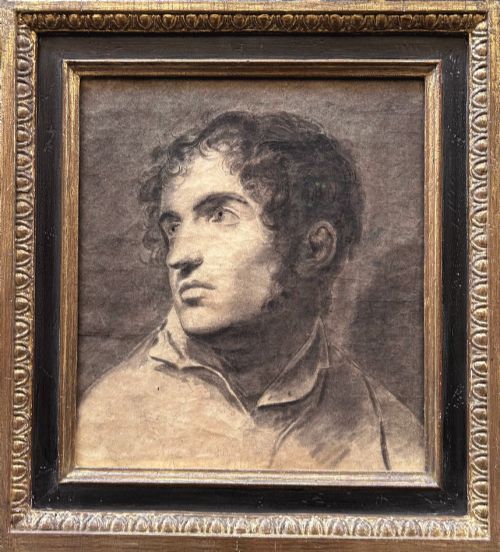
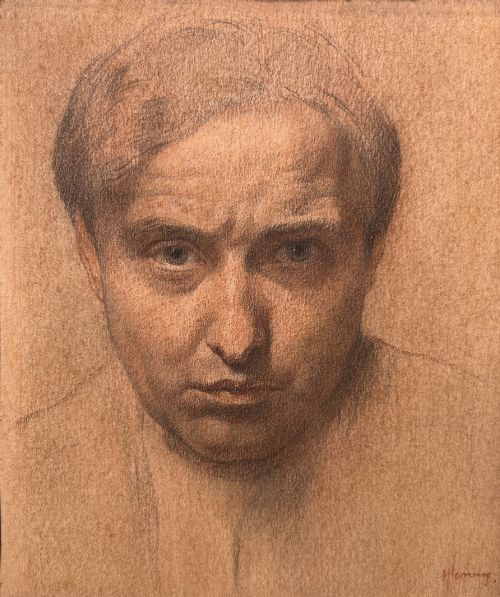
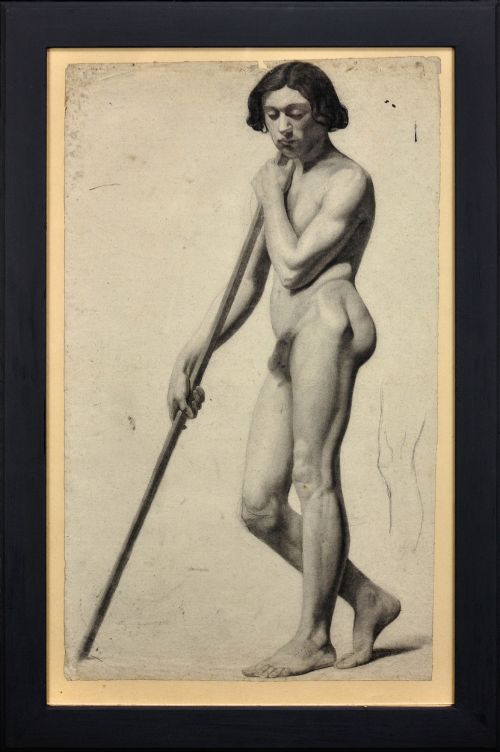
A charcoal portrait on paper brings you face to face with historical sitters, ranging from academic life studies of male nudes to named portraits of explorers, writers, and lords. These works span the eighteenth, nineteenth, and early twentieth centuries, encompassing Victorian, Edwardian, and Art Deco periods.
Most examples you meet here arrive framed behind glass, preserved in wood or giltwood frames that often match the period of the drawing itself. The selection includes French and Italian school works, studio drawings, and finished pieces produced by both continental and British hands.
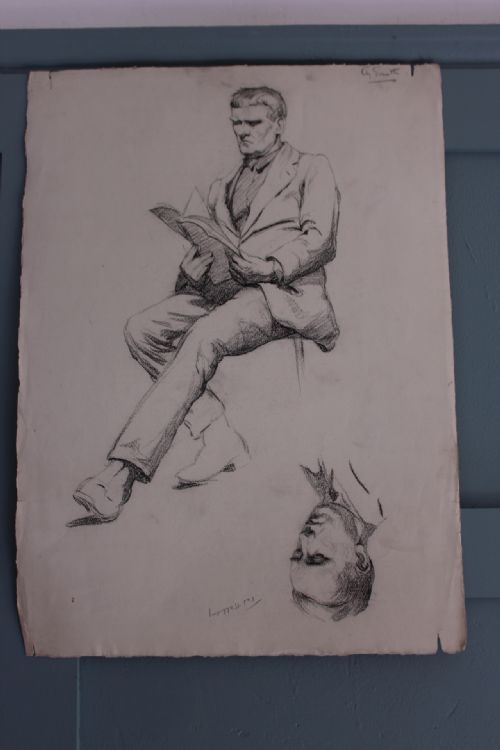
The subjects extend beyond formal portraiture into life studies, orientalist depictions, and atmospheric sketches of gentlemen and women. These sheets capture fleeting expressions and careful anatomical studies through the direct application of dry media.
How they were made
Makers drew these portraits using charcoal, chalk, graphite, and pastel applied directly to various types of paper support, sometimes including watermarked paper sheets. Artists often combined charcoal with white chalk or graphite highlights to build volume, shadow, and tonal depth across the surface.
Framing materials such as wood, carved Florentine mouldings, and giltwood protected these delicate dry-media works behind glass from dust and smudging. The combination of friable charcoal particles bound only lightly to paper fibres requires this physical barrier for long-term survival.
A nineteenth-century lady's portrait hides safely upon paper watermarked by J Whatman in eighteen fifty-two.
What varies in quality
The strength of a charcoal portrait on paper rests upon the surety of the draughtsmanship and the psychological depth captured in the sitter's expression. Confident handling of shadow and light distinguishes a masterly studio study from a hesitant academic exercise.
Condition plays a central role, particularly the stability of the charcoal medium against dusting and the preservation of the paper support free from excessive foxing or damp staining. Original period framing also enhances the integrity of the piece.
Herbert Johnson Harvey·Arthur Todd·Winifred Eugene Ballard·John Hoppner·Reginald G Eves·Theobald Chartran·John Seymour Lucas·Ernest Borough Johnson·George Richmond·Leo Klin·Francis Dodd·Cecil CP Lawson·Juliet Pannett
The Charcoal Portrait on Paper Glossary
- Academic Realism
- A style of painting and drawing produced under the influence of European academies of art, prioritising precise anatomical accuracy and classical proportions.
- Life Study
- A drawing or painting of a live human model, executed as a direct observation exercise in an art school or studio setting.
- Orientalism
- The depiction of Near Eastern and Middle Eastern subjects by Western artists, often characterised by exotic costume and atmospheric lighting popular in the nineteenth century.
- Watermark
- A recognizable image or pattern in paper that appears darker when viewed against transmitted light, often indicating the maker and date of the paper sheet.
Charcoal Portrait on Paper: Frequently Asked Questions
Are these drawings original works?
The pieces listed are original hand-drawn works on paper rather than mechanical reproductions or prints. Artists applied charcoal, chalk, and graphite directly to the sheet during the sitting or in the studio.
Signatures, dates, and watermark evidence often help confirm the period and individual authorship of the drawing.
How should I hang antique paper art?
Display these works on interior walls away from direct sunlight, heat sources, and damp environments to protect both the paper and the friable charcoal medium. UV-protective glass adds an extra layer of defence against fading.
Ensure the frame hangs securely from appropriate fixings so that vibrations do not dislodge the dry media from the paper fibres.
What is an academic life study?
An academic life study is a detailed drawing of a nude or clothed model created by an artist training within a formal academy system. These pieces served to master human anatomy, proportion, and tonal shading.
Such drawings often feature artists' studio notes or institutional stamps alongside the primary charcoal work.