
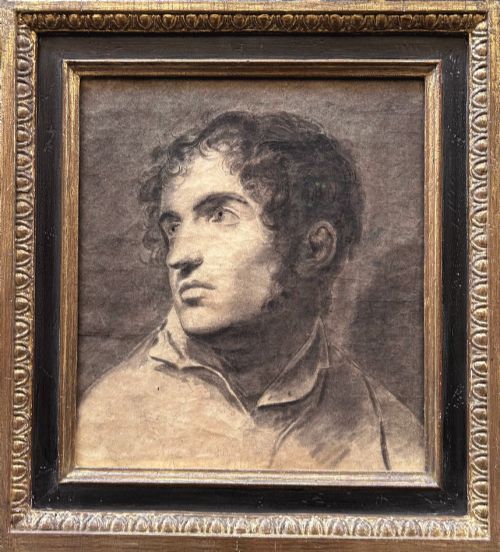
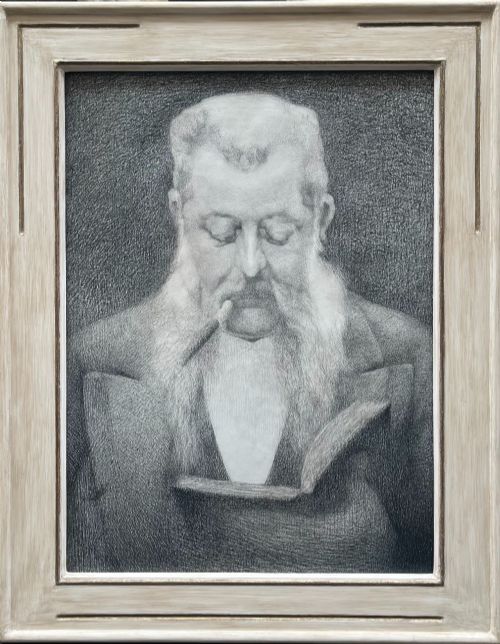
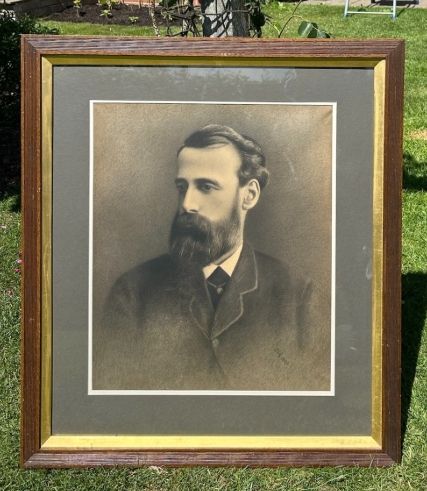
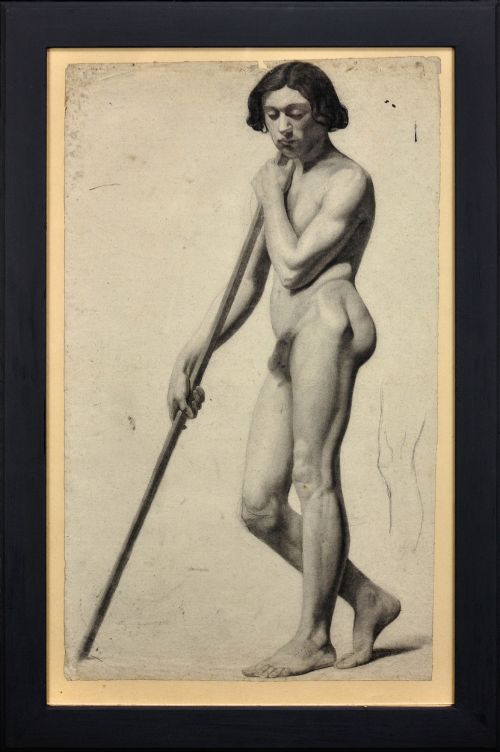


Framed Charcoal Portrait Drawing
A framed charcoal portrait drawing captures the direct hand of the artist, bringing personality and historical presence straight to the wall.
Framed Charcoal Portrait Drawing
A framed charcoal portrait drawing represents a direct graphic record on paper, capturing human likeness through monochrome marks. These works range from informal studio life studies to finished exhibition pieces.
The selections available here lean heavily into nineteenth-century Victorian and Edwardian examples, alongside early twentieth-century French and British school works. Buyers frequently encounter subjects rendered in charcoal combined with chalk, graphite, or pastel.
Framed formats protect these fragile works behind glass within period wood or gilded frames. The character of each piece rests on the tension between dark charcoal lines and the pale tone of the paper surface.
How they were made
Artists utilised compressed or vine charcoal sticks on paper, occasionally combining graphite and chalk to build depth and tone. Heightening with white pastel or chalk was common on tinted paper to create highlights in portraits.
Works of this nature were housed behind glass to protect the soft charcoal medium from smudging. These drawings sit within wooden frames, sometimes finished with gesso and gilt.
Portraits on this page encompass British, French, and African school studies of male and female sitters.
What varies in quality
Quality rests on the sureness of the draughtsmanship and the psychological depth of the sitter. A confident hand captures bone structure and expression with minimal, decisive strokes rather than heavy reworking.
The relationship between the drawing and its frame matters significantly. Original period frames that complement the date and aesthetic of the artwork elevate the overall integrity of the piece.
Henry Arthur Roberts·J D Fergusson·Arthur Todd·Winifred Eugene Ballard·Reginald G. Eves·Theobald Chartran·Ernest Borough Johnson·George Richmond·Juliet Pannett
The Framed Charcoal Portrait Drawing Glossary
- Charcoal
- A dry drawing medium made from organic matter burned in a kiln, producing deep black marks. It yields easily to blending and smudging for tonal graduation.
- Giltwood
- Wood carved and coated with gold leaf or gold paint. This finish appears frequently on nineteenth-century picture frames.
- Academic Realism
- A style of painting and drawing produced under the influence of European academies of art. It prioritises precise anatomical correctness and classical composition.
- Symbolist
- An artistic movement from the late nineteenth century that favoured spiritual and metaphorical themes over literal representation. Works in this style often use mood and shadow to suggest hidden meanings.
- Pastel
- A powdered pigment massed into a stick form for dry drawing. It offers vibrant colour and sits loosely on the paper support.
Framed Charcoal Portrait Drawing: Frequently Asked Questions
How should I hang a charcoal drawing?
Keep charcoal works out of direct sunlight to prevent the paper from yellowing and the media from fading over time. Stable indoor humidity protects both the delicate paper support and the timber frame.
Ensure the piece hangs securely on a wall using appropriate fixings suited to the weight of the glass and wooden frame.
Are these drawings original works?
The pieces listed are original hand-drawn works on paper created by individual artists, rather than mechanical reproductions or prints. Each drawing contains unique hand-drawn marks and variations.
Signatures or studio stamps frequently accompany these original sheets, pointing to the hands that made them.
What framing is typical for these portraits?
Many drawings are housed in period wooden frames, including gilded examples and carved mouldings appropriate to their age. These frames often show patination consistent with their history.
Glass fronts protect the soft charcoal surface from accidental touch and atmospheric dust.
How do I identify the period?
Stylistic clues, dress codes of the sitters, and framing materials help narrow down the decade or century of execution. Victorian and Edwardian pieces often display specific mounting styles and paper types.
Inscribed names, dates, or artist monograms on the front or reverse provide direct evidence of the creation period.