
Chair Back Settee
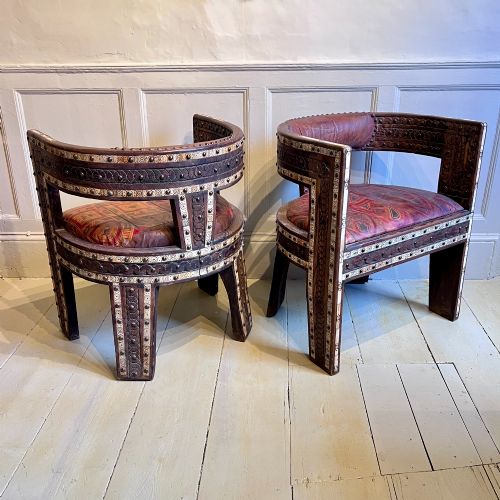
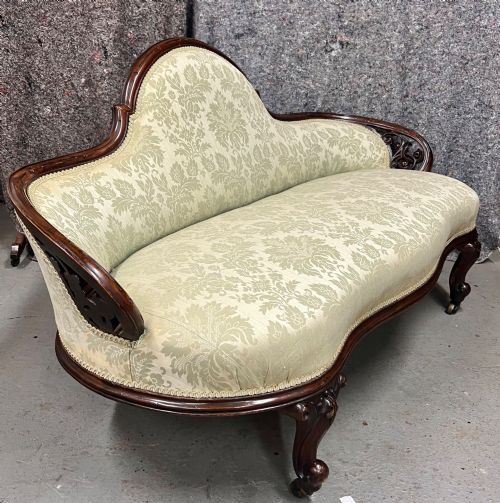
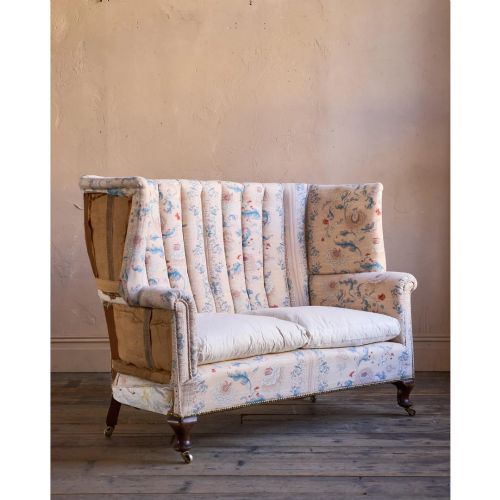
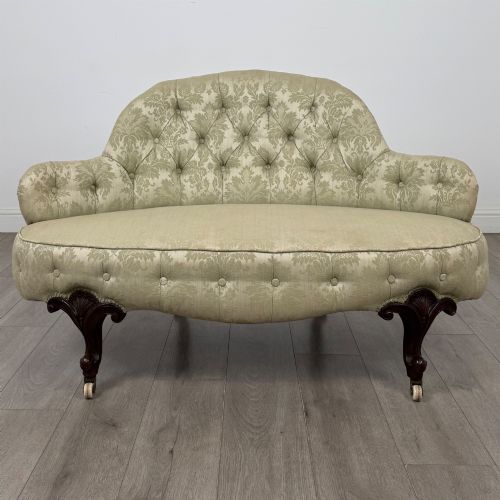
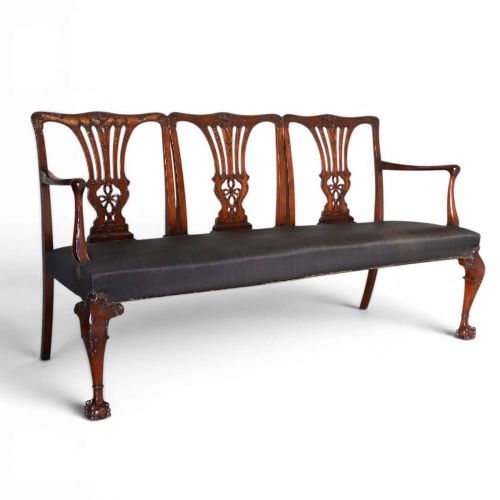
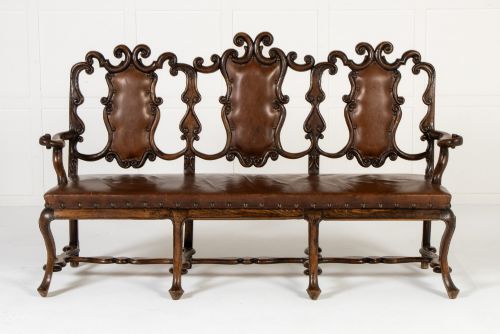
A chair back settee combines the seating capacity of a sofa with the distinctive joined backrests of individual dining or parlour chairs.
Chair Back Settee
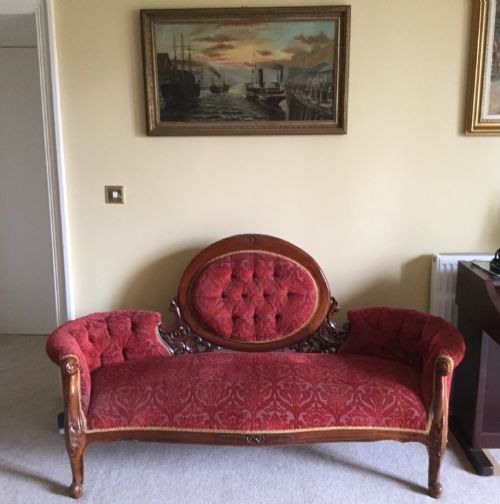
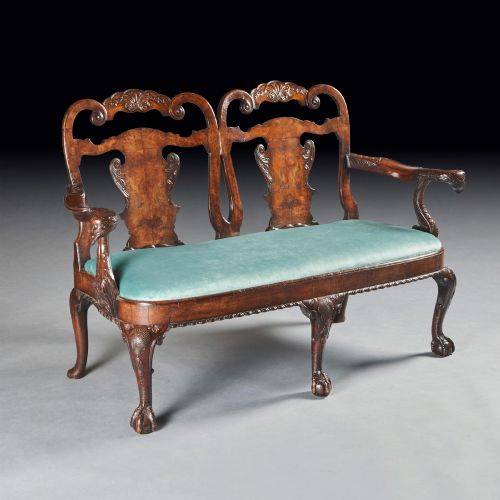
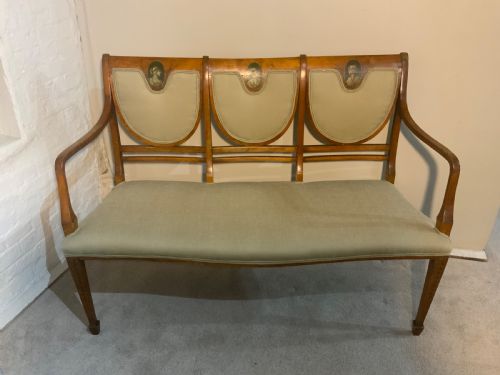
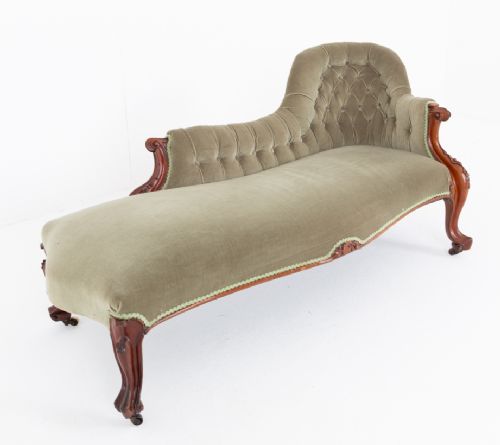
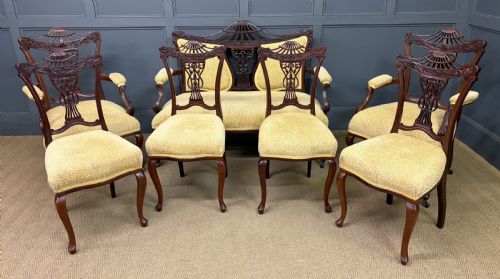
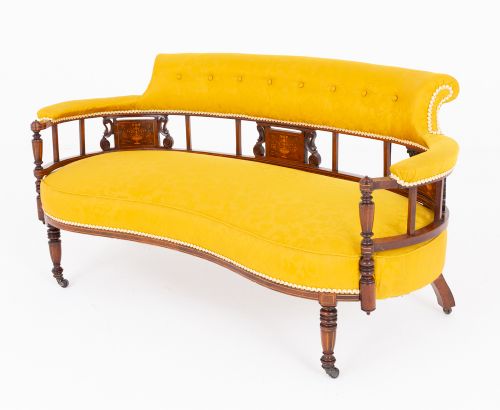
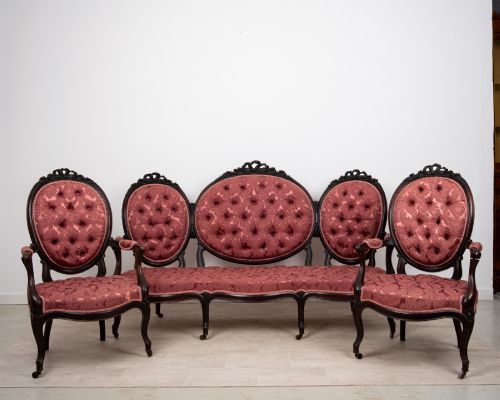
When searching for a chair back settee, buyers encounter formal seating that bridges the gap between individual chairs and larger sofas. These pieces feature backrests designed to mimic two, three, or even four conjoined chair backs, frequently following historical revival styles from the eighteenth and nineteenth centuries. Examples range from early nineteenth-century satinwood and mahogany creations to Edwardian iterations incorporating inlaid details.
The versions most commonly met on this page date from the Victorian and Edwardian periods, alongside revival pieces echoing George II, Hepplewhite, and Chippendale designs. Timelines span from the nineteenth century into the early twentieth century, utilising traditional cabinet-making forms adapted for drawing rooms and reception spaces. They appear in diverse configurations, including double and triple chair back formats fashioned in rich timbers.
Materials and construction
Makers relied heavily on dense hardwoods such as mahogany, walnut, and satinwood to provide the structural integrity required for intricate pierced or carved backrests. These timbers were often polished to a high sheen, revealing deep natural grains that defined the visual character of the framing.
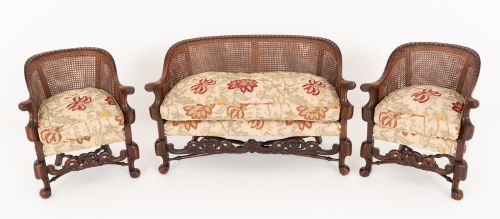
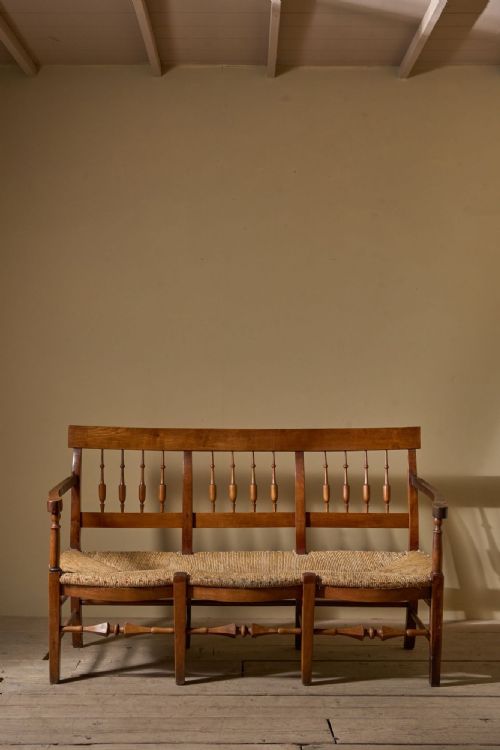
Upholstery materials varied widely according to period, incorporating leather, velvet, damask, fabric, and deep pile brocade over sprung bases or rush seats. Caning also appeared on lighter Edwardian and revival frames, adding texture and visual breathability to the conjoined back designs.
Listings feature mahogany, walnut, and satinwood frames alongside velvet, leather, and damask upholstery across Victorian and Edwardian periods.
Assessing quality
Quality rests in the crispness of the carving along the top rail and splats, where sharp hand-worked detail separates superior cabinet-making from softer, later mechanical output. The joinery connecting the individual chair sections to the seat rail demands precision to withstand centuries of lateral pressure.
The choice and execution of secondary woods and upholstery foundations further distinguish finer pieces, ensuring stability beneath decorative surfaces like inlay or gilt work.
Holland and Sons·Liberty of London
The Chair Back Settee Glossary
- Splat
- The central vertical strip of wood in the back of a chair or chair back settee. It often bears elaborate carving or piercing in Chippendale and Hepplewhite styles.
- Satinwood
- A durable, yellowish timber prized for its smooth grain and lustrous finish. Cabinet-makers utilised it extensively for fine inlay work on later furniture.
- Caning
- Woven rattan or split reed used to create lightweight, open panels in chair backs and seats. It requires skilled hand-weaving to maintain tension across the frame.
- Revival
- A nineteenth or early twentieth-century design movement mimicking earlier historical periods such as George II or Louis XVI. These pieces adopted historic aesthetics while utilising contemporary workshop techniques.
Chair Back Settee: Frequently Asked Questions
What is a chair back settee?
A chair back settee is an elongated seat whose backrest is constructed to resemble two or more conjoined chair backs. This design creates a formal linear appearance distinct from standard upholstered sofas.
Craftsmen often employed styles derived from eighteenth-century masters like Chippendale and Hepplewhite for these frames. They served primarily in formal rooms where seating needed to coordinate with surrounding dining or parlour chairs.
How were chair back settees used?
These settees were placed in drawing rooms, grand hallways, and reception spaces to provide structured seating for multiple guests. Unlike deep lounging sofas, their upright backs encouraged a more formal posture.
They also functioned as decorative anchor pieces against large walls or beneath windows. Some smaller variants served specific transitional roles near bedroom ends or entranceways.
How do I identify the period?
Dating relies heavily on identifying the primary timber, secondary woods, and stylistic revival cues present in the woodwork. For instance, satinwood inlay and lighter frames point toward the Edwardian era, whereas dense carved mahogany often signals Victorian or earlier revival work.
Upholstery techniques and hidden framing structures also offer clues, though many pieces have been re-covered over time. Comparing the carving depth and joinery style against documented historical examples confirms the exact era of manufacture.
How do I care for wood and upholstery?
Preserving the wood requires maintaining stable room humidity and applying quality wax sparingly to protect the polished surface. Avoid placing antique timber frames in direct sunlight to prevent fading and drying of the grain.
Upholstery longevity depends on gentle cleaning appropriate to the specific textile, whether brocade, leather, or velvet. Professional conservation is recommended for sprung bases and antique fabric restoration.