




Ceramic Soup Tureen Lid
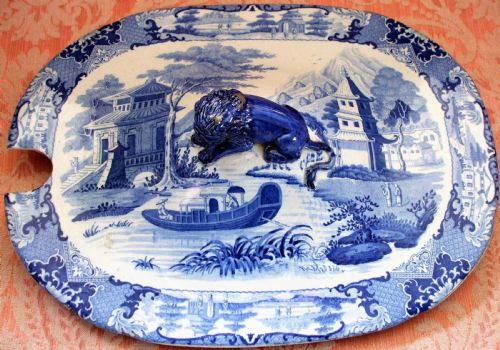
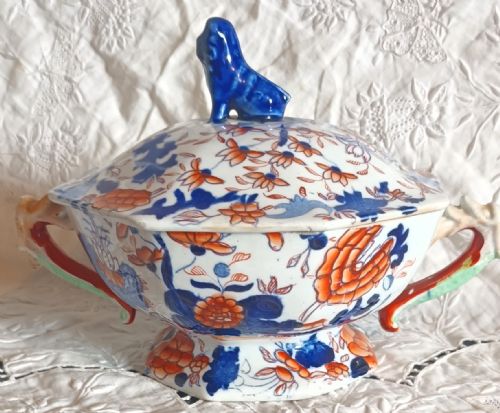
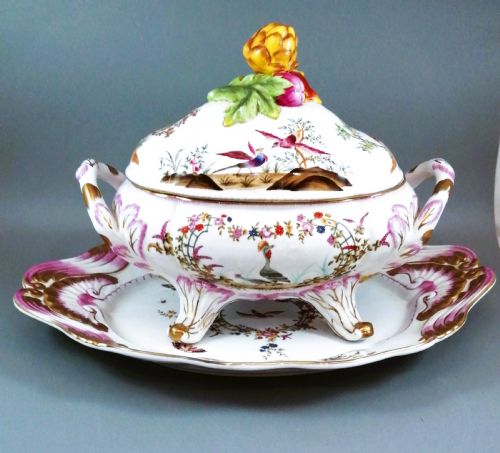
These ceramic soup tureen lid examples complete surviving serving vessels from the eighteenth and nineteenth centuries, offering collectors replacement tops or study pieces.
Ceramic Soup Tureen Lid
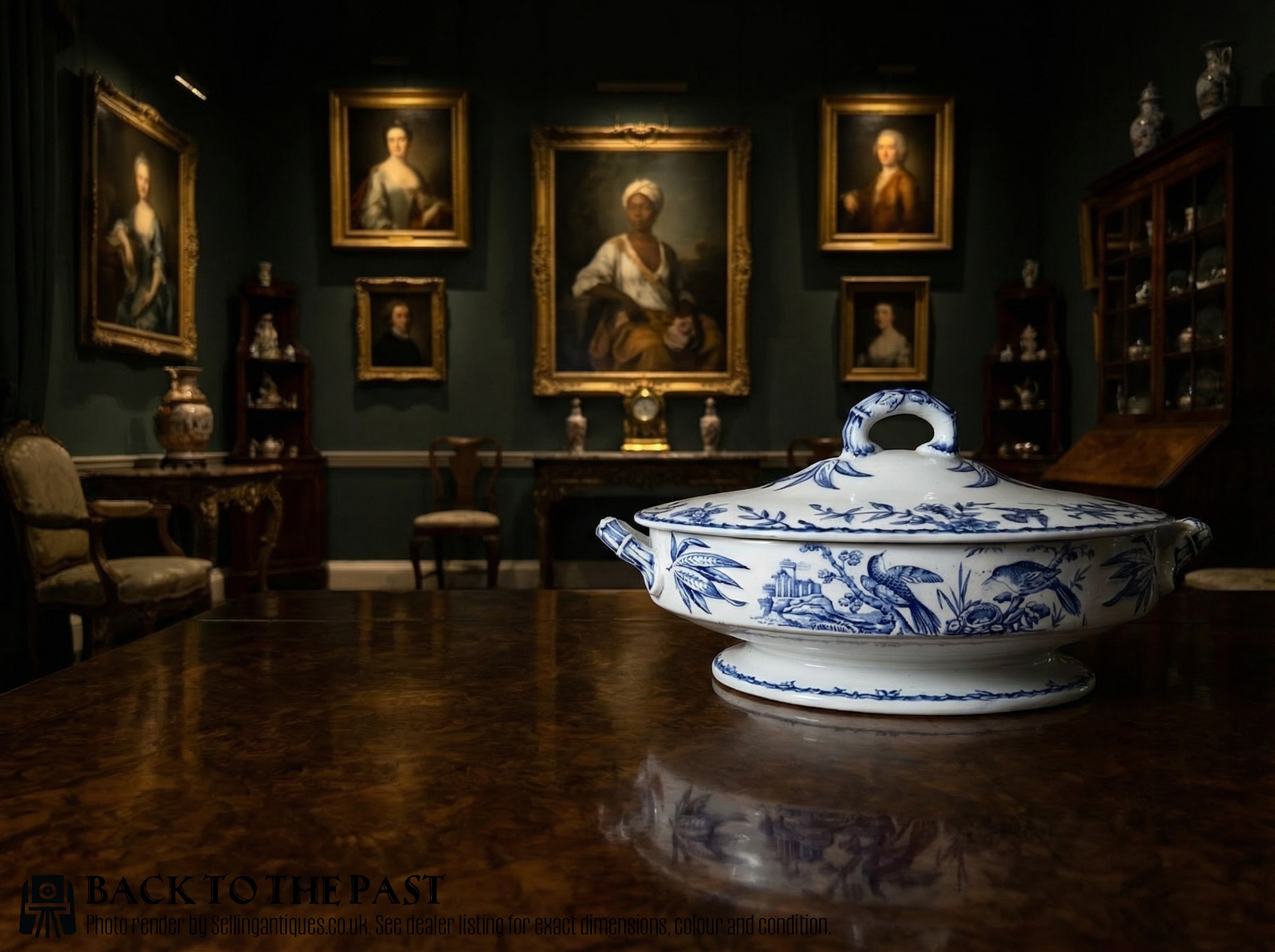
A ceramic soup tureen lid is a detachable cover designed to seal hollowware serving vessels used for broths, sauces, and soups during formal dining. When you search for a ceramic soup tureen lid, you encounter individual covers and complete lidded vessels originating from English and continental potteries across the Georgian, Victorian, and Regency periods.
The pieces on this page span earthenwares, ironstones, and porcelains, taking forms from large soup tureens down to smaller sauce tureens and broth cups. Most examples originate from nineteenth-century Staffordshire potteries or eighteenth-century English and European factories.
Buyers frequently seek these specific covers to reunite with orphaned bases, or collect them as standalone ceramic specimens displaying transfer printing, hand-painting, and gilding. The selection ranges from robust Mason's ironstone to delicate soft-paste porcelain from Derby and continental kilns.
How they were made
Potters shaped these lids using earthenware, ironstone, and porcelain bodies, frequently applying tin or lead glazes to seal the porous clay beneath. Decoration relied on blue and white transfer printing, hand-painted Chinoiserie mandarin patterns, enamel colours, and touches of gold leaf.
Factory production combined traditional moulding techniques with specialised kiln firing, allowing potteries like Mason's and Derby to produce durable ironstone and refined porcelain wares. Lids required precise fitting to rest securely atop corresponding tureen collars, often featuring moulded handle finials shaped as fruit, flowers, or scrollwork.
The listings combine earthenware, ironstone, and porcelain materials across Georgian, Victorian, and Regency periods.
What varies in quality
Quality rests in the crispness of the moulded detail, the alignment of the transfer print, and the fineness of the ceramic body itself. Porcelain and soft-paste pieces demand greater kiln skill than standard earthenware, while ironstone offers heavy-duty durability.
Decoration elevates standard utility wares into ornamental objects through meticulous hand-enamelling, rich cobalt blue printing, and preserved gold leaf highlights. The sophistication of the modelled handle finial and the depth of the glaze further distinguish standard production from premier factory output.
Robert Hamilton·Mason's·Derby·Richard Ginori·Ridgways
The Ceramic Soup Tureen Lid Glossary
- Ironstone
- A heavy, semi-vitrified earthenware developed in the nineteenth century for durability and strength. It provides a robust alternative to softer earthenwares and delicate porcelains.
- Transfer print
- A decorative technique where an engraved copper plate transfers a design onto tissue paper, which is then stamped onto the ceramic body before glazing. This method allowed consistent, detailed patterns such as Canton river scenes.
- Soft-paste porcelain
- An artificial porcelain mixture fired at lower temperatures than hard-paste, common in eighteenth-century English factories. It yields a warm, creamy body with distinctive glaze pooling.
- Chinoiserie
- European artistic style reflecting Chinese motifs, popular on eighteenth and nineteenth-century ceramics. It appears on several Mandarin pattern tureens.
- Broth cup
- A small, two-handled vessel designed for serving individual portions of soup or broth. These pieces frequently include matching lidded covers.
Ceramic Soup Tureen Lid: Frequently Asked Questions
Are these lids sold with bases?
Some listings include the complete tureen and cover together, while others offer the lid as an individual component.
Buyers should examine each listing title to determine whether the base, ladle, or stand accompanies the cover.
What materials were used?
The listings feature earthenware, ironstone, and porcelain, alongside soft-paste porcelain bodies.
Decoration on these ceramic surfaces incorporates blue and white transfer printing, enamel colours, and gold leaf.
How do I identify the period?
Periods range from eighteenth-century soft-paste porcelain to nineteenth-century ironstone and Victorian earthenware.
Stylistic cues such as Continental Rococo moulding or Georgian transfer prints help indicate the era of manufacture.
What styles are available?
Available styles span Georgian, Victorian, Regency, and Continental Rococo designs.
Many pieces showcase Chinoiserie mandarin patterns or traditional blue and white transfer scenery.