




Ceramic Shell Dish
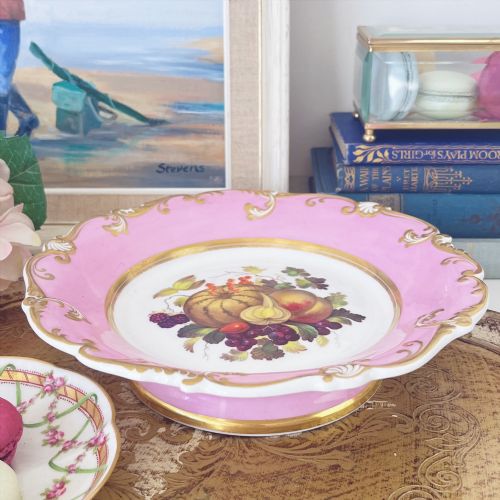
These ceramic shell dish pieces bring marine forms into eighteenth and nineteenth century interiors as serving ware and decorative centrepieces.
Ceramic Shell Dish
A ceramic shell dish takes the natural fluted geometry of scallops, clams, and oysters to form tableware, pickle dishes, and sweetmeat stands. These pieces function as decorative plates, comports, and vide-poche receptacles across various historical periods.
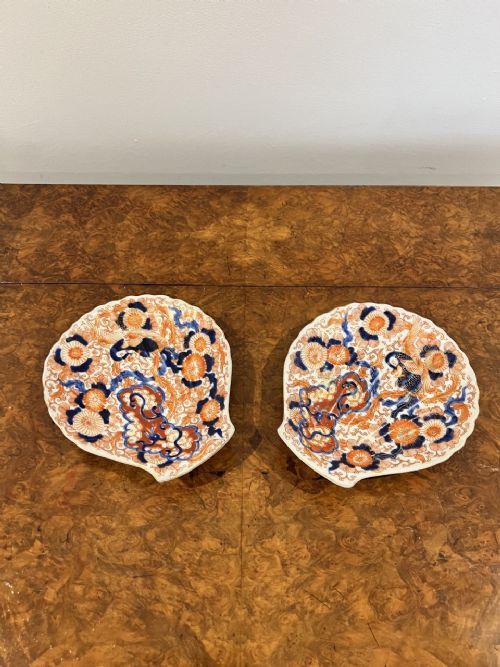
The selection ranges from eighteenth century English porcelain centrepieces and Japanese Imari plates to nineteenth century earthenware and Art Nouveau figural pieces. Domestic dining tables and display cabinets both accommodated these marine-moulded vessels.
Examples span from mid-eighteenth century porcelain pickle dishes to Edwardian glazed pottery figures incorporating shell bowls. Makers utilise these aquatic motifs to create both functional service vessels and purely decorative centrepieces.
Materials and technique
Potters shape hard-paste porcelain, soft-paste porcelain, earthenware, and ironstone into naturalistic marine contours, often employing press-moulding to capture the radiating ribs of scallop and clam shells. Artisans then apply underglaze blue, polychrome enamel painting, or transfer printing to define the interior surfaces.
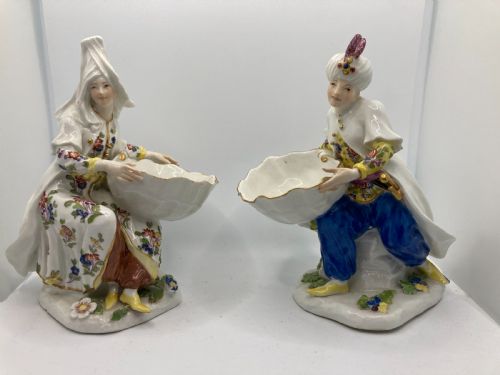
Gilt edge detailing, gold leaf highlights, and gilding frame the moulded rims of eighteenth and nineteenth century porcelain items. Certain decorative pieces incorporate modelled figures in soft-paste porcelain or tinted pottery alongside the primary shell bowl.
Mermaids and cherubs frequently share shell bowls with quails, grasshoppers, and floral sprays across these historical ceramics.
Distinctions in quality
The refinement of the modelling dictates distinction, separating crisply pressed shell ribs from softer, blurred contours where the mould has worn. Hand-painted botanical sprays, bird studies, and armorial details demonstrate superior brushwork against simpler transfer-printed patterns.
The preservation of original gilding and enamel brilliance influences overall merit, alongside the clarity of the porcelain body and the crispness of any associated figural elements.
H and R Daniel·Barr Flight and Barr·Royal Worcester·Chamberlain Worcester·Royal Dux·Meissen·Mason·Old Derby
The Ceramic Shell Dish Glossary
- Pickle dish
- A small, shallow vessel used in eighteenth and nineteenth century dining for serving relishes, pickles, or small condiments. These pieces frequently take naturalistic shell forms to complement formal table settings.
- Sweetmeat stand
- An elevated or footed serving dish designed for confections, nuts, or dried fruits. These multi-tiered or single vessels often utilise scallop shell basins supported on pedestals or feet.
- Vide-poche
- A small tray or bowl intended for emptying pockets, holding small daily accessories or calling cards. In ceramics, these items often feature figural supports leaning against shell-shaped receptacles.
- Comport
- A decorative footed dish or tazza elevated above the table surface for serving fruit or sweetmeats. These pieces form central elements of nineteenth century dessert services.
- Imari
- A style of Japanese export porcelain characterised by underglaze blue, iron red, and gold decoration. These patterns appear on nineteenth century shell-shaped plates influenced by traditional Edo period aesthetics.
Ceramic Shell Dish: Frequently Asked Questions
What were shell dishes used for?
These pieces served practical functions on dining tables as pickle dishes, sweetmeat holders, dessert plates, and comports for fruit. They held small portions of food or confectionery during formal eighteenth and nineteenth century meals.
Over time, many of these items transitioned into purely decorative cabinet pieces, vide-poche trays, or centrepieces designed to display the technical skill of the pottery.
How do I date a porcelain shell dish?
Dating relies on identifying factory marks, paste composition, and painting styles characteristic of specific periods like the eighteenth century or the Regency era. Soft-paste porcelain and hand-painted motifs often indicate earlier production, while later nineteenth century pieces frequently employ different glaze techniques and transfer-printing.
Associated figures, such as Art Nouveau maidens or cherubs, provide clear stylistic markers pointing towards late nineteenth or early twentieth century manufacture.
Are these dishes safe for food use?
Most antique porcelain and earthenware shell dishes function primarily as decorative cabinet plates, display centrepieces, or collection items. Historic glazes and soft-paste bodies from the eighteenth and nineteenth centuries can be sensitive to modern culinary use.
Gentle hand washing preserves fragile enamel decorations, hand-painted details, and delicate gold leaf gilding from deterioration.
What is Japanese Imari on a shell dish?
Japanese Imari describes a distinct decorative tradition featuring a palette of underglaze cobalt blue, iron red, and added gilding. European and Japanese makers adapted these vibrant patterns to fit the fluted contours of shell-shaped plates.
These pieces combine traditional Eastern motifs with European ceramic forms popular during the nineteenth century.