

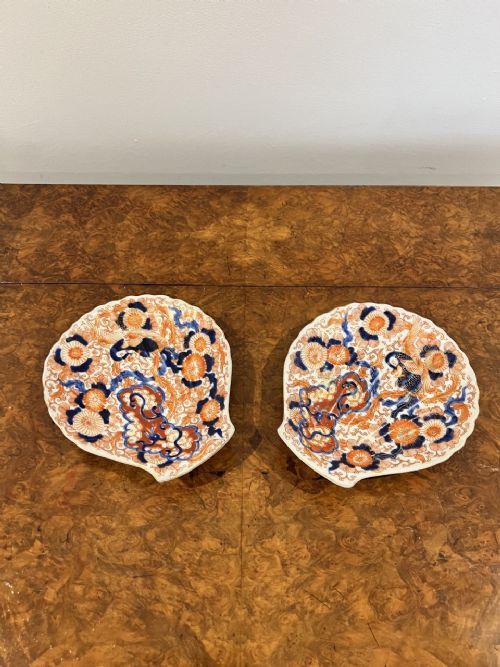


Hand Painted Shell Dish
These hand painted shell dish examples bring organic maritime form to the table, uniting cabinet display with functional service across multiple centuries.
Hand Painted Shell Dish
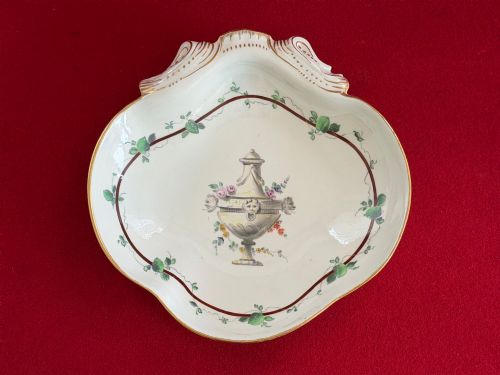
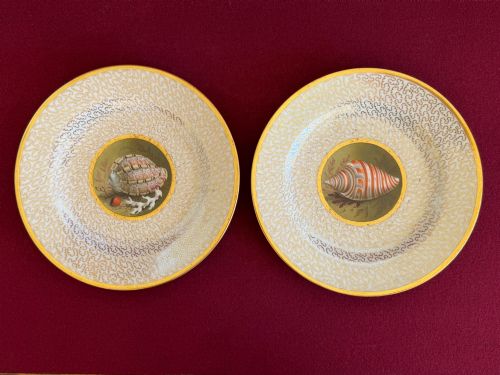
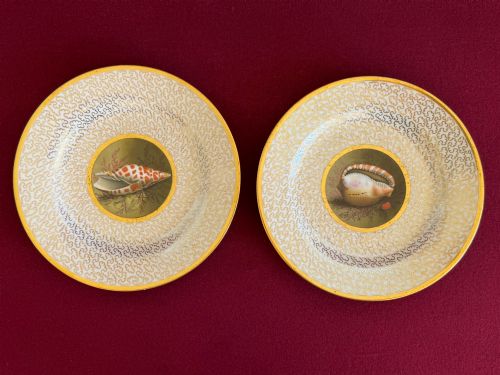
A hand painted shell dish takes the natural fluted contours of scallop and marine shells and translates them into ceramic form. Collectors encounter these pieces primarily as cabinet plates, serving dishes, and decorative vide-poche trays.
The selection ranges widely across periods, including Georgian, Regency, and Victorian eras, alongside later nineteenth and early twentieth century productions. Makers utilised traditional porcelain, earthenware, pearlware, and faience to achieve these curved silhouettes.
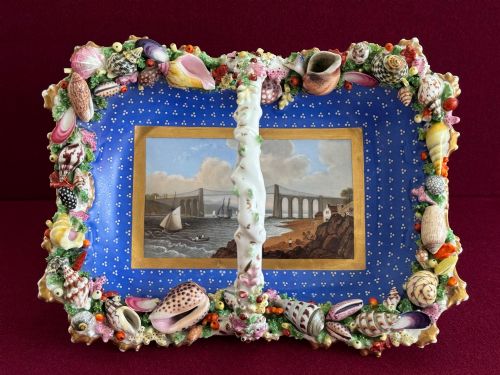
Stylistic influences span from Japanese Imari patterns and French Provincial designs to Rococo Revival flourishes and delicate floral sprays. These pieces frequently serve as centrepieces or decorative baskets, displaying painted landscapes, birds, and fruit.
How they were made
Potters shaped clay and porcelain into asymmetrical shell contours, frequently incorporating moulded handles or feet styled as natural marine elements. Artisans applied hand painted pigments directly onto the ceramic body, often enhancing edges and details with gold leaf.
Glazing processes varied from clear porcelain finishes to tin glazes on faience bodies, sealing the hand painted pigments beneath a protective vitreous layer. Kiln firing fixed the colours and gilding, though earlier Georgian and Regency wares required distinct temperature controls compared to later Victorian pieces.
Hand Painted Shell Dish Retail Price Guide 2026
Typical asking prices for hand painted shell dish among the pieces listed under this phrase on Sellingantiques today, from the lower quarter to the upper quarter. They describe what is for sale here now, not the wider market.
The listings combine British porcelain from Worcester and Coalport with continental faience and Japanese Imari imports spanning the Georgian to Victorian periods.
What varies in quality
The precision and detail of the hand painted decoration define the upper tier of these pieces, particularly when artists render specific natural subjects like fruit or birds. Factory origin plays a role, with established porcelain works demonstrating finer paste composition and more controlled gilding applications.
The crispness of the moulded shell relief and the preservation of delicate edges distinguish finer examples from simpler earthenware productions. Superior items maintain intact gold leaf and vibrant enamel colours without significant rubbing from historical use.
Barr Flight and Barr·Royal Worcester·Chamberlain Worcester·Coalport·H and R Daniel
The Hand Painted Shell Dish Glossary
- Vide-poche
- A small tray or dish intended for emptying pockets of small items. These shallow containers often double as decorative dishes.
- Pearlware
- A refined earthenware developed in the late eighteenth century featuring a slightly bluish glaze that pooled in recesses. It bridges the gap between creamware and true porcelain.
- Imari
- A style of ceramic decoration originating in Japan characterised by underglaze blue and iron red, with supplementary gold. British and European factories frequently imitated this palette.
- Faience
- European tin glazed earthenware, most commonly associated with French and continental production. It provides an opaque white surface suitable for painted scenes.
- Gilt edge
- A thin application of gold leaf bordering the rim of a ceramic piece. It frames the painted central design and indicates a higher finish level.
Hand Painted Shell Dish: Frequently Asked Questions
How were shell dishes used?
Historical records show these pieces functioning as dessert dishes, cake plates, and serving vessels for the table. Their distinct marine forms also suited them for display as cabinet pieces or decorative vide-poche trays.
Over time, smaller versions transitioned into specialised service roles like holding fruit or small personal items in drawing rooms.
How do I identify a Regency period piece?
Regency examples often display the fine porcelain paste and distinctive enamel painting characteristic of early nineteenth century manufactories. Look at the potting technique and any factory marks to confirm the era.
Stylistic cues such as formal floral arrangements and specific gilding styles further help separate these items from later Victorian productions.
Are these dishes safe for food?
Most antique pieces function primarily as decorative items or display plates due to their age and delicate enamel work. Historical glazes and hand painted surfaces can be sensitive to modern detergents and cutlery.
Displaying them in cabinets or using them for dry presentation preserves the painted surfaces and gold leaf.
What is the difference between porcelain and earthenware?
Porcelain provides a denser, vitrified body that often transmits light when held up and supports fine, detailed miniature painting. Earthenware and pearlware bodies are more porous, requiring opaque glazes like tin or specialised lead formulas.
These material differences affect the weight, sound, and visual depth of the hand painted decoration applied across different eras.