


Ceramic Hearth Dogs
These ceramic hearth dogs bring the comforting presence of Victorian Staffordshire spaniels and poodles right to the fireplace.
Ceramic Hearth Dogs
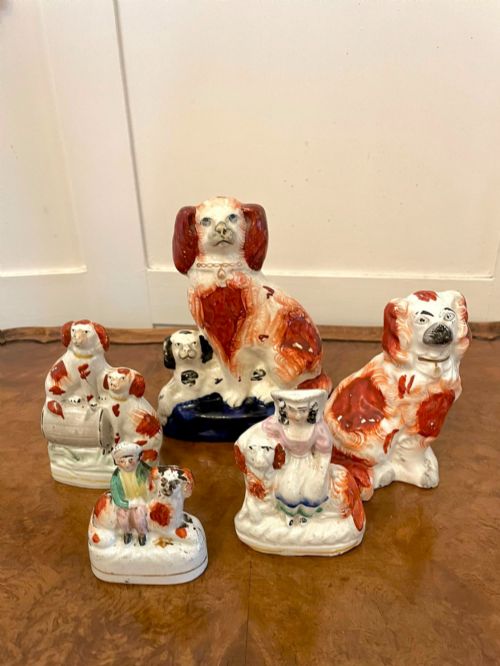
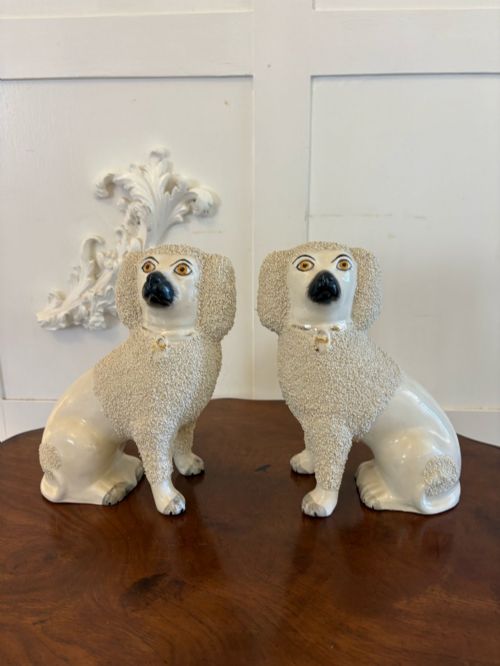
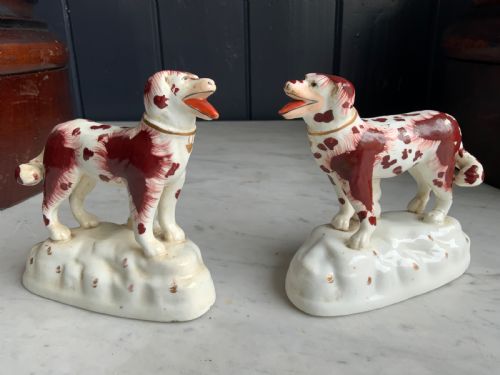
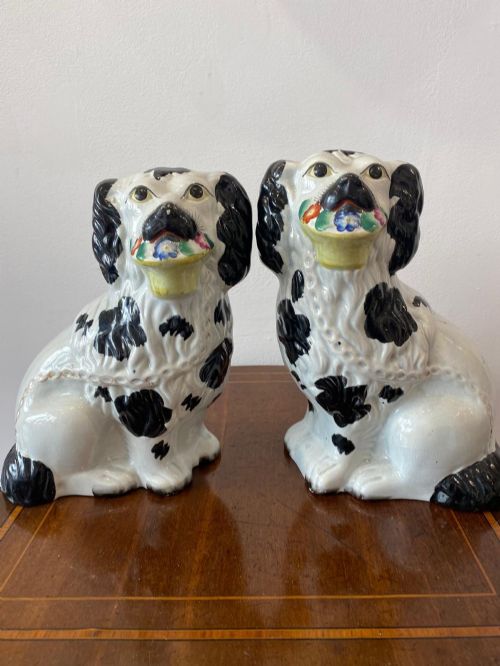
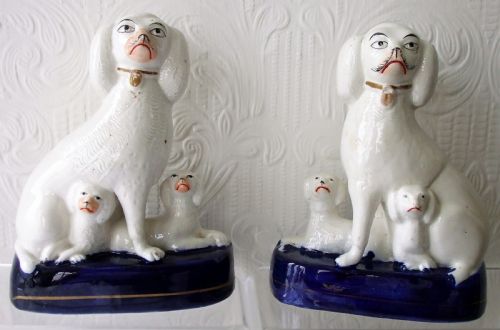
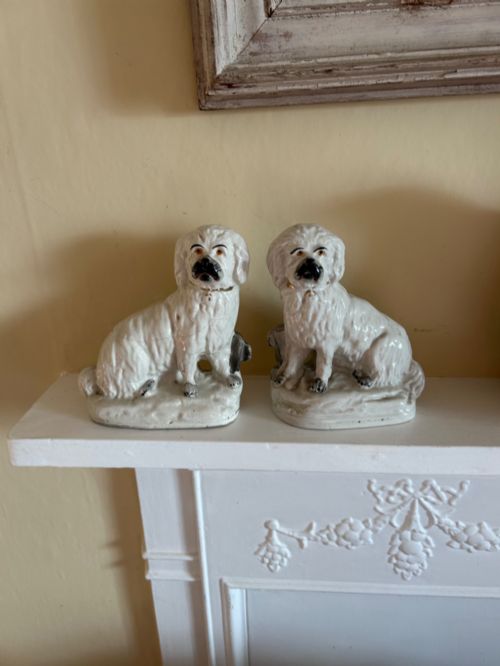
When buyers search for ceramic hearth dogs, they are looking for traditional chimney spaniels, poodles, and terriers designed to sit either side of a fireplace. The pieces on this page are predominantly Victorian Staffordshire pottery figures dating from the nineteenth century, including pairs and groups with pups.
Makers produced these decorative objects in various breeds such as spaniels, poodles, Maltese terriers, and poodles with pups. They appear in configurations ranging from simple seated dogs to elaborate pairs on blue cushions with encrusting.
Pottery, glaze, and hand painting
Some nineteenth-century pieces include applied textural elements such as clay encrusting on cushions or modelled pups alongside the main figure.
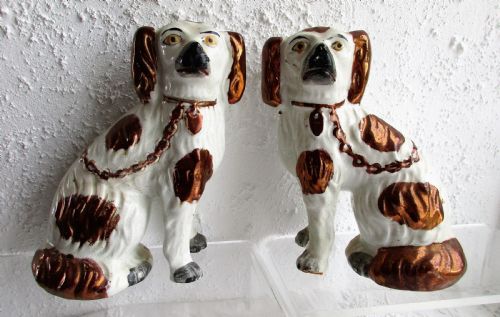
Materials recorded across the selection include earthenware, porcelain, copper lustre, gold leaf, and enamel over lead glaze.
Painting precision and modelling detail
Pairs that match well in size, posture, and decoration command more attention than mismatched groupings assembled from different potteries.
Beswick
The Ceramic Hearth Dogs Glossary
- Earthenware
- A porous pottery body fired at lower temperatures, commonly used for nineteenth-century Staffordshire figures.
- Lead glaze
- A glossy coating applied to pottery before firing that gives the surface its characteristic shine and protects the painted decoration.
- Copper lustre
- A metallic glaze finish that creates a reflective, coppery sheen on the surface of the pottery.
- Enamel
- Opaque coloured decoration applied over the glaze and fired at a lower temperature to add distinct markings and facial details.
- Encrusting
- Applied small pieces of clay used to create textured details such as fur or decorative cushions.
Ceramic Hearth Dogs: Frequently Asked Questions
What are ceramic hearth dogs?
Ceramic hearth dogs are decorative pottery figures, most often Staffordshire spaniels and poodles, made to sit on mantelpieces or hearths during the nineteenth century.
They traditionally stood in matching pairs facing inwards toward the fireplace.
How do I identify Victorian pieces?
Victorian examples typically show the characteristic earthenware bodies, hand-painted enamel markings, and glaze finishes associated with nineteenth-century Staffordshire potteries.
Look for period modelling styles such as seated spaniels and poodles with pups.
Were these dogs meant to be functional?
These figures served purely as decorative ornaments for the home rather than practical utensils.
Victorian households placed them on mantelpieces to bring warmth and symmetry to the room.