




Ceramic Children Ornaments
Ceramic children ornaments are sculptural figures depicting young subjects, prized for capturing domestic innocence across various European traditions.
Ceramic Children Ornaments
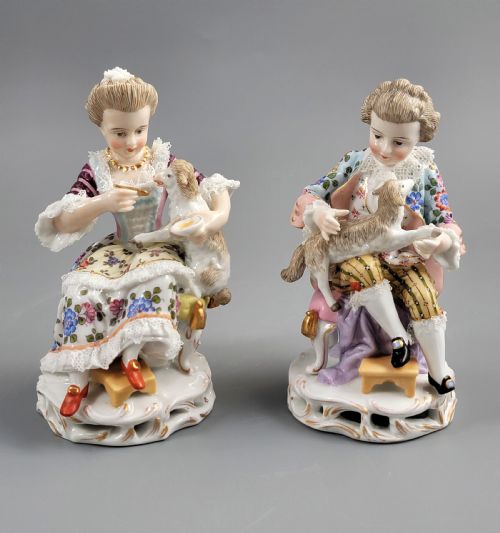
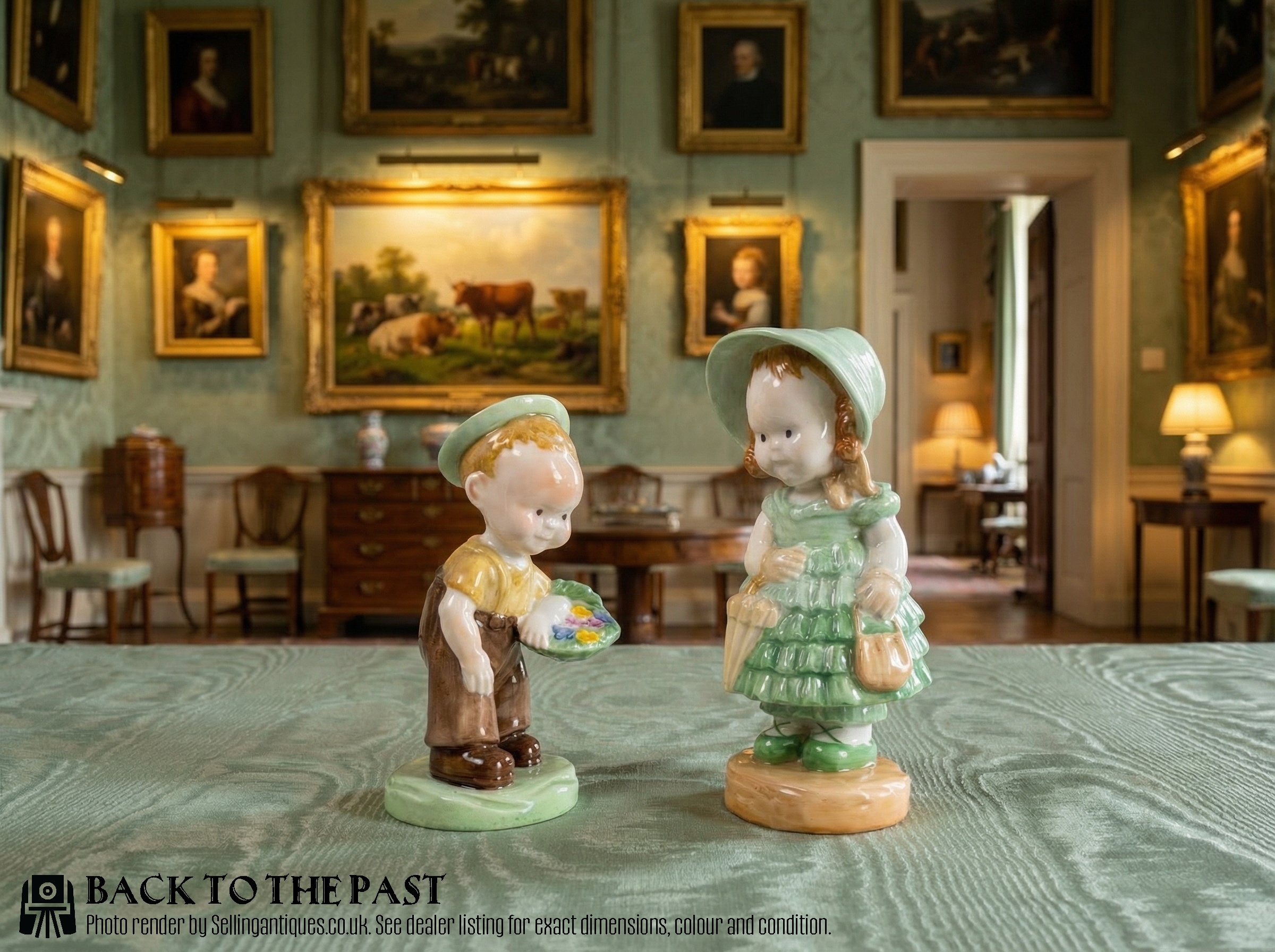
The selections span distinct stylistic movements including Victorian, Rococo Revival, Art Nouveau, and Art Deco. Figures frequently portray everyday childhood scenes, such as youngsters with pets, or allegorical subjects.
Originating largely from English, German, French, and Scandinavian workshops, these pieces arrive in varied mediums like bisque, parianware, and glazed earthenware.
Materials and production methods
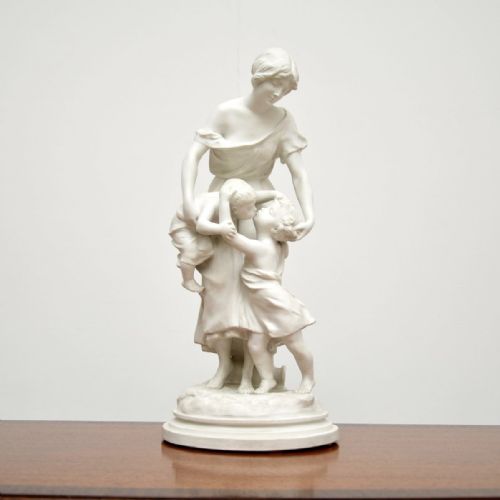
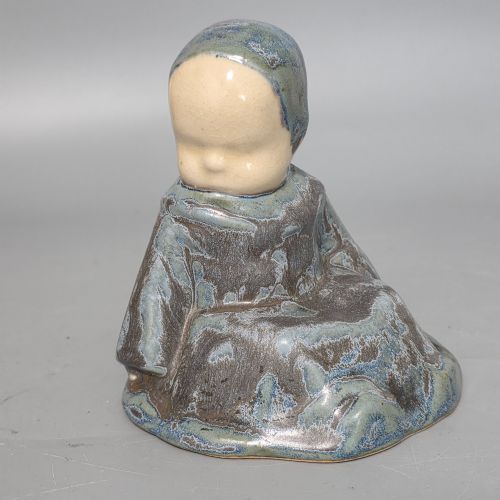
Makers utilised porcelain, earthenware, and terracotta, applying coloured glazes, enamel, and occasional gold leaf accents to surface details. Biscuit porcelain and unglazed bisque porcelain appear frequently, offering a matte finish that highlights sculpted contours without reflective sheen.
Many nineteenth-century examples employ parianware, a fine-grained porcelain resembling marble, while earthenware versions rely on hand-painted overglaze decoration.
Puppies and kittens constantly interrupt these children, appearing reliably trapped in porcelain arms across multiple centuries.
Distinguishing quality in the pieces
Quality rests in the crispness of modelling and the delicacy of hand-painted facial expressions and attire. Superior works display fine anatomical definition and careful attention to secondary details like foliage, garments, and accompanying animals.
Factory standard and individual hand-finishing determine whether a figure achieves lively characterisation or remains stiff and generic.
Royal Dux·Meissen·Royal Copenhagen·Royal Worcester·Ernst Bohne and Soehne·Helena Wolfsohn·Copeland
The Ceramic Children Ornaments Glossary
- Bisque porcelain
- Unglazed porcelain fired once to create a matte, porous surface resembling marble. It allows fine sculptural details to remain crisp.
- Parianware
- A fine white porcelain developed in the nineteenth century to imitate carved marble. It is prized for statuary and portrait busts.
- Earthenware
- Porous pottery fired at lower temperatures than porcelain. It requires a vitreous glaze to hold liquids and achieve a smooth surface.
- Staffordshire pottery
- Earthenware produced in the English region of Staffordshire. Figures from this area often depict rustic subjects and vernacular themes.
- Majolica
- Low-fired earthenware coated with an opaque tin-lead glaze. It is known for vivid, colourful surface decoration.
Ceramic Children Ornaments: Frequently Asked Questions
How do I identify a Victorian ceramic child figure?
Victorian examples often employ Staffordshire earthenware or parianware, frequently depicting children with animals or horses in pastoral settings.
Look for robust modelling, characteristic overglaze enamel colours, and nineteenth-century stylistic conventions.
What is the difference between bisque and porcelain?
Bisque porcelain remains unglazed after firing, presenting a matte, porous texture that resembles carved marble. Standard porcelain receives a glass-like glaze, resulting in a shiny finish.
Both materials share the same high firing origins but differ entirely in surface touch and appearance.
Where were most of these ornaments made?
The pieces originate primarily from European ceramic centres, notably factories in Germany, England, France, and Denmark.
Prominent regional workshops produced everything from utilitarian earthenware figures to fine porcelain cabinet statuary.
How should I display delicate ceramic figures?
Place them on stable, flat surfaces away from high-traffic household areas where they might be easily knocked over.
Keep them out of direct sunlight to protect hand-painted enamel colours and gold leaf accents from fading over time.