



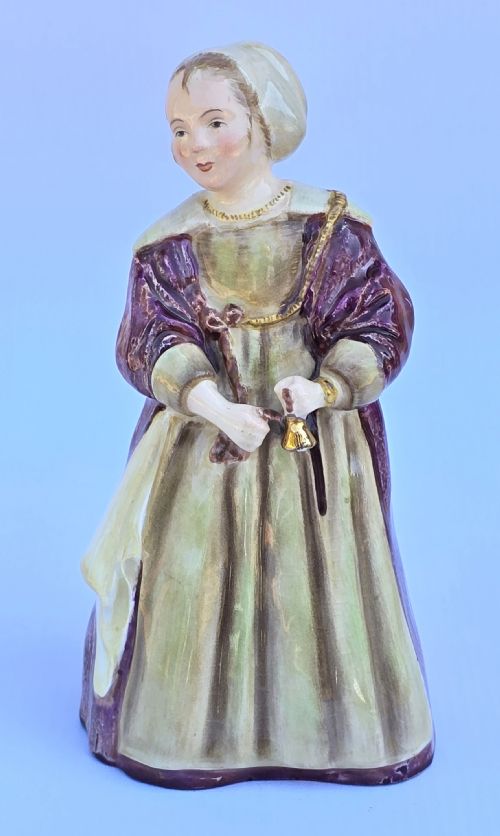


Glazed Earthenware Statuette
A glazed earthenware statuette brings domestic figures, historical portraits, and animal subjects into the interior from the nineteenth and early twentieth centuries.
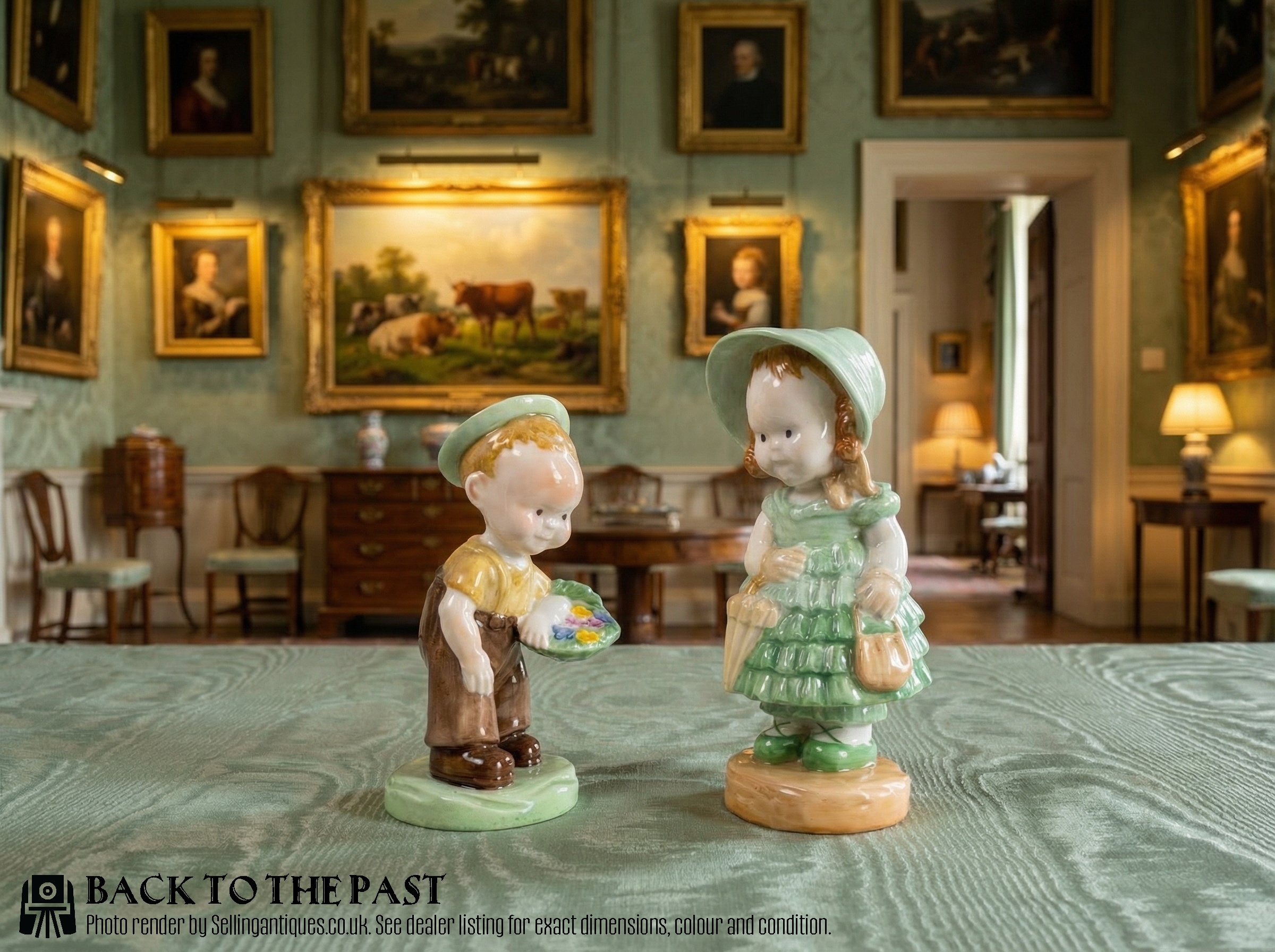
Glazed Earthenware Statuette
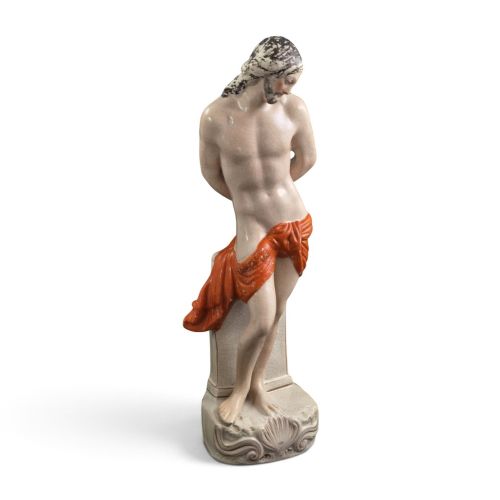
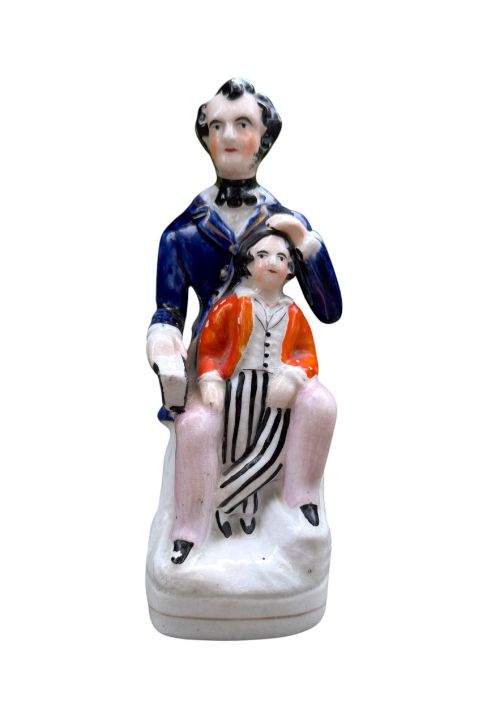
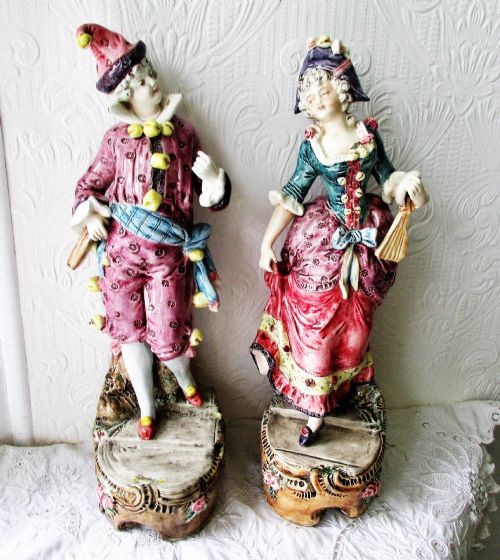
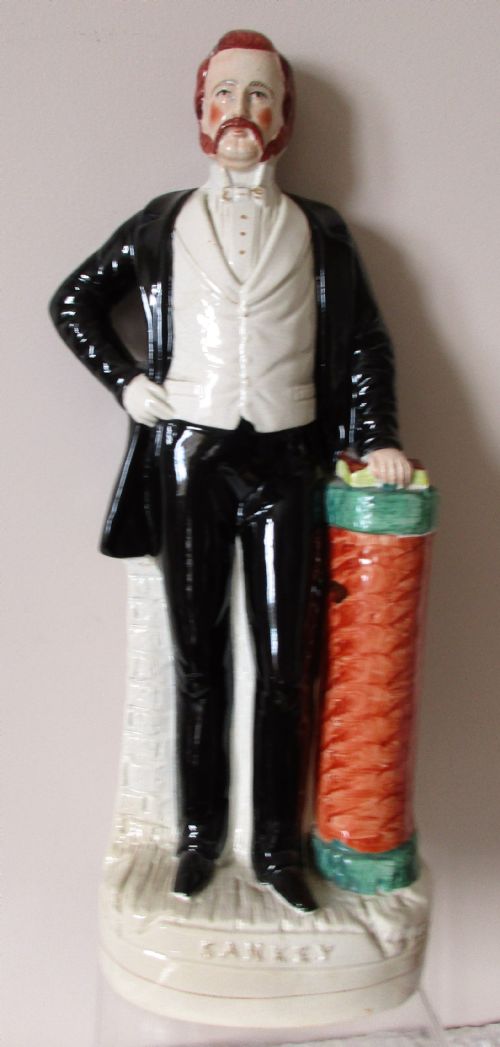
A glazed earthenware statuette is a small ceramic sculpture depicting human subjects, animals, or literary characters. These pieces record historical figures, military leaders, literary pairs, and domestic scenes, serving as decorative mantel ornaments.
The most common examples on this page are nineteenth-century Staffordshire pottery figures and flatbacks. These span Victorian portrait subjects, literary groups like Tam O'Shanter, and pairs of lions or gardeners.
The material ranges from porous earthenware bodies finished with coloured lead glazes to pieces decorated with enamel paints. Production stretches across the Victorian and Edwardian periods into the nineteen-thirties.
How they were made
Makers shaped these earthenware statuettes using press moulds, joining front and back sections together for hollow flatback figures. The unglazed clay bodies were fired once to form biscuit ware before receiving decoration.
Surface colour comes from liquid lead glazes applied directly over the clay or from enamel paints applied over a white ground and fixed in a second low-temperature kiln firing.
Early potters occasionally gave flatback lions human-like front teeth, staring out from Victorian mantelpieces with unexpected expressions.
What varies in quality
The richness of the coloured glaze and the depth of the enamel palette distinguish finer studio or factory output from utilitarian cottage pottery. Well-modelled proportions and stable flatbacks separate superior examples from distorted or heavily restored figures.
Wedgwood and Co. Ltd·Rozenburg·Royal Worcester
The Glazed Earthenware Statuette Glossary
- Earthenware
- Porous pottery fired at lower temperatures than stoneware or porcelain. It requires a glaze to become impermeable to liquids.
- Flatback
- A Staffordshire figure modelled with a finished front and a plain, unglazed or partially glazed flat rear intended to stand against a wall.
- Lead glaze
- A glossy coating containing lead oxide applied to pottery before firing. It produces a shiny finish that intensifies the underlying colours.
- Enamel paint
- Vitreous pigments applied over the fired glaze surface. These require a subsequent low-temperature firing to fuse the colours to the piece.
- Biscuit
- Fired but unglazed ceramic ware. Figures often underwent a preliminary biscuit firing before receiving colour and glaze.
Glazed Earthenware Statuette: Frequently Asked Questions
What are glazed earthenware statuettes?
These pieces are moulded ceramic figures depicting people, animals, and historical events. They were produced primarily in pottery workshops during the nineteenth and early twentieth centuries.
Most examples function as chimney-piece ornaments and display cabinets. They record contemporary news, literary characters, and popular portraits of the era.
How do I identify Victorian Staffordshire figures?
Victorian Staffordshire figures are typically earthenware with painted enamel details and lead glazes. Many feature flat backs designed to face outward from a mantelpiece.
Subjects often include military heroes, royalty, literary pairs, and domestic animals. They display characteristic crazing in the glaze due to age.
How should I clean my statuette?
Dust these ceramic figures gently with a soft, dry brush. Avoid using water or chemical cleaners, as moisture can penetrate porous earthenware bodies and damage old enamel paint.
Keep them away from direct sunlight and damp environments. Stable placement on a flat surface prevents accidental tipping.
Are these figures marked by makers?
Many nineteenth-century earthenware statuettes, particularly Staffordshire pieces, are unmarked. Makers relied on recognizable modelling styles and subject matter rather than factory stamps.
Later pieces from the Edwardian period and the twentieth century more frequently carry printed or impressed factory marks. Unmarked examples are attributed through stylistic comparison.