


Ceramic Cheese Dish Cover
A ceramic cheese dish cover keeps a dairy wedge fresh while looking splendid upon the dining table.
Ceramic Cheese Dish Cover
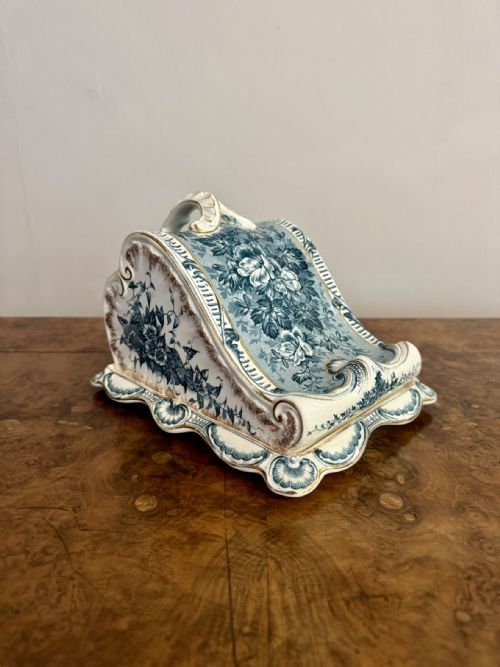
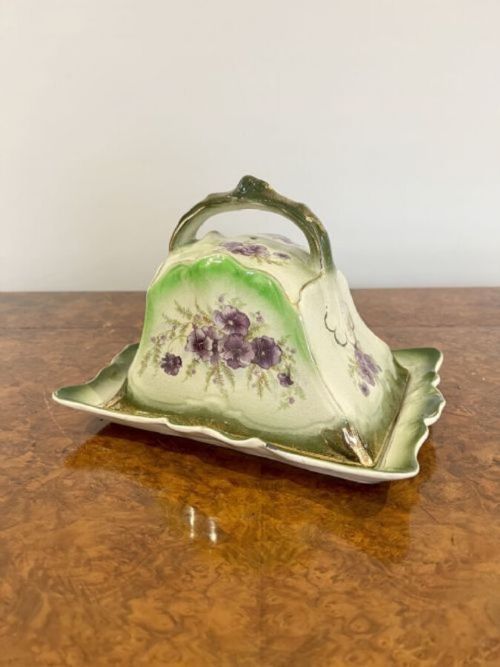
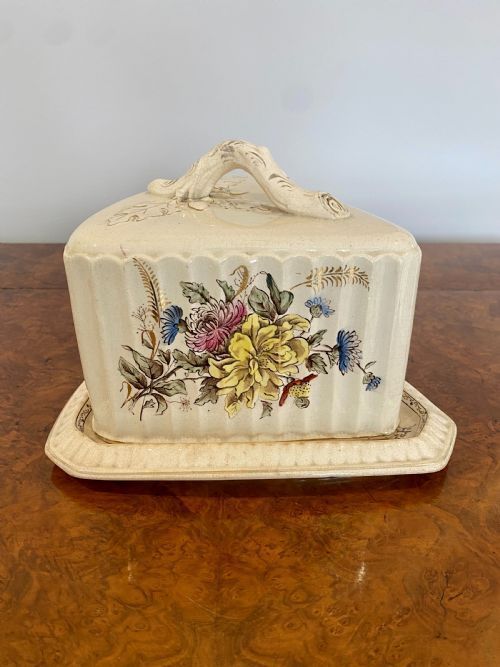
A ceramic cheese dish cover comprises a domed lid and a matching base tray designed specifically for storing and presenting large blocks of cheese. These pieces typically date from the nineteenth century, spanning the Victorian and Edwardian eras.
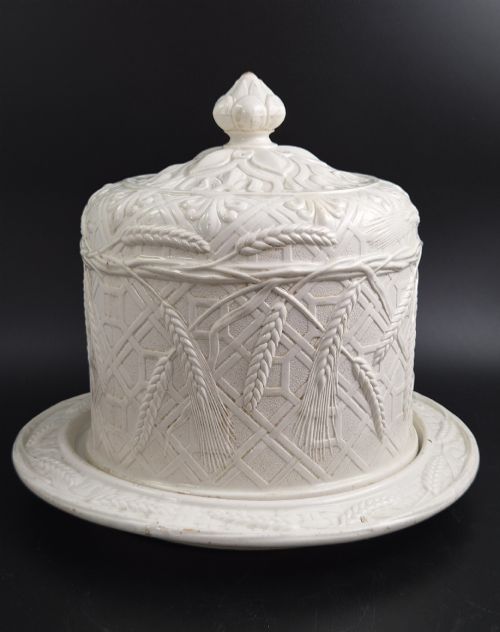
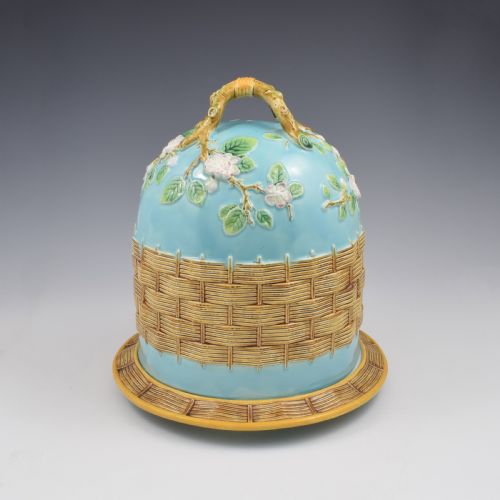
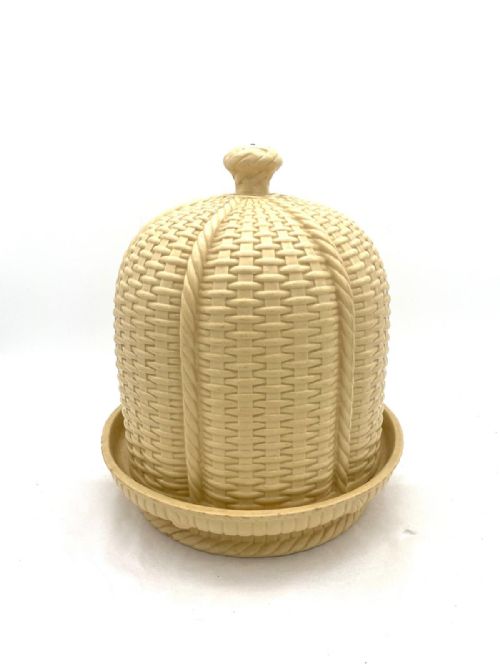
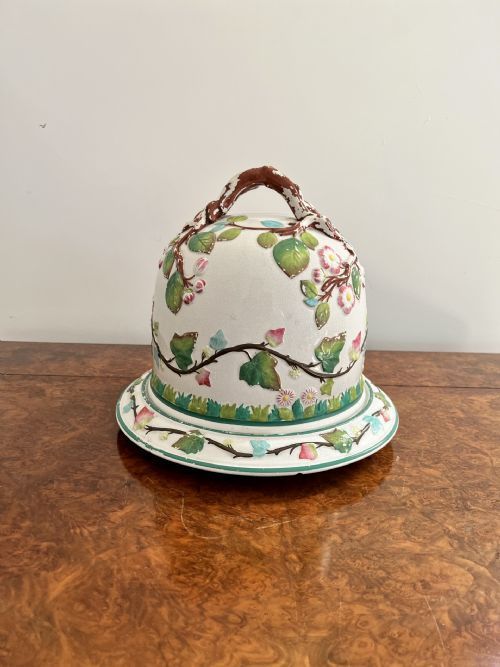
The buyer frequently encounters robust white ironstone and colourful glazed majolica vessels within this category. Many examples take traditional forms such as the tall Stilton bell or feature decorative motifs like basket weave and wheat patterns.
Materials and construction
Potters utilised earthenware, stoneware, and heavy white ironstone to shape the substantial domes and stands required for dairy storage. These ceramic bodies provided the necessary durability and weight for daily use in nineteenth-century households.
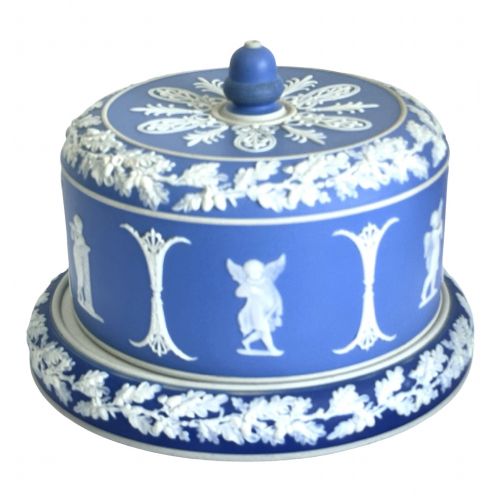
Techniques ranged from high-relief moulding to create textured surfaces like basket weave and apple blossom to the application of glossy coloured glazes and jasperware details.
Current listings feature earthenware, ironstone, and stoneware ceramics spanning the Victorian and Edwardian periods.
Distinguishing finer examples
Quality rests upon the crispness of the moulding and the depth of the relief work, where finer pieces display sharp botanical details and well-defined patterns. The richness of the glaze application and the successful integration of the dome with its matching stand further separate standard production from exceptional work.
George Jones·Wedgwood·James Dudson·Copeland
The Ceramic Cheese Dish Cover Glossary
- Ironstone
- A dense, durable type of earthenware patented in the nineteenth century. It provided a sturdy alternative to porcelain for heavy-duty kitchen and dining wares.
- Majolica
- A colourful Victorian pottery style characterised by lead-glazed earthenware with vibrant modelled relief decoration. It often mimics natural forms like fruit and foliage.
- Jasperware
- A fine-grained, unglazed stoneware developed by Josiah Wedgwood. It is famous for contrasting white cameo reliefs against a coloured background.
- Drabware
- A type of utilitarian ceramic finished in a dull greyish-brown or olive-coloured glaze. It was particularly popular during the early nineteenth century.
Ceramic Cheese Dish Cover: Frequently Asked Questions
How were ceramic cheese dishes used?
Victorian households utilised these covered domes to keep large wedges of cheese moist and to prevent strong odours from escaping into the dining room. The matching stand collected crumbs and served as a tray for direct table presentation.
Servants brought the dish out at the conclusion of the meal, lifting the heavy ceramic bell to reveal the cheese to diners.
What is the difference between a cheese dome and a Stilton bell?
A standard cheese dome is usually wider and accommodates large, squat wedges of cheddar or similar hard cheeses. A Stilton bell is taller and narrower in profile, designed specifically to house a high cylindrical wheel of blue Stilton.
Both variants share the same fundamental purpose of protecting the dairy, but their distinct proportions reflect the traditional shape of the cheese they were made to hold.
How do I date a Victorian cheese dish?
Dating relies heavily on style, ceramic body, and registration marks stamped on the base of the stand. Pieces from the middle of the nineteenth century often favour drabware and simpler ironstone forms, while later Victorian examples frequently showcase elaborate majolica glazes.
Makers named in the registry or stamped into the ceramic can also narrow the production era down to specific decades.
Can I still use an antique cheese dish?
These antique vessels remain fully functional for serving and storing hard cheeses at room temperature. The dense ceramic helps maintain a stable microclimate under the dome.
Careful hand washing is essential to preserve the historic glaze, avoiding thermal shock and abrasive dishwashers that might damage nineteenth-century surfaces.