





Central Medallion Silk Rug
A central medallion silk rug brings luminous depth to a room through intricate weaving traditions spanning Persian, Anatolian, and Central Asian workshops.
Central Medallion Silk Rug
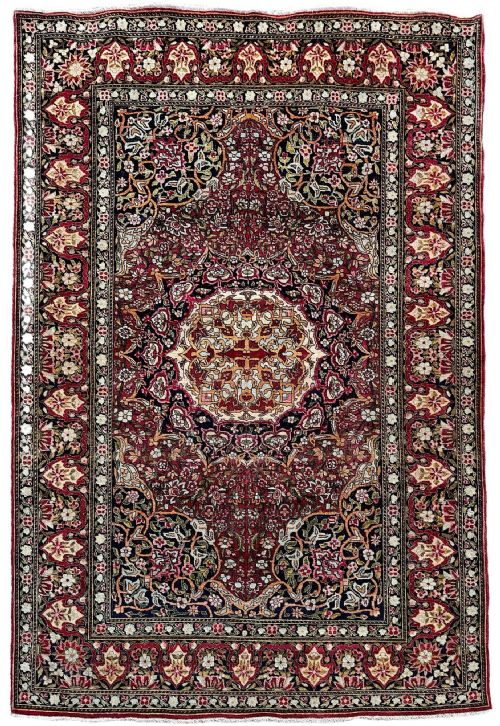
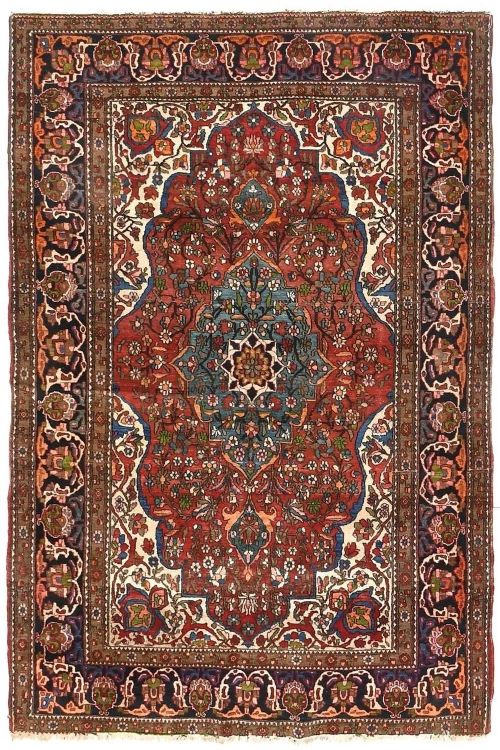
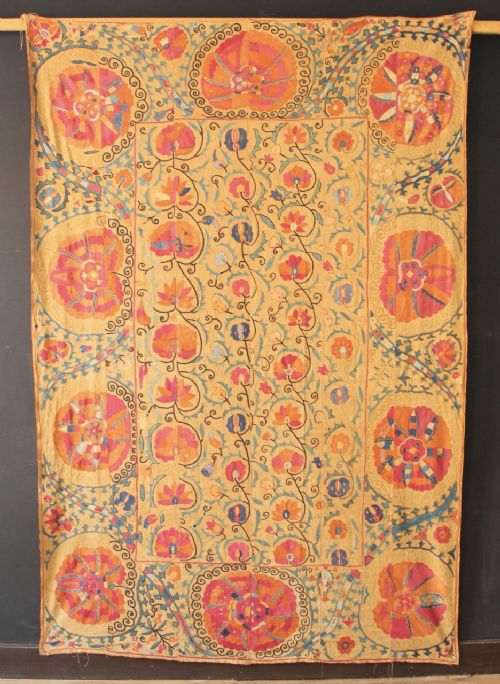
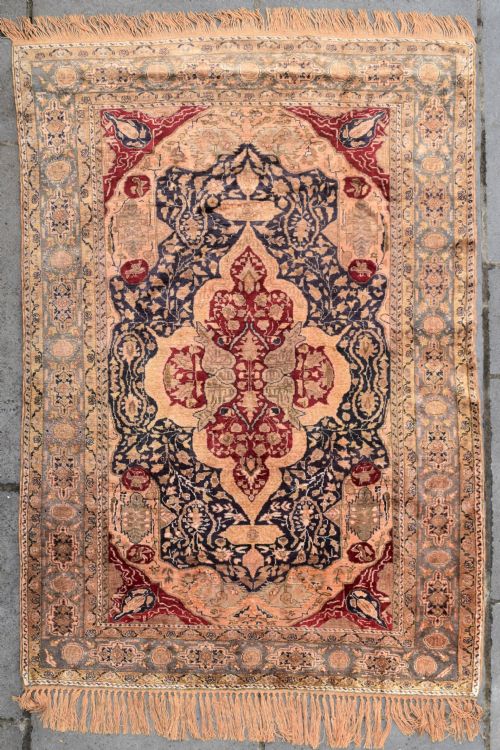
A central medallion silk rug anchors a floor scheme with a distinct focal motif surrounded by floral or geometric fields. When you search for a central medallion silk rug, you encounter pieces originating from Persian centres such as Isfahan, Tabriz, Kashan, and Senneh, alongside Turkish Kayseri and Sivas production and Central Asian Uzbek suzanis.
The materials vary from pure silk and floss silk to hybrid constructions utilising cotton foundations with silk highlights or art silk. Dating ranges from the nineteenth century through the early decades of the twentieth century, encompassing traditional Anatolian and Persian Safavid styles as well as Ottoman Revival and Uzbek folk art.
Formats on this page include area rugs and larger carpets designed for formal rooms or intimate spaces. Buyers frequently encounter regional variations where the central medallion shifts from classical floral curves to tribal geometric interpretations.
What Varies in Quality
Knot density and structural precision dictate the crispness of the central medallion and the overall durability of the textile. Pieces employing pure silk or floss silk throughout demonstrate superior material consistency compared to those relying on art silk or cotton foundations with isolated highlights.
The sophistication of the design execution separates standard regional output from masterwork examples originating in renowned weaving cities like Isfahan or Tabriz. Preservation of the original pile and selvages further defines the standing of an individual piece.
Central Medallion Silk Rug Retail Price Guide 2026
Typical asking prices for central medallion silk rug among the pieces listed under this phrase on Sellingantiques today, from the lower quarter to the upper quarter. They describe what is for sale here now, not the wider market.
Some nineteenth century Suzani weavers left tiny intentional irregularities in their floral repeats, believing absolute perfection belonged to the divine alone.
The Central Medallion Silk Rug Glossary
- Medallion
- A prominent central ornamental motif, often floral or geometric, that defines the primary symmetry of the rug. This design element draws the eye and anchors the composition.
- Suzani
- An embroidered tribal textile originating from Central Asia, typically featuring silk needlework on a cotton ground. These pieces often incorporate bold floral layouts.
- Floss silk
- Unspun or loosely twisted silk fibres that yield an exceptionally soft touch and a high sheen. Weavers utilise this material to catch the light from different angles in the room.
- Art silk
- Artificial silk, commonly known as mercerised cotton or synthetic rayon, used to mimic the appearance and lustre of natural silk. It offers a similar visual effect at a different material grade.
- Kelleh
- A long, narrow carpet format traditionally suited to corridors or specific rectangular room proportions. This format showcases extended field designs alongside the central motif.
Central Medallion Silk Rug: Frequently Asked Questions
How do I clean a silk rug?
Professional specialist cleaning is essential for silk rugs to prevent dye bleeding and fibre distortion. Avoid home steam cleaning or harsh chemical treatments.
Regular gentle vacuuming without a beater bar removes surface dust safely between professional maintenance visits.
Where should I place a silk rug?
These delicate textiles suit low-traffic areas such as bedrooms, quiet studies, or formal sitting rooms where they experience minimal heavy footfall. Placing them out of direct sunlight preserves the subtle pastel and saturated dye colours.
Using a quality rug underlay prevents slipping and cushions the foundation fibres against hard flooring.
How do I identify Persian versus Turkish pieces?
Persian pieces such as Isfahan or Tabriz typically feature curvilinear floral arrangements and intricate medallion geometry woven with refined knot structures. Turkish Kayseri and Sivas rugs often present distinct regional colour palettes and specific medallion scaling.
Examining the structural foundation and knot style helps clarify the specific origin workshop.
What is the difference between pure silk and art silk?
Pure silk consists of natural protein fibres spun from silkworm cocoons, offering authentic drape, natural lustre, and historical longevity. Art silk refers to manufactured substitutes like mercerised cotton or rayon that imitate that initial shine.
Burn or microscopic fibre testing distinguishes natural protein from cellulose or synthetic alternatives.