

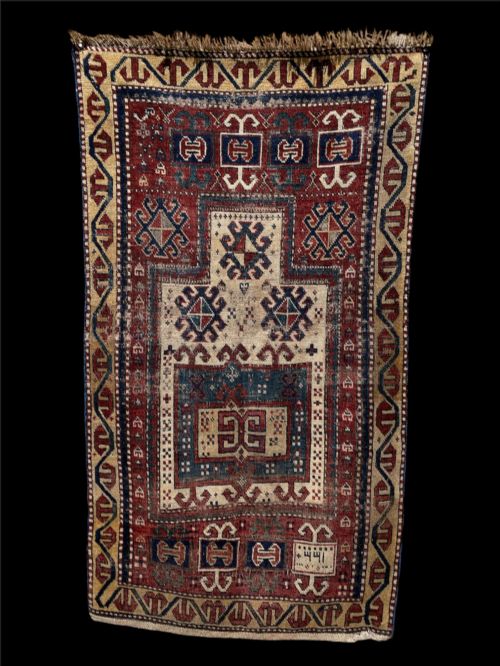


Caucasian Prayer Mat
A caucasian prayer mat brings dense geometric design and rich wool pile into a room, offering centuries of regional weaving heritage.
Caucasian Prayer Mat
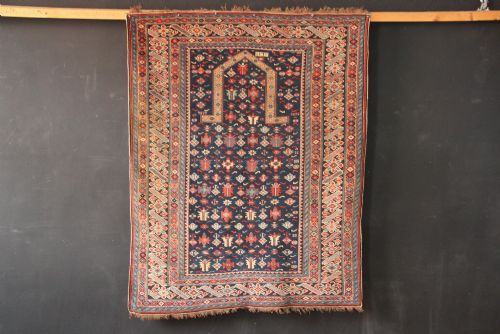
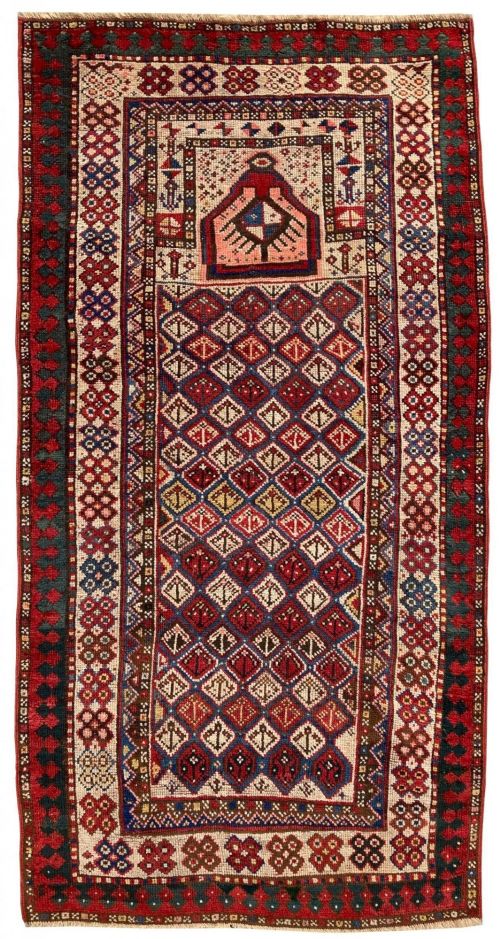
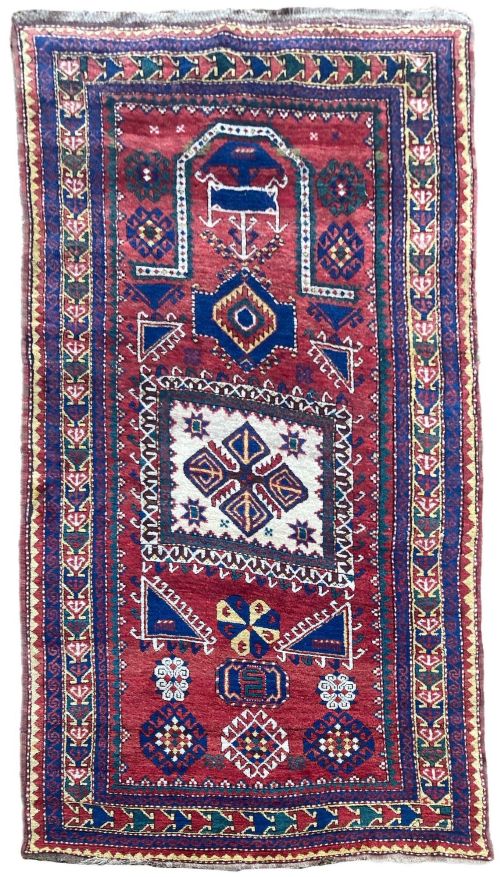
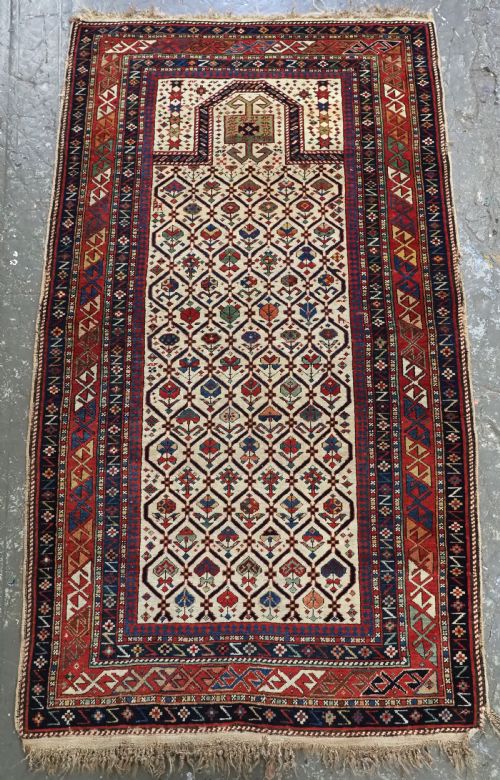
When you search for a caucasian prayer mat, you encounter hand-knotted floor coverings originating from the Caucasus region during the nineteenth century, including Victorian periods. These pieces serve primarily as functional rugs and carpets designed with specific prayer niches.
The versions most commonly met on this page span styles classified as Caucasian and Caucasian Tribal, created in workshops or villages across the Caucasus. They arrive in formats ranging from standard rectangular runners and area rugs to unusual square sizes.
Individual examples carry regional designations such as Fachralo, Kazak, Dagestan, Kuba, Gendje, Lesghi, Karabagh, Karachov, Marasali, Bordjalou, and Shirvan. Each designation indicates specific local traditions in border arrangements and field geometry.
What varies in quality in a caucasian prayer mat
The visual strength of a caucasian prayer mat depends on the clarity of its wool pile and the crispness of its geometric or floral lattice design. Superior examples exhibit exceptional colour saturation and precise execution within regional motifs.
Structural integrity and original condition separate standard utility pieces from exceptional survivors. The handling of borders, the preservation of the pile, and the rarity of background colours dictate the standing of each individual rug.
Caucasian Prayer Mat Retail Price Guide 2026
Typical asking prices for caucasian prayer mat among the pieces listed under this phrase on Sellingantiques today, from the lower quarter to the upper quarter. They describe what is for sale here now, not the wider market.
Specific regional types represented include Kazak, Dagestan, Gendje, Kuba, Lesghi, Karabagh, Marasali, Bordjalou, and Shirvan.
The Caucasian Prayer Mat Glossary
- Boteh
- A stylised almond or pear-shaped motif commonly found in eastern weaving traditions. This pattern appears frequently across regional field designs.
- Kazak
- A style of rug produced by tribal weavers in the southern Caucasus known for bold geometric blocks and strong primary colours. These pieces often display striking visual impact.
- Dagestan
- A designation for rugs originating from the eastern Caucasus mountains, typically characterised by intricate geometric lattices and refined floral details. They show precise wool-work.
- Prayer niche
- The directional arch or mihrab woven into the upper portion of a carpet to indicate the direction of prayer. It defines the primary ritual form of these textiles.
- Gendje
- A classification originating from the town of Gandja in the Caucasus, noted for diagonal stripes and structured floral lattice designs. Such rugs display distinct regional palettes.
Caucasian Prayer Mat: Frequently Asked Questions
What is a caucasian prayer mat?
A caucasian prayer mat is a nineteenth-century hand-knotted woolen rug featuring a distinctive prayer niche or mihrab design. These textiles originate from various tribal and village centres across the Caucasus region.
They combine practical floor covering with symbolic regional artistry, displaying geometric patterns, floral lattices, and characteristic local colour palettes.
How were these rugs used?
These textiles served primarily as portable prayer spaces for individuals, positioned toward the direction of prayer in homes or communal settings. Their dense wool construction provided a clean, durable surface for daily ritual use.
Beyond ritual functions, they operated as valued household furnishings and portable wealth within tribal communities across the Caucasus.
How do I live with one?
Place your rug in a low-traffic area or mount it securely to a wall to protect the historic wool pile from excessive wear. Regular gentle vacuuming without a beater bar helps maintain the fibres.
Keep the textile away from direct, strong sunlight to preserve the natural dyed wool colours against fading over time.
How do I tell types apart?
Distinguish regional types by examining the specific geometry of the borders, the structure of the central field, and the colour combinations. Names like Fachralo, Kazak, or Dagestan point to distinct weaving traditions and village aesthetics.
Pay close attention to motifs such as the boteh or floral lattices, which frequently indicate whether a piece originates from the western or eastern Caucasus.