




Catholic Devotional Statue
A catholic devotional statue brings centuries of intimate domestic prayer and ecclesiastical devotion straight into a modern room.
Catholic Devotional Statue
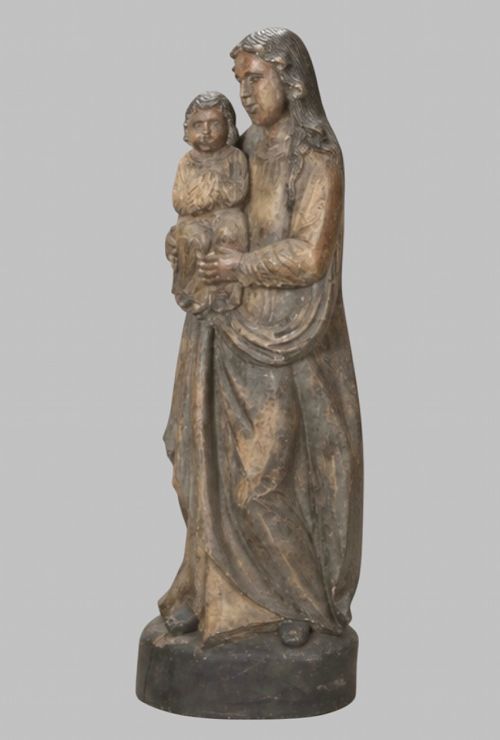
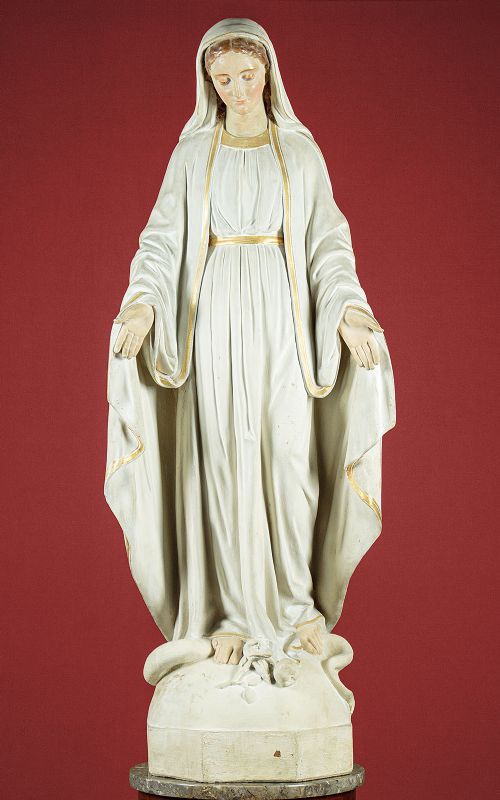
A catholic devotional statue encompasses carved figures of the Madonna and Christ Child, saints, and holy scenes designed for private worship or home altars. These works emerge from distinct regional traditions spanning several centuries, capturing the quiet gravity of historical faith.
The versions most commonly met on this page belong to the nineteenth century and the year nineteen hundred, often rendered in carved wood or polychrome finishes. They take the form of devotional sculptures, home altars, and religious figures created across Italy, Spain, and France.
Regional aesthetics shape these pieces significantly, ranging from Spanish Baroque and Gothic Revival to Italian Folk Art and Spanish Colonial expressions. Each object carries the specific visual language of its origin, reflecting local religious customs and workshop practices.
Materials and Construction
Surface decoration relies heavily on polychrome paintwork and layered pigments to bring realism and depth to the sacred subjects. Terracotta and glass also appear in specific iterations, demonstrating the variety of sculptural methods employed by period makers.
The inventory records pieces originating from Spanish, Italian, and French traditions, encompassing styles from folk art to Gothic Revival.
Judging Quality and Execution
Quality in these sculptures rests upon the finesse of the carving and the subtlety of the polychrome surface treatment. A superior piece displays confident handling of form, particularly in the rendering of hands, drapery folds, and facial expressions.
The preservation of original painted surfaces and gold leaf heavily influences the character of each work. Pieces that retain their early pigment layers without aggressive later repainting offer a more authentic connection to their period of creation.
The Catholic Devotional Statue Glossary
- Polychrome
- Decorated in multiple colours, frequently applied over a gesso ground on carved wooden figures. This technique gives statues a lifelike appearance.
- Home Altar
- A small portable shrine or setup used for private domestic prayer. These structures often house central devotional figures.
- Santos
- A carved figure representing a saint or holy person, originating from Spanish and Latin American traditions. They are often dressed in real fabrics or painted elaborately.
- Pieta
- A subject depicting the Virgin Mary holding the dead body of Christ. It is a central theme in European devotional art.
- Globe de Marie
- A French glass dome enclosure used to protect and display religious statues or mementos. They were popular in nineteenth-century domestic interiors.
Catholic Devotional Statue: Frequently Asked Questions
What is a catholic devotional statue?
A catholic devotional statue is a carved or sculpted representation of holy figures used for prayer and religious contemplation. These pieces range from small home altar figures to larger sculptural works.
They reflect the stylistic traditions of various European regions, including Spain, Italy, and France, across several centuries.
How were these statues used?
These figures were primarily utilised for private prayer within the home or as focal points in small domestic shrines and altars. They helped individuals direct their focus during personal worship and meditation.
Some pieces were also created for ecclesiastical settings or local processions, reflecting community religious life.
How do I date a wooden statue?
Dating relies on examining the tool marks, the composition of the wood, and the ageing of the polychrome paint layers. Stylistic indicators such as Gothic Revival or Baroque influences also point to specific eras.
Comparing the wear patterns and structural joinery helps confirm whether a piece originates from the seventeenth, eighteenth, or nineteenth century.
How should I care for antique wood sculptures?
Antique wooden sculptures require stable indoor humidity and protection from direct sunlight to prevent the wood from splitting and the paint from fading. Dusting should be done gently with a soft, dry brush.
Avoid using liquid cleaners or polishes on polychrome or gilt surfaces, as moisture can damage historic pigments.