


Carved Wood Madonna
A carved wood madonna brings centuries of devotion into a room, taking the form of figures and panels shaped from timber.
Carved Wood Madonna
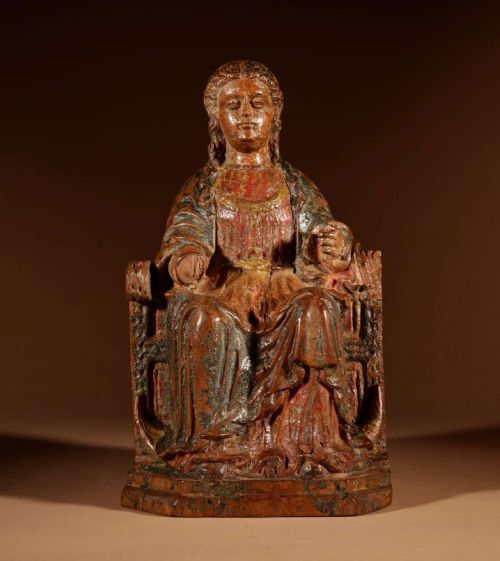
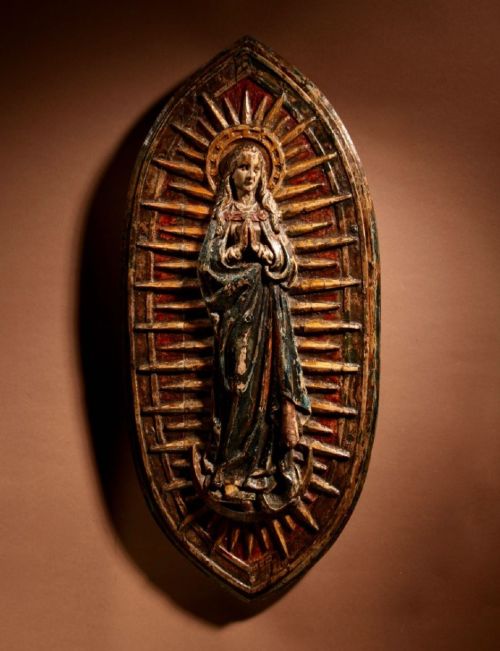
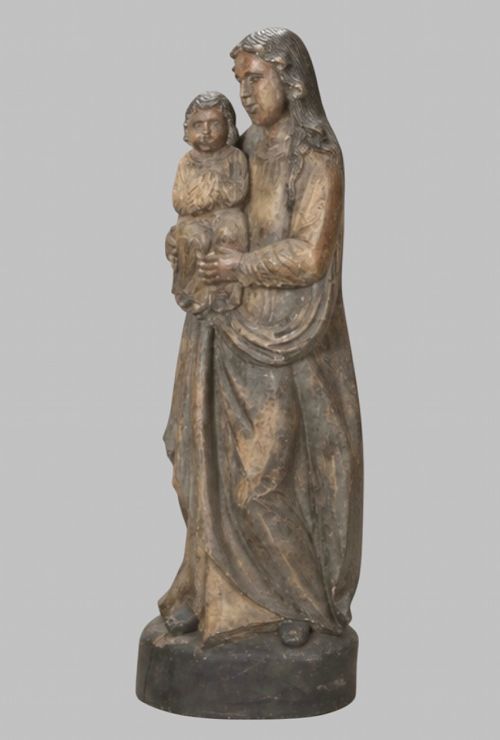
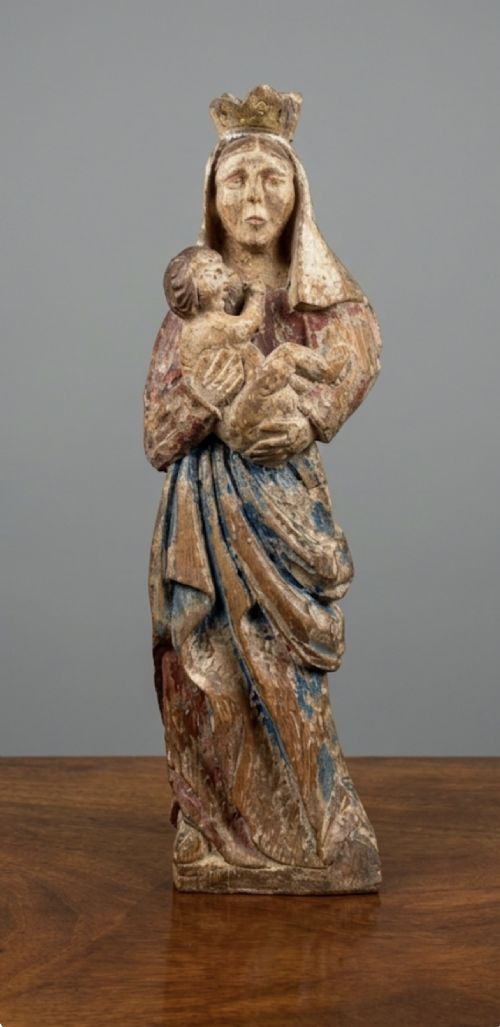
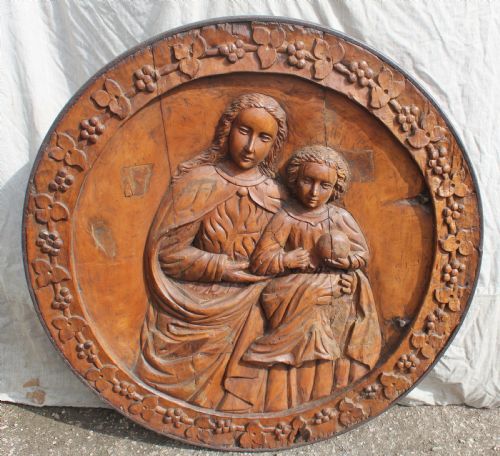
A carved wood madonna represents the Virgin Mary, often shown with the Christ child, seated on a throne, or standing on the half moon. These devotional figures appear across multiple periods, including the sixteenth century and the nineteenth century.
The pieces on this page span several forms, from free-standing religious statues and sculptures to wall plaques and altarpiece panels. Examples range from early Gothic and Renaissance works to later folk art and Spanish colonial pieces.
How they were made
Carvers shaped these figures from timbers such as oak, walnut, applewood, and lime wood. The choice of wood determined the depth of detail achievable in the drapery and facial expressions.
Many surfaces received layers of gesso, polychrome paint, or gold leaf to add colour and reverence. Over the centuries, these painted and gilded finishes weathered and aged in distinct ways.
The archive and active listings include pieces from the pre-sixteenth century, sixteenth century, seventeenth century, eighteenth century, and nineteenth century.
What varies in quality
The strength of the carver's hand dictates the expression of grief, prayer, or maternal tenderness in the face. Finer pieces display fluid movement in the folds of the garments and careful anatomical proportion.
The survival of original surface treatments, including traces of early polychrome paint and gilding, elevates a piece. Workshop skill is visible in the structural joinery and the treatment of the reverse sides.
The Carved Wood Madonna Glossary
- Polychrome
- Painted in several colours. This surface treatment is frequently found on older wooden religious figures.
- Gesso
- A plaster mixture applied to wood as a base for painting or gilding. It provides a smooth surface for detailed decoration.
- Giltwood
- Wood that has been covered with a thin layer of gold leaf. This technique illuminated devotional figures in dimly lit spaces.
- Pieta
- A subject depicting the Virgin Mary supporting the dead body of Christ. These sculptures emphasise sorrow and sacrifice.
- Santos
- A carved wooden religious figure used in domestic or church worship. They are particularly associated with Spanish colonial traditions.
Carved Wood Madonna: Frequently Asked Questions
Where were these figures placed originally?
Many of these sculptures originated as central panels in church altarpieces, niche figures in chapels, or devotional objects for private prayer. Wall plaques and smaller statues served domestic shrines within homes.
Over time, many migrated from ecclesiastical settings into private collections and secular interiors as works of art.
How should I care for a wooden religious figure?
Keep wooden sculptures away from direct heat sources and dramatic humidity fluctuations to prevent the timber from splitting. Dust them gently with a soft, dry brush without applying modern polishes or cleaning agents.
Protecting fragile gesso and polychrome surfaces from moisture ensures the remaining historic finish stays stable.
What is the difference between folk art and church pieces?
Church pieces were typically produced by trained guild carvers working within established Gothic or Renaissance traditions. They exhibit formal anatomical precision and sophisticated theological iconography.
Folk art interpretations and colonial figures often show a more direct, simplified hand and local material choices. Both categories hold distinct places in the history of carved devotion.