


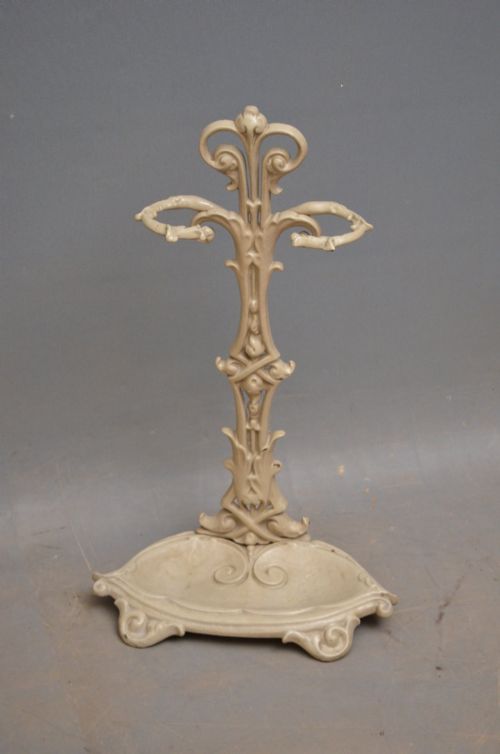
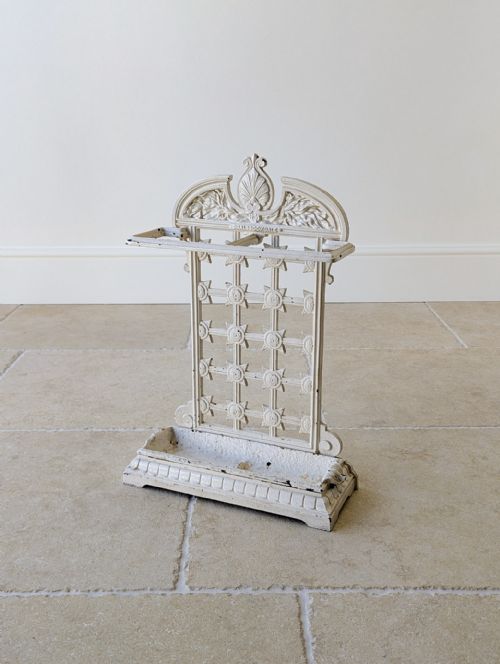
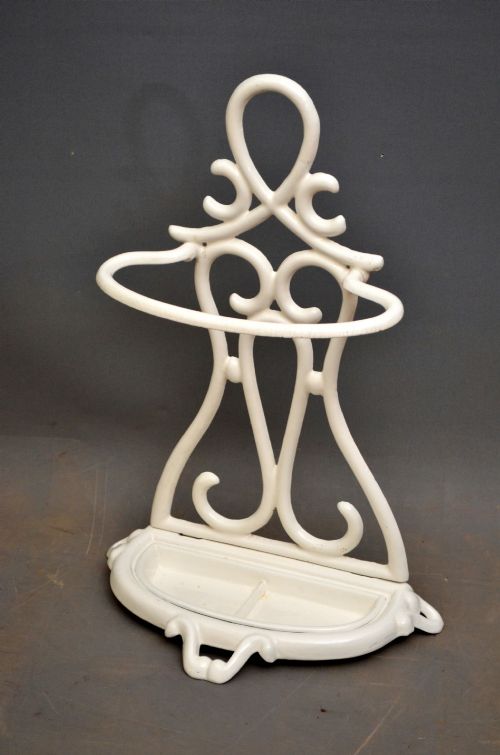
Cast Iron Cane Stand
A cast iron cane stand keeps hallway floors dry while holding walking sticks and umbrellas in heavy, durable metal.
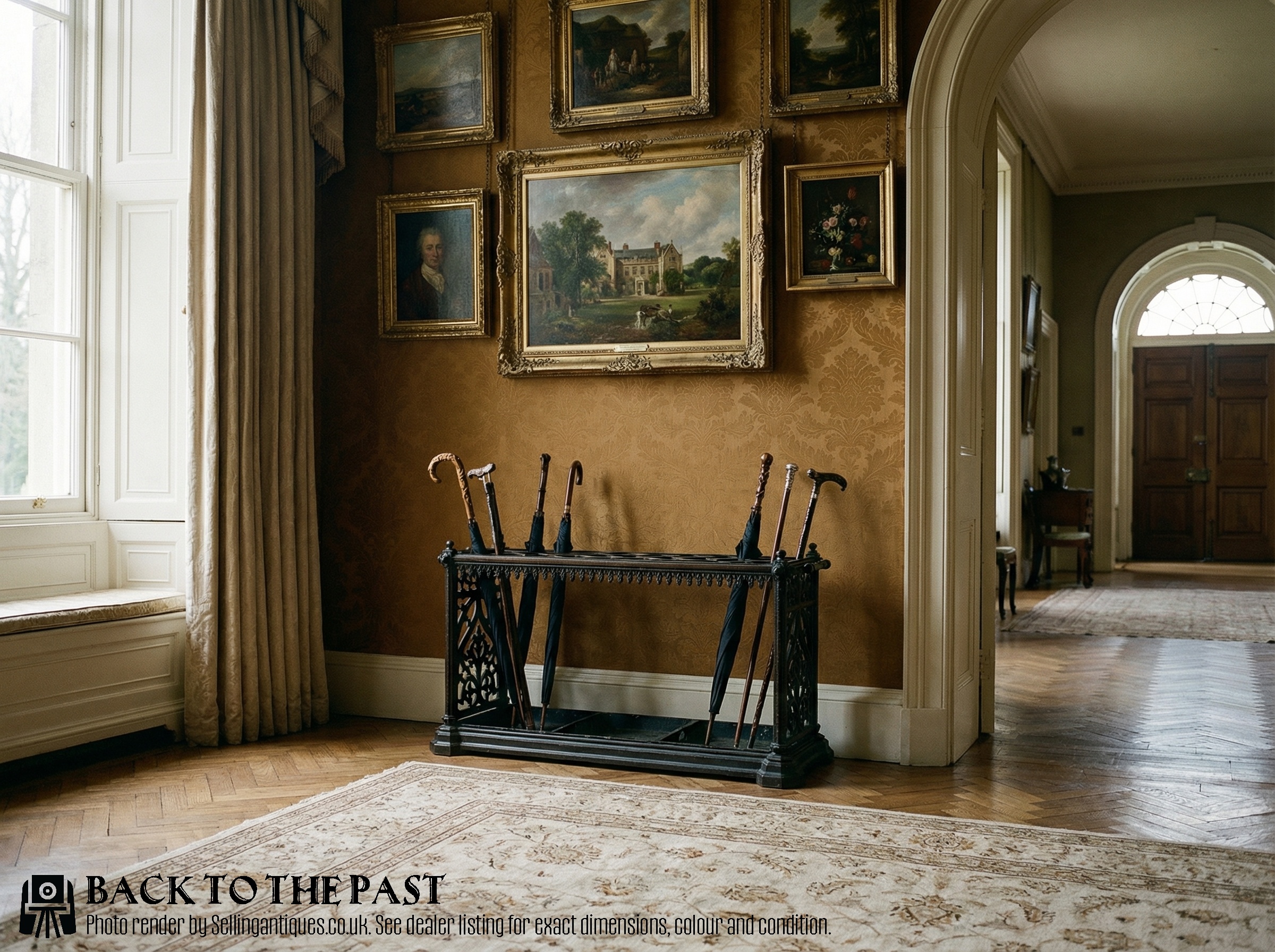
Cast Iron Cane Stand
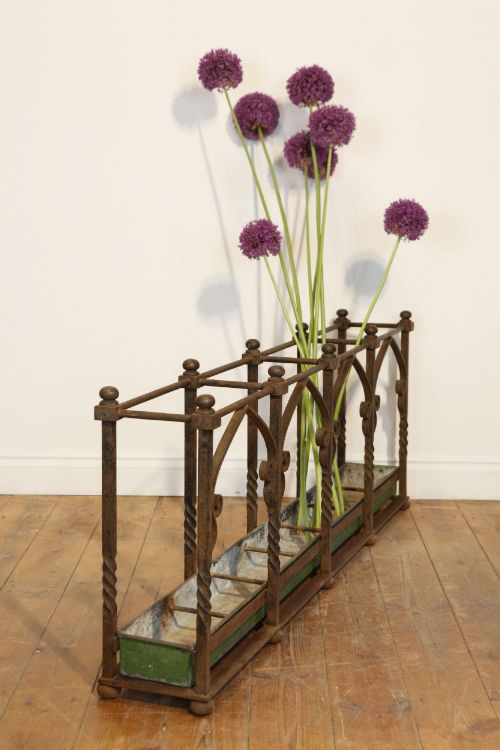
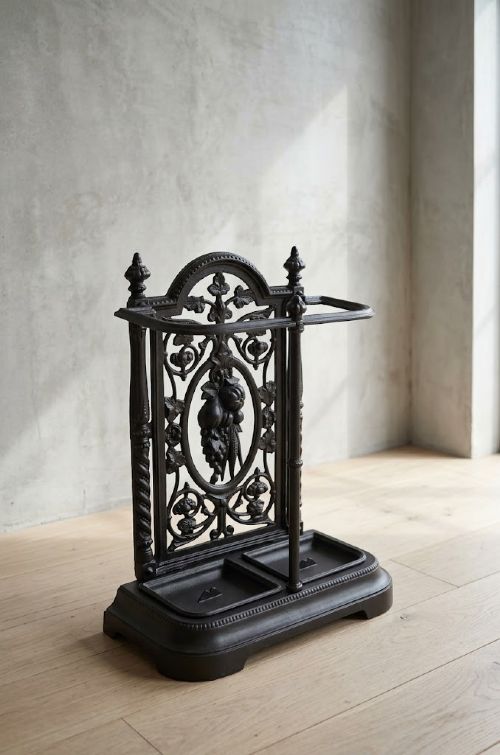
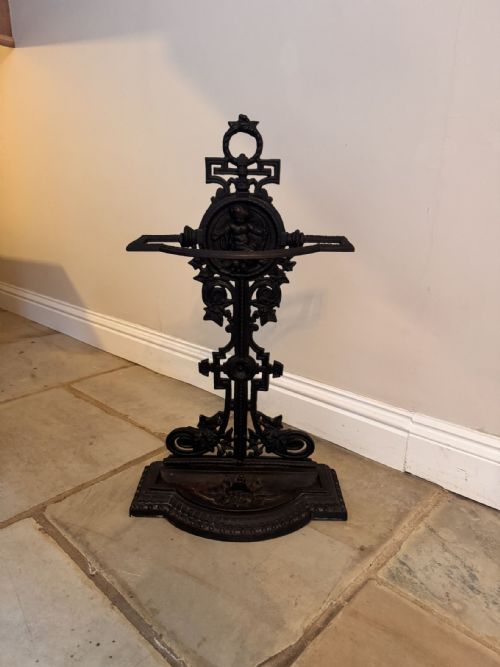
When you search for a cast iron cane stand, you examine utilitarian hall furniture designed to organise walking sticks, canes and umbrellas. These heavy metal holders appear in various configurations, often combining a rigid metal frame with an integrated drip tray at the base.
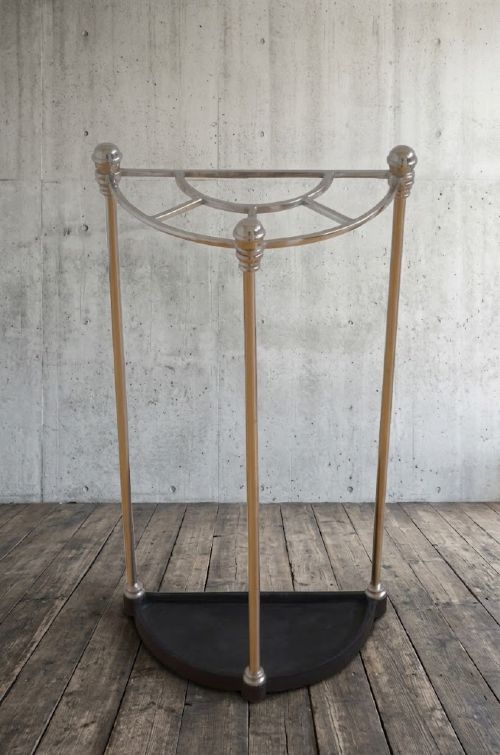
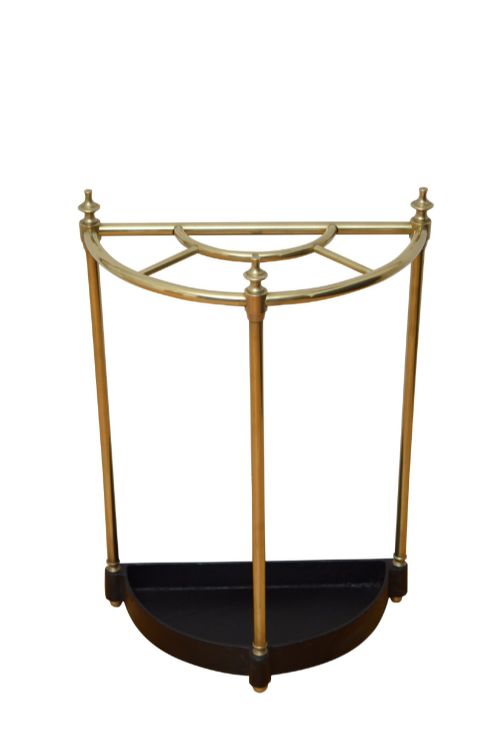
You are most likely to meet Victorian and 19th-century examples on this page, alongside Edwardian and Art Deco pieces. Forms range from straightforward upright designs to semi-circular demi-lune shapes intended to sit flush against hallway walls.
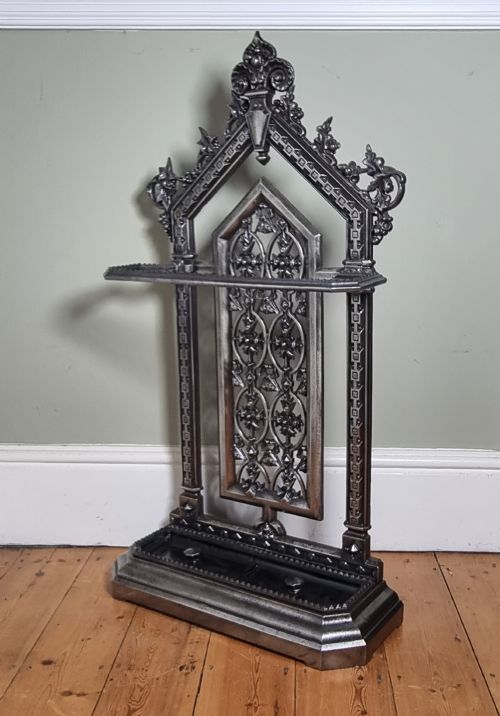
Makers and foundries stamped many of these utilitarian objects with registry marks or company names on the reverse or base. Styles shift from plain utility pieces to ornate Victorian, Gothic, Aesthetic Movement and Art Nouveau patterns.

Materials and construction
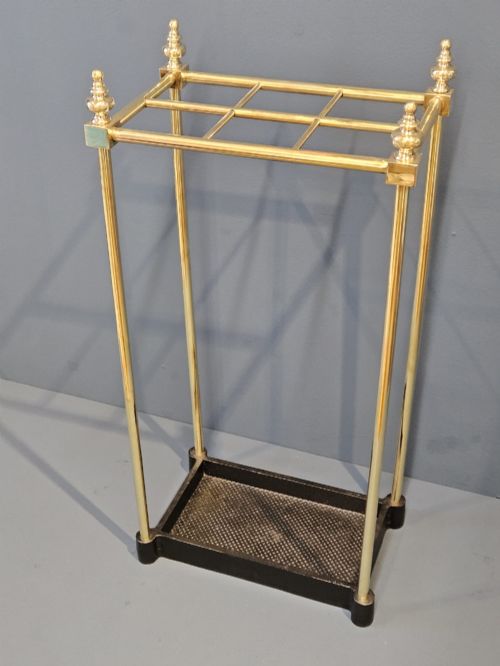
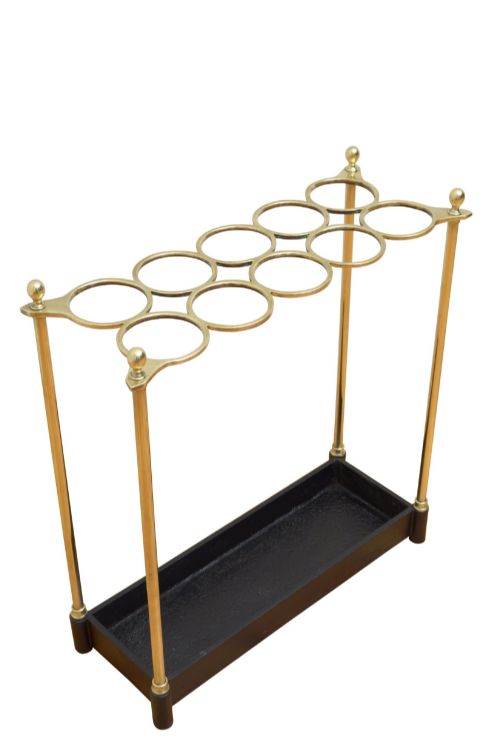
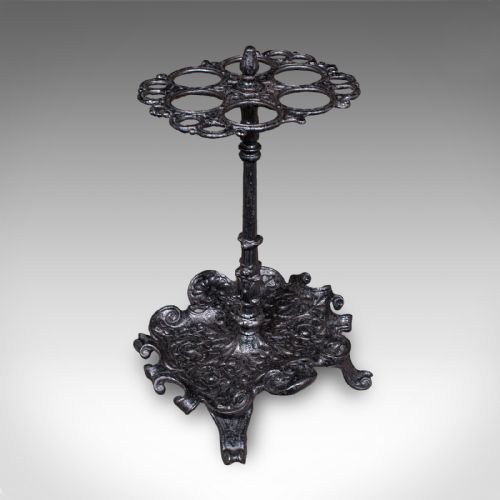
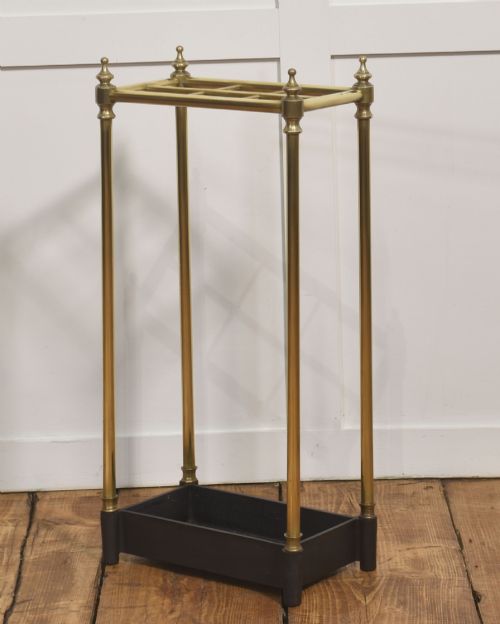
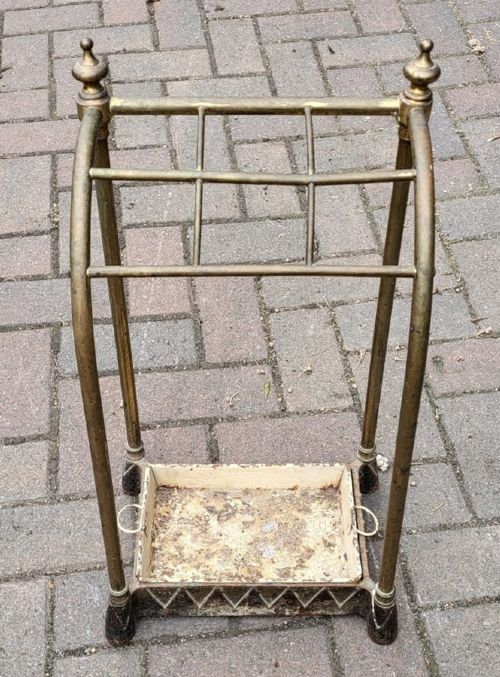
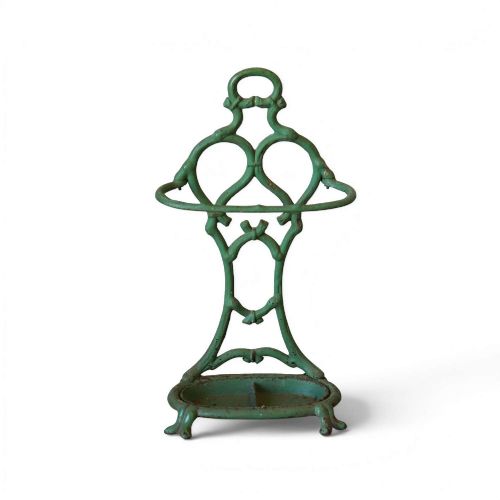
Foundries poured molten iron into sand moulds to create the rigid frameworks of these stands, often incorporating intricate pierced scrollwork or figural elements. Manufacturers combined this heavy metal base structure with brass rails, steel rods, or removable enamel drip pans.
Surface finishes varied from plain painted cast iron to decorative nickel plating or white enamel linings inside the collection trays. Makers also utilised tubular metal and brass components to add contrasting metallic highlights to the dark iron structures.
Cast Iron Cane Stand Retail Price Guide 2026
Typical asking prices for cast iron cane stand among the pieces listed under this phrase on Sellingantiques today, from the lower quarter to the upper quarter. They describe what is for sale here now, not the wider market.
Listings feature cast iron alongside brass, steel, nickel plating and tubular metal.
Standards of craftsmanship
The distinction between ordinary utility items and finer hall furniture rests in the crispness of the foundry casting and the complexity of the design. Sharply defined relief work on figural or botanical patterns indicates careful moulding and superior workmanship.
Heavier gauge metal and complete original drip trays separate well-preserved examples from altered or incomplete pieces. Foundries known for distinct artistic collaborations or registered designs achieve stronger recognition than anonymous workshop production.
Coalbrookdale·Thomas Jeckyll·Falkirk Ironworks·A Kenrick & Sons
The Cast Iron Cane Stand Glossary
- Demi-Lune
- Half-moon shape designed to fit flat against a hallway wall.
- Drip Tray
- Removable metal or enamel pan at the base that catches water from wet umbrellas.
- Aesthetic Movement
- Design style of the late nineteenth century prioritising visual beauty over strict utility.
- Faux Bois
- Surface decoration or casting modelled to imitate the texture of natural wood.
- Finial
- Decorative ornamental terminal fixed to the top of upright support rods.
Cast Iron Cane Stand: Frequently Asked Questions
What is a cast iron cane stand used for?
These holders organise walking sticks, umbrellas and parasols in entrance halls and boot rooms. The heavy frame supports long items upright while the base tray catches rainwater.
Historically, they served visitors and residents by keeping hallways tidy and protecting floors from damp weather.
How do I identify the period of a stand?
Stylistic clues such as Aesthetic Movement motifs or Art Nouveau curves point to specific decades of production. Victorian examples often feature heavy Gothic or floral ironwork cast in British foundries.
Maker stamps and registry numbers cast into the iron provide precise dates of manufacture and origin.
How do I care for a cast iron stand?
Keep the metal dry and clean away dust from intricate scrollwork using a soft brush. Periodically check that enamel or metal drip trays are clear of standing moisture.
Avoid harsh chemical cleaners that might strip original painted surfaces or protective finishes.