
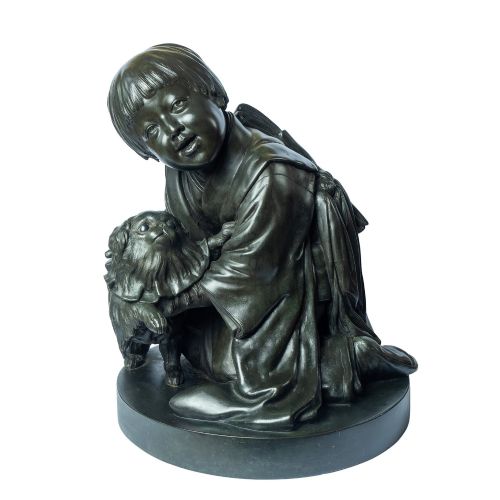


Cast Bronze Dog Figure
A cast bronze dog figure brings sculptural life to a desk or mantelpiece, capturing canine character in enduring metal.
Cast Bronze Dog Figure
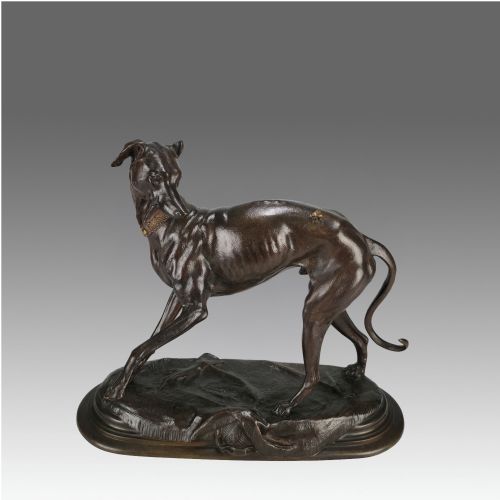
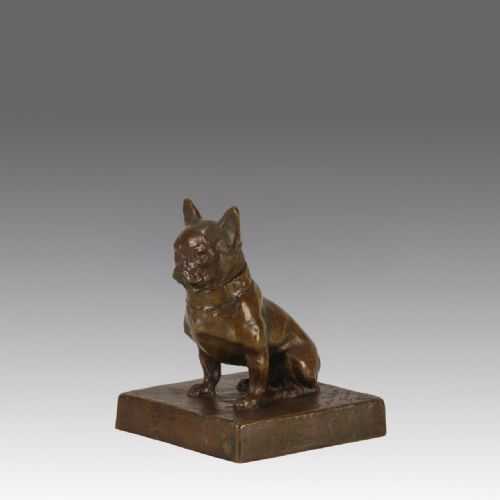
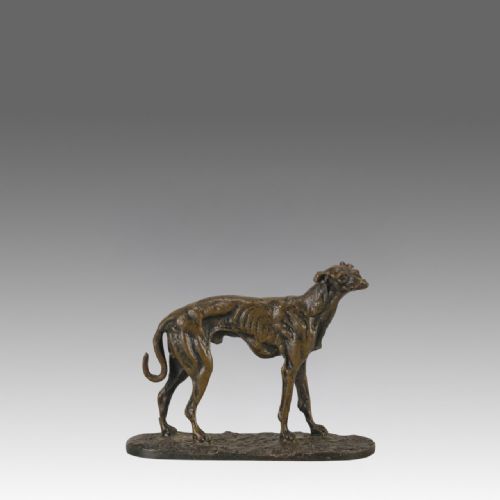
A cast bronze dog figure captures domestic pets and working dogs in metal, spanning the nineteenth and early twentieth centuries. These sculptures take the form of greyhounds, pugs, terriers, and gundogs modelled by European and Japanese makers.
The most common examples on this page are French animalier bronzes from the nineteenth century, often mounted on marble or cast as desk ornaments. Collectors also encounter Victorian doorstops and Austrian cold painted pieces.
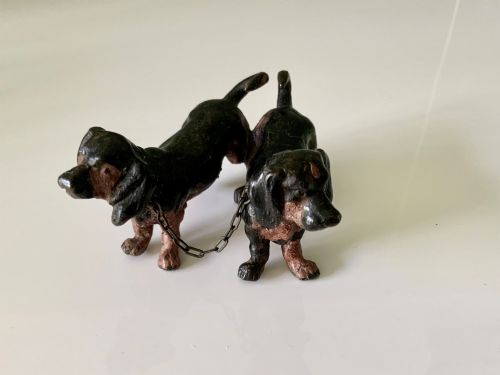
Many works show distinct breeds like dachshunds, poodles, and spaniels engaged in natural movements, from retrievers with game to resting hounds. These items function variously as paperweights, inkwells, night lights, and standalone ornaments.
How They Were Made
Foundry workers utilised the lost-wax casting method or sand-casting techniques to shape molten metal into complex animal forms. The resulting metal work was then chased by hand to sharpen details in fur, musculature, and collars.
Patination involved applying chemical solutions to heated metal surfaces to achieve rich brown, green, or black tones. Some figures received cold painted polychrome enamel decoration applied directly over the bronze.
Many smaller sculptures and inkwells were mounted onto bases of veined marble, slate, or combined with brass and cast iron fittings.
A cast iron spaniel stands ready to prop open a heavy Victorian door.
What Varies in Quality
The crispness of the chasing and hand-finishing defines the best pieces, where muscle tension and facial expressions remain sharp. Weaker casts lose anatomical detail in the fur and paws due to worn moulds or hurried cleanup.
Foundry marks and signatures from established French animalier sculptors or major casting houses indicate higher workshop standards. Unsigned posthumous casts often display softer contours and less nuanced surface patination.
The integration of functional elements, such as hinged inkwell lids or fitted marble plinths, distinguishes superior decorative objects from standard production pieces.
Alfred Barye·P J Mene·Jules Moigniez·Arthur Waagen·Louis Riche·Christophe Fratin·Edith Parsons·Dora Heber·Joseph Francois Victor Chemin·Masaaki·Dubucand
The Cast Bronze Dog Figure Glossary
- Animalier
- A nineteenth-century artistic movement focused on the realistic depiction of animals, particularly in sculpture. French artists dominated this school, producing dynamic studies of hounds and wild beasts.
- Cold painted
- A technique where polychrome oil or enamel paints are applied to unheated bronze figures. This method was widely used on Austrian cabinet bronzes to create colourful realism.
- Lost-wax casting
- A historic method of metal casting in which a molten metal is poured into a mould that has been created by means of a wax model. Once the mould is set, the wax is burned away.
- Patina
- The chemical coloration or surface film that develops on bronze over time or through artificial ageing. A good patina enhances the depth and texture of the metal.
- Okimono
- A Japanese decorative figurine intended for display on a shelf or in a traditional alcove. These objects demonstrate exceptional precision in metalwork and casting.
Cast Bronze Dog Figure: Frequently Asked Questions
What is an animalier bronze?
An animalier bronze is a nineteenth-century sculpture focused on realistic animal anatomy and behaviour. These works were produced primarily by European artists who studied animals in motion.
Such sculptures range from small cabinet figures to large table ornaments, often depicting dogs, horses, and wildlife with naturalistic precision.
How do I identify a cold painted bronze?
Cold painted bronzes feature hand-applied enamel colours over the metal surface rather than a chemical patina. The paint sits directly on the bronze and shows visible brushwork under magnification.
These pieces often depict smaller dogs like pugs and dachshunds with realistic facial expressions and coloured coats.
Are these figures solid bronze?
Many nineteenth-century sculptures are hollow-cast to save metal and weight, while smaller decorative items and figurines are sometimes cast solid. Foundry workers used the lost-wax or sand-casting method to achieve these hollow forms.
Heavier items on marble bases may incorporate internal mounting bolts or weighted elements to ensure stability on furniture.