


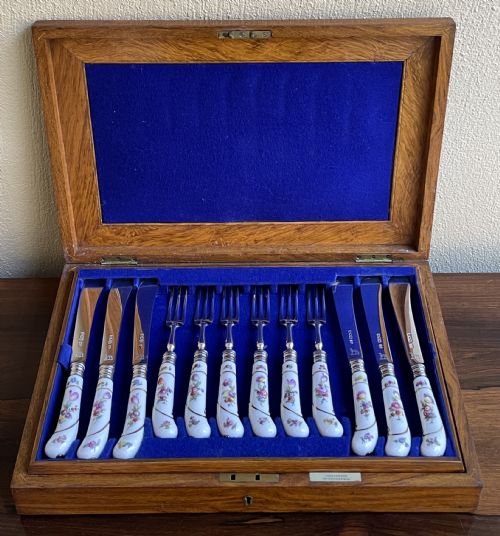


Cased Victorian Silver Plate
These cased victorian silver plate items bring fitted elegance to formal dining and travel, offering matched sets preserved in their original protective boxes.
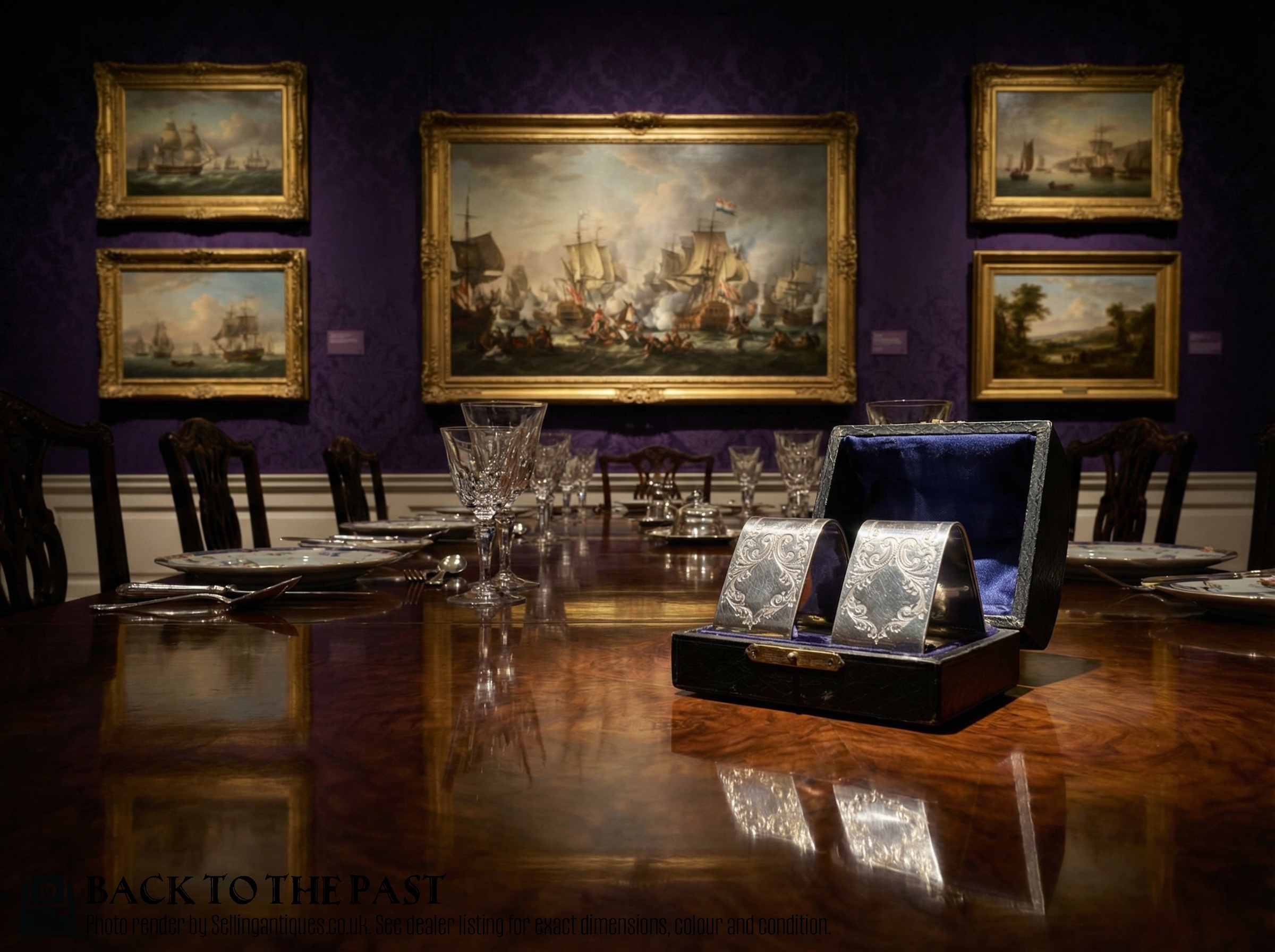
Cased Victorian Silver Plate
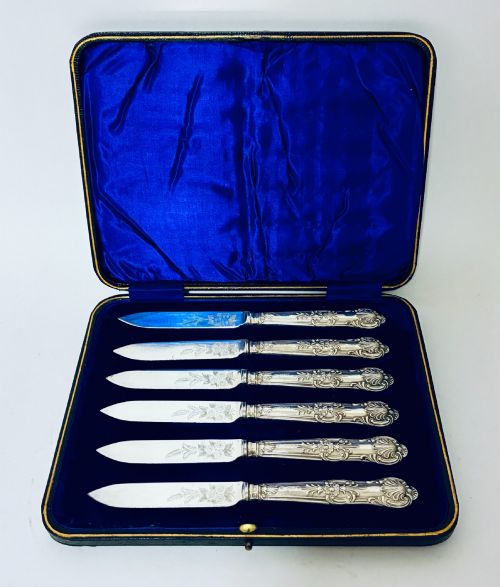
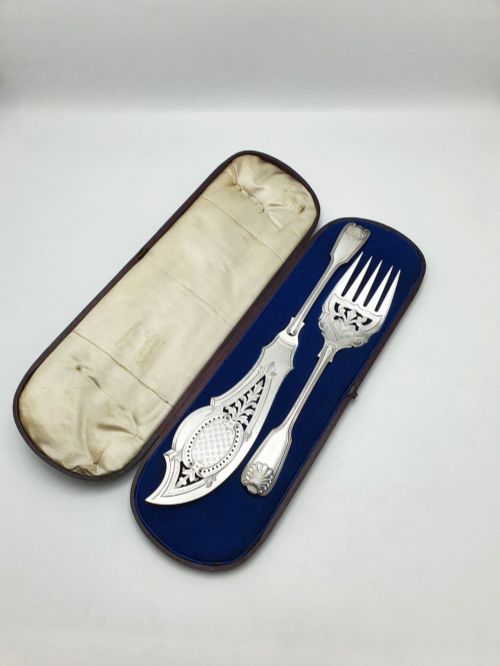
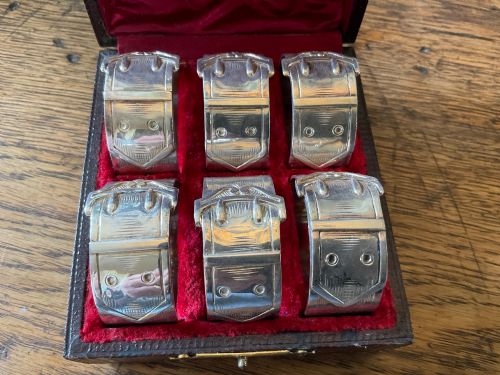
When searching for cased victorian silver plate, buyers encounter fitted presentation boxes housing matching utensils, travel gear, and dining accessories. These items date primarily from the Victorian and Edwardian periods, spanning the late nineteenth century.
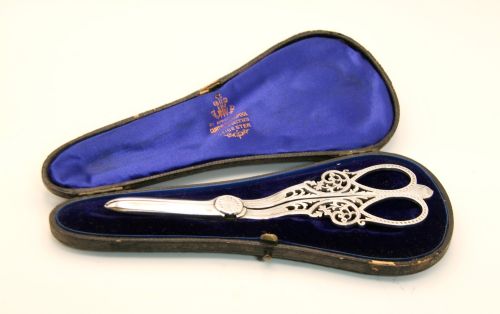
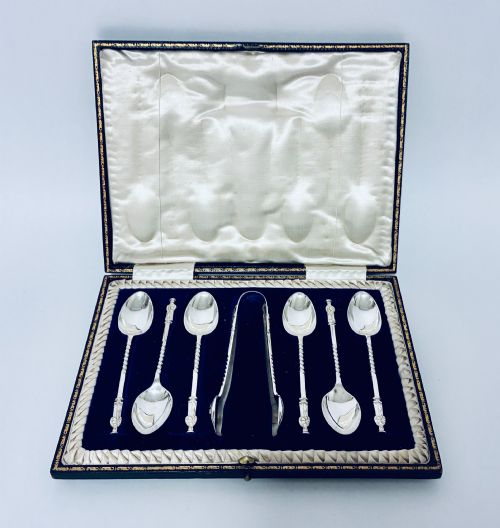
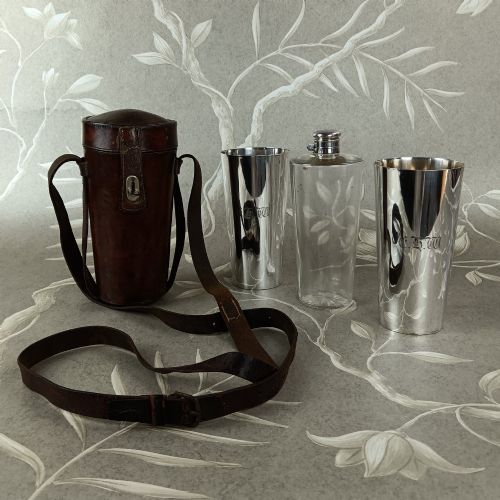
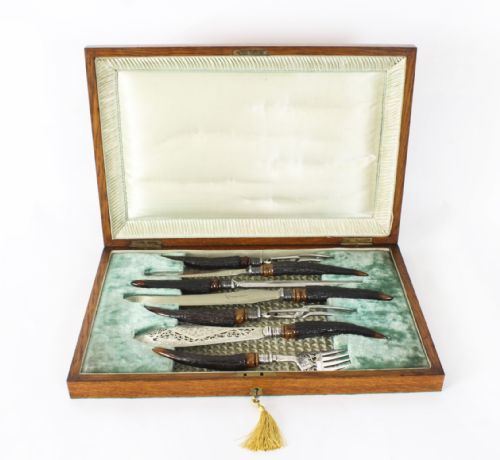
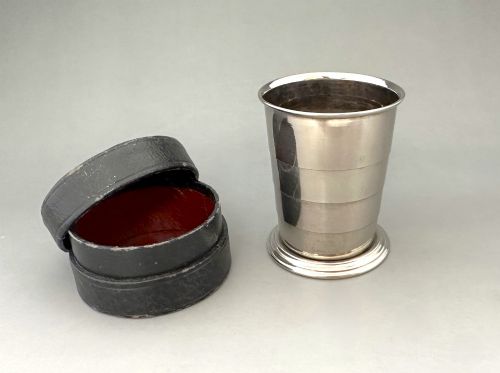
Sets on this page commonly include fish serving cutlery, fruit knife and fork sets, apostle spoons, napkin rings, and campaign spirit flasks. Each grouping sits snugly inside a velvet, silk, or leather lined wooden or metal container.
The objects serve formal dining and gentlemanly pursuits alike, ranging from elaborate dessert services to travelling candlesticks and shooting peg cases. Original housing protects the delicate silver plate and internal linings from wear.
Materials and Construction
Makers applied thin layers of silver over base metals using nineteenth-century plating techniques, mounting them with handles fashioned from mother-of-pearl, horn, bone, or porcelain. Engraved ornamentation decorates blade surfaces and handles alike.
Protective cases combine sturdy wooden or metal shells with internal partitions covered in silk, velvet, or leather. Fitted compartments secure each individual piece during travel or storage.
Distinctions in Quality
Quality rests in the crispness of the chased or engraved decoration upon the silver plate and the integrity of the fitted case. Complete sets retaining every original component command greater interest than assembled groups.
Superior examples display maker marks from notable workshops, heavier gauge metal plating, and undamaged interior silk or velvet linings. The harmony between the fitted case and its contents defines the standard.
James Dixon And Sons·Carrington·Hukin And Heath·Thomas Harwood And Co·Jonas Bowen And Sons·Lee And Wigful
The Cased Victorian Silver Plate Glossary
- Silver plate
- Base metal coated in a thin layer of silver through electroplating or older immersion methods. This technique made elaborate tableware accessible during the nineteenth century.
- Campaign set
- Portable equipment designed for travel, military service, or outdoor sports, housed in compact fitted cases. These items fold or nest for efficient storage.
- Apostle spoon
- A spoon featuring the figure of an apostle cast on the handle terminal. Victorian sets often reproduce historic ecclesiastical designs.
- Peg lamp
- A small oil lamp equipped with a metal spike designed to fit into a candleholder or stand. Examples frequently utilise satin glass bowls.
- Vesta case
- A small pocket container with a textured strike surface used for holding matches. Victorian versions often feature novelty shapes or portraits.
Cased Victorian Silver Plate: Frequently Asked Questions
What was cased silver plate used for?
These sets served formal dining rituals, afternoon tea, and gentlemanly travel pursuits. Fitted boxes protected delicate cutlery and accessories during storage in large households.
Items ranged from fish serving knives to portable spirit flasks and campaign sets designed for outdoor shooting or military use.
How do I care for cased silver plate?
Keep items dry and store them within their original fitted cases to prevent tarnish and protect delicate velvet or silk linings. Avoid harsh chemical dips that strip the thin silver layer.
Use a soft cloth and gentle silver cleaner only when necessary, taking care to preserve any engraved details on the metal surface.
Are these sets complete with original pieces?
Many listings retain their matching components, such as sets of six numbered napkin rings or paired fruit knives and forks. Original presentation boxes usually contain fitted slots for every specific item.
Review individual descriptions to confirm whether all matching forks, spoons, or serving implements remain inside the lining.
How do I identify Victorian pieces?
Victorian items frequently exhibit dense floral engraving, natural horn or mother-of-pearl handles, and specific nineteenth-century case designs. Maker marks stamped into the metal provide clues to production dates.
Stylistic cues such as aesthetic movement patterns or heavy Victorian ornamentation distinguish these objects from later twentieth-century wares.