


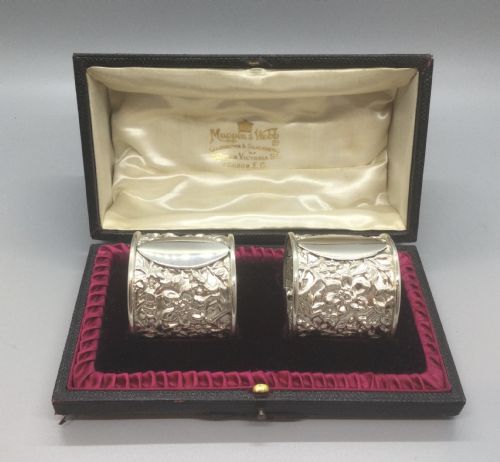

Silver Serviette Ring Set
A silver serviette ring set brings matched silver to the dining table, offering coordinated settings from the Victorian and Edwardian periods.
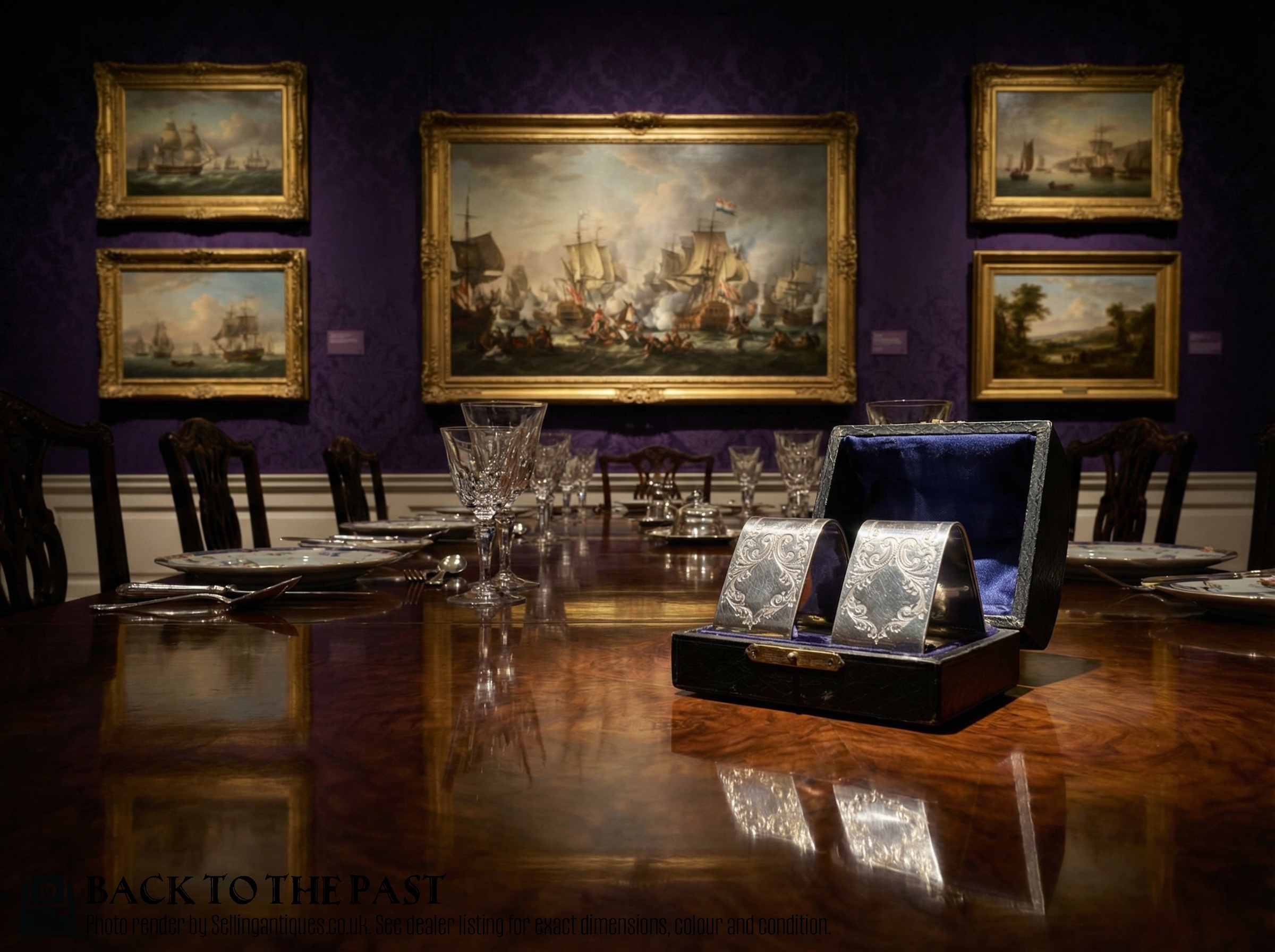
Silver Serviette Ring Set
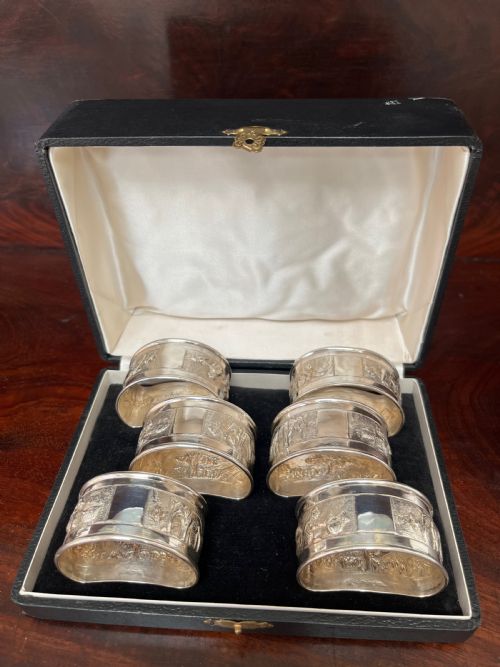
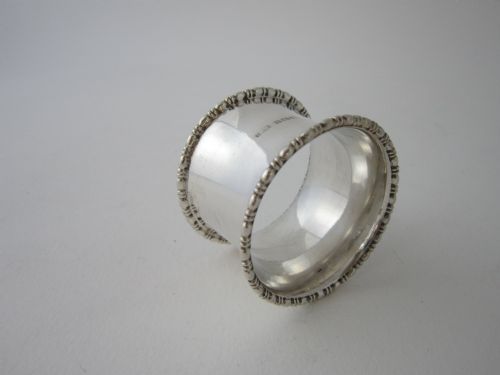
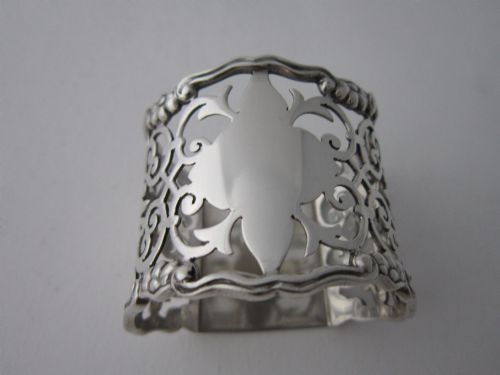
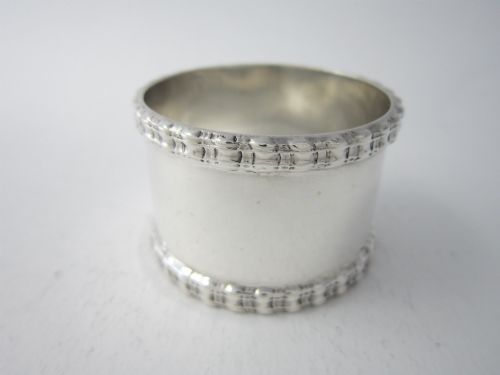
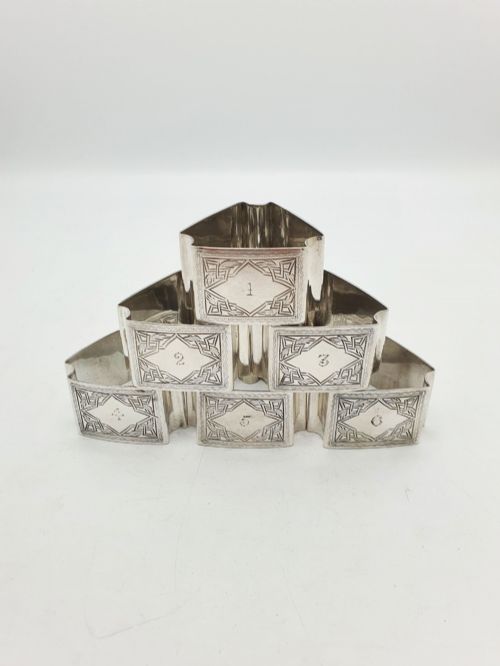
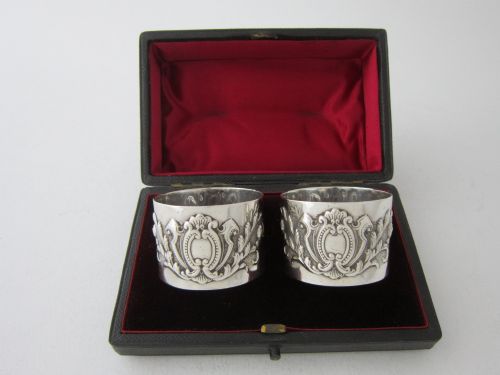
A silver serviette ring set comprises matched sets of table rings used for holding table napkins at meals. These sets frequently appear as groups of six, alongside pairs and individual examples.
Buyers searching for a silver serviette ring set encounter pieces spanning the nineteenth century through the mid twentieth century. Styles range from plain designs to novelty forms and regional English makes.
The materials span solid sterling silver and silver plate, often housed in fitted boxes lined with silk or velvet. Many sets date from the Victorian, Edwardian, and George V eras.
How they were made
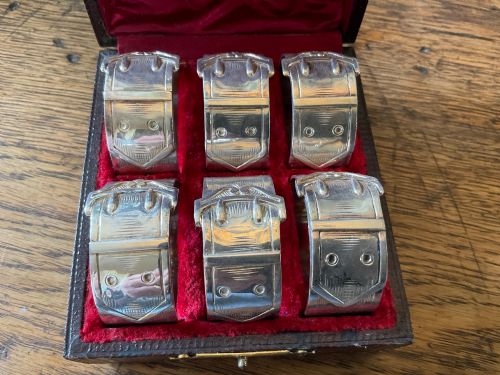
Makers shaped sterling silver and silver plate into circular and novel forms, utilising techniques such as casting and hammering. Novelty sets take specific shapes like stirrups and belt buckles.
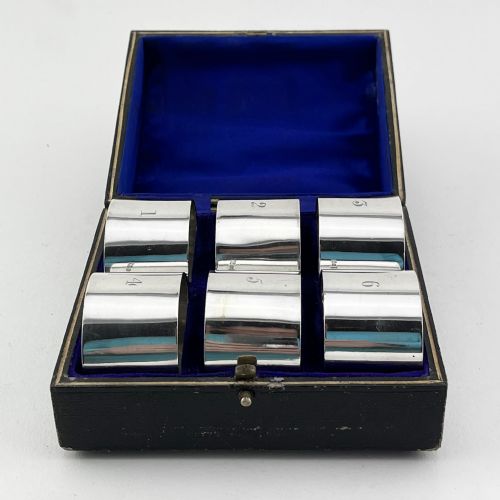
Presentation boxes utilise materials such as wood covered in leatherette, lined with silk or velvet to cradle each piece securely.
The inventory spans the Victorian, Edwardian, George V, and Arts and Crafts periods.
What varies in quality
Quality rests in the weight of the metal and the presence of complete original fitted boxes lined in silk or velvet. Matching sets with intact numbering or uniform hallmarks demonstrate higher consideration from the outset.
Handcrafted details, such as those found in Arts and Crafts examples, separate standard production from more distinctive workshop output.
C.T. Burrows & Sons·Guild of Handicraft
The Silver Serviette Ring Set Glossary
- Sterling silver
- A silver alloy containing 925 parts of pure silver per thousand. This standard metal appears across numerous period napkin rings.
- Silver plate
- A base metal coated with a thin layer of silver. This material offers the appearance of solid silver at a different production level.
- Hallmark
- An official mark stamped onto precious metals indicating the assay office, maker, and year. These stamps help date individual pieces.
- Novelty
- An object shaped to resemble something other than its standard form. Examples include napkin rings modelled as stirrups or belt buckles.
Silver Serviette Ring Set: Frequently Asked Questions
How do I clean antique silver napkin rings?
Clean sterling silver rings gently using a specialised cloth designed for precious metals. Avoid harsh dips that remove desirable patination built up over decades.
Store them in their original fitted boxes when not in use to protect the surface from tarnishing and scratching.
Are these sets usually complete?
Many sets survive in complete groups of six, though pairs and single items also appear. Fitted boxes often accommodate the exact number of rings originally produced.
Checking the internal lining helps confirm whether the case matches the current contents.
What period do most sets date from?
The selection includes pieces spanning the late nineteenth century through the mid twentieth century. Victorian, Edwardian, and George V eras represent the most common periods.
Assay office hallmarks provide specific dates for solid silver examples.
How were these rings used historically?
Families used them at the dining table to identify individual napkins between meals. Each household member kept their own designated ring.
Numbered sets ensured that every person retained their specific place at the table.