




Cased Serviette Rings
These cased serviette rings are matching sets of silver dining table markers housed in fitted velvet and silk-lined boxes.
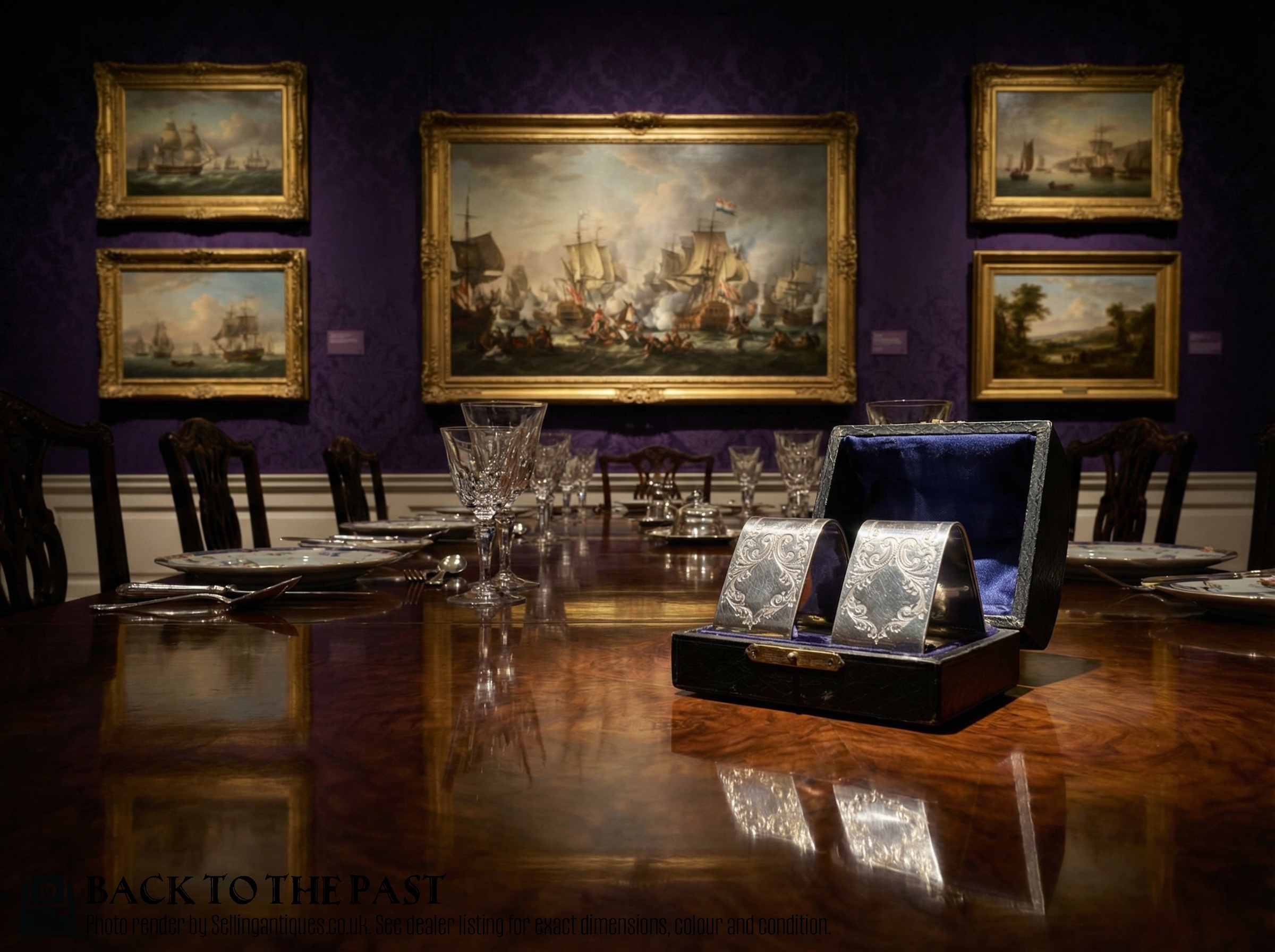
Cased Serviette Rings
The examples gathered here span from the late nineteenth century through the Edwardian period and into the mid twentieth century. Most pieces date from the Victorian and George V eras, reflecting a time when matching table silver was an essential household possession.
Materials and Construction
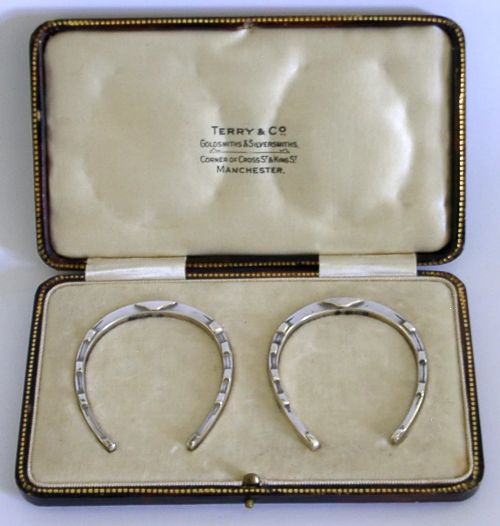
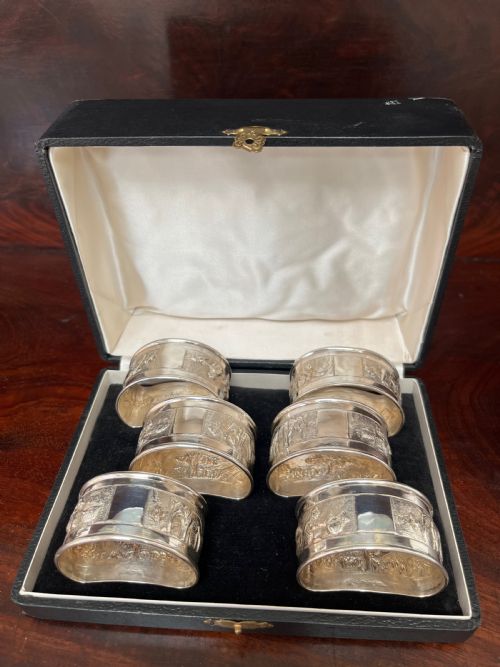
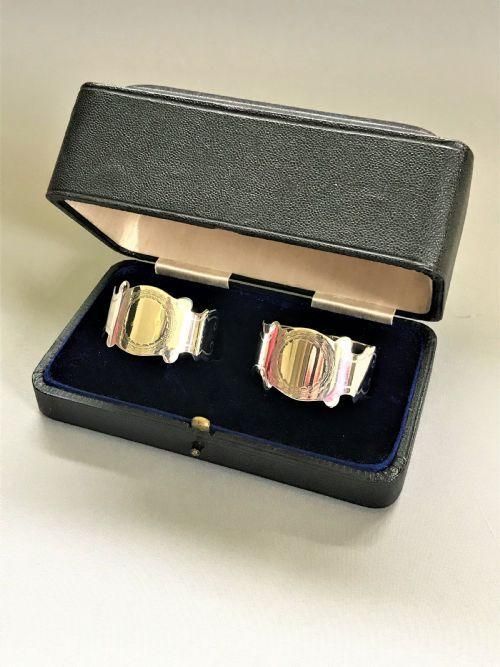
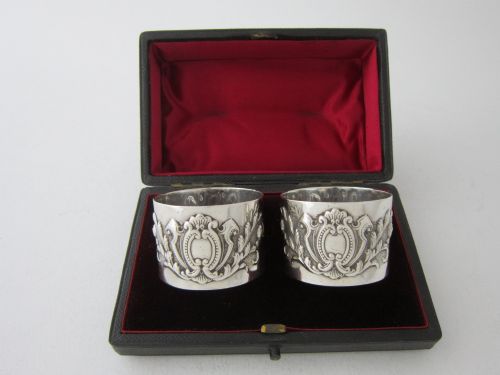
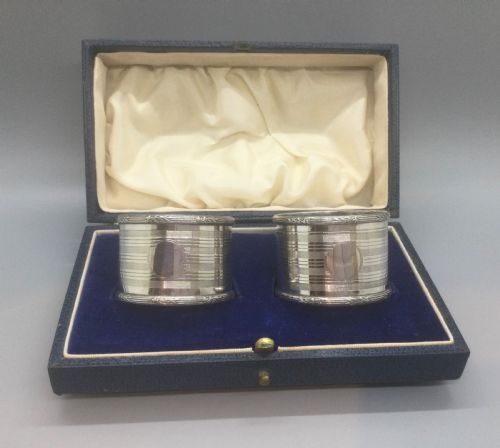
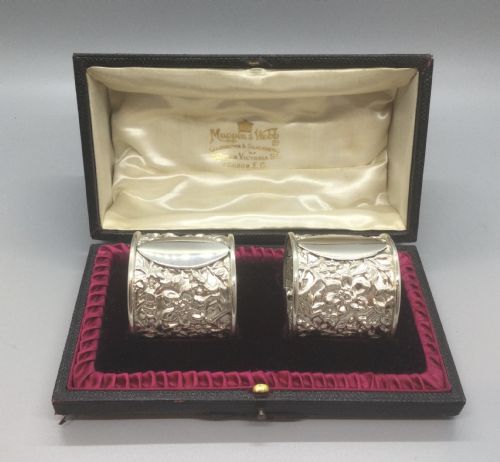
These sets are made predominantly from solid sterling silver or silver plate, shaped into cylindrical bands or formed as novelty designs like horse shoes and belt buckles. Metalsmiths struck or cast the silver before applying hand-engraved motifs and plain polished finishes.
The protective cases utilise rigid timber frames covered in leather, leatherette, or textured cloth. Interiors feature tailored beds lined with plush silk or velvet to hold each ring firmly in place during storage.
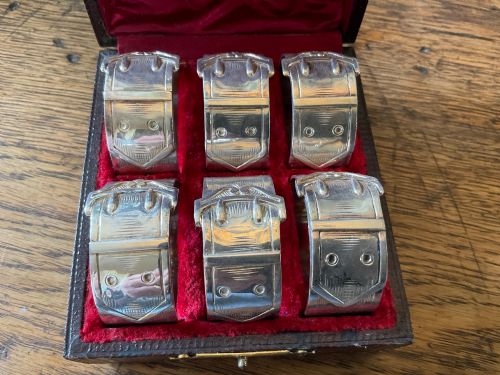
Several Victorian sets feature rings cleverly modelled as miniature leather belt buckles complete with metal tongues.
Assessing Quality and Craftsmanship
Quality rests in the weight and substance of the silver rings, alongside the crispness of any chased or engraved decoration. Finer sets maintain uniform wall thickness and clear hallmarks that denote the assay office and maker.
The condition of the fitted case also dictates the overall standing of the set. Original silk linings and sound leather or wood outer boxes that shut cleanly hold greater appeal than replacement or heavily damaged enclosures.
C.T. Burrows & Sons·Mappin & Webb
The Cased Serviette Rings Glossary
- Serviette ring
- A ring used to hold an individual's table napkin between meals. These items are also frequently referred to as napkin rings.
- Sterling silver
- A silver alloy containing 92.5 percent pure silver and 7.5 percent other metals, usually copper. This standard is guaranteed by British assay office hallmarks.
- Silver plate
- A base metal coated with a thin layer of pure silver. This technique offered a more affordable alternative to solid precious metal.
- Assay office
- An official body that tests the purity of precious metals and stamps them with statutory hallmarks. Cities such as Birmingham, Chester and London operated these offices.
- Fitted case
- A storage box custom-built with internal recesses shaped to hold a specific set of items securely. They are frequently lined with silk and velvet.
Cased Serviette Rings: Frequently Asked Questions
What are cased serviette rings?
These items are matched sets of silver napkin holders that come in their own dedicated storage boxes.
They were designed to keep dining tables orderly and protect the precious metal from tarnishing when not in use.
How were cased serviette rings used?
Families used them at the dinner table to identify each person's linen napkin between meals.
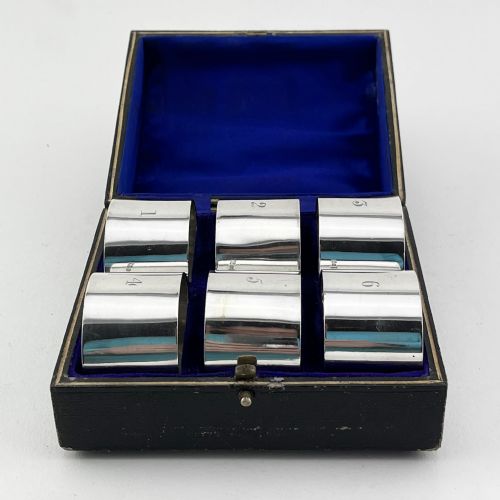
At the end of dining, the rolled cloth went back into its numbered or matched ring before the set returned to its lined box.
How do I date a set?
Dating relies heavily on the silver hallmarks stamped onto the metal of the rings themselves.
These tiny marks reveal the assay office, the specific year letter, and the maker's mark, while the style of the storage box offers additional period clues.
Are all cased sets made of solid silver?
No, while many feature solid sterling silver, others are constructed from silver plate over a base metal.
Examining the hallmarks inside the rings will confirm whether the metal is solid or plated.