



Pair of Napkin Rings
A pair of napkin rings brings matched craftsmanship to the dining table, offering fitted cases and enduring metalwork from the late nineteenth century onward.
Pair of Napkin Rings
A pair of napkin rings serves to identify individual table linen at formal or family meals, typically supplied as a matched duo within a protective container. These domestic accessories emerge predominantly from Victorian, Edwardian, and George V periods, reflecting changing dining customs across decades.
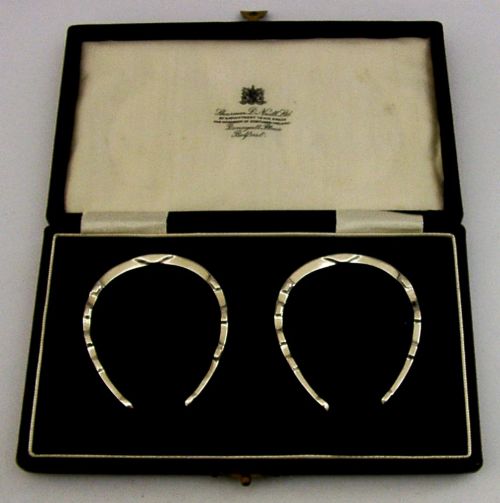
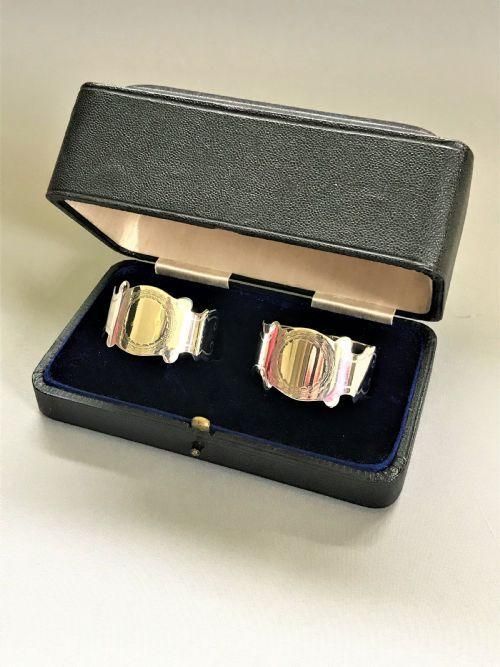
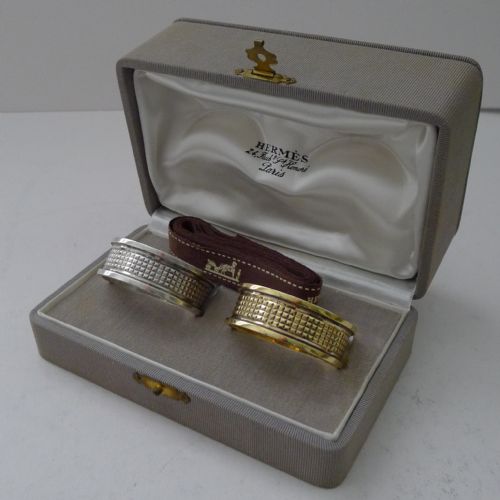
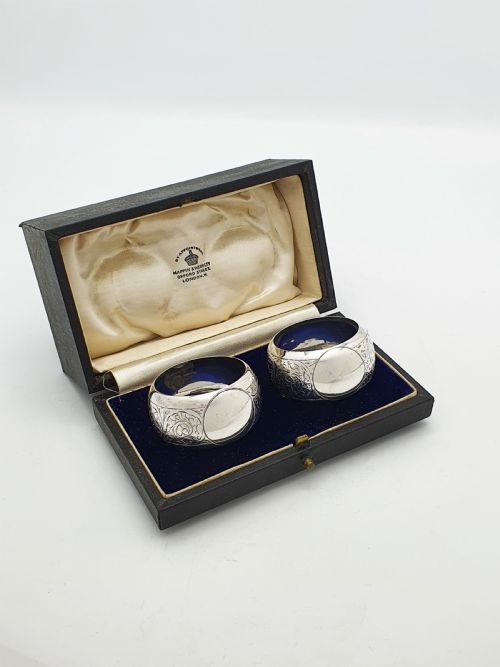
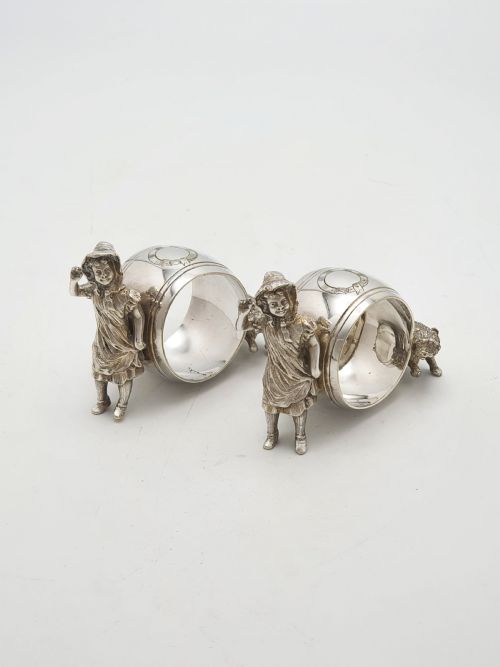
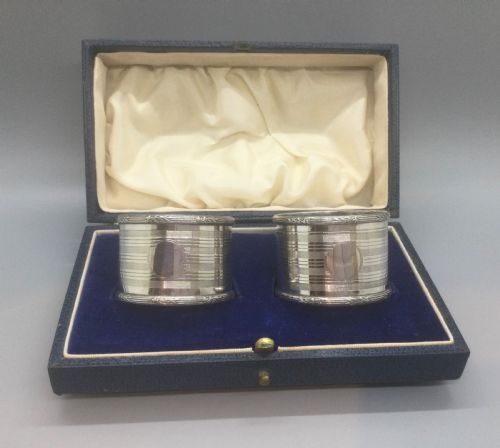
The versions most commonly met on this page are fashioned from solid sterling silver or silver plate, frequently discovered inside original fitted cases lined with silk, velvet, or satin. Collectors encounter both plain circular bands and elaborate figural or pierced designs spanning the late 1800s into the mid twentieth century.

How they were made
Silversmiths utilised solid sterling silver and silver plate, shaping metals through casting, piercing, and hammering techniques. Workshops applied silver gilt for interior enrichment, alongside specialised treatments such as enamel work characteristic of specific decorative movements.
Presentation packaging relied on sturdy leatherette outer cases fitted with soft internal linings of velvet, satin, or silk to cradle each ring securely. Makers stamped official hallmarks onto the metal surfaces to record the assay office, year, and standard of silver.
The available pieces span Victorian, Edwardian, Arts and Crafts, Art Nouveau, and Art Deco styles.
What varies in quality
The standard of a set rests upon the depth of ornamentation and the integrity of the original presentation case. Pieces featuring intricate pierced metalwork, figural motifs, or applied enamel demand greater artisan skill than plain tubular bands.
Provenance and maker reputation elevate specific examples, particularly those bearing the marks of prominent design houses or known silversmiths. The survival of the matching fitted box with intact interior linings adds significantly to the completeness of the set.
Hermes Paris·Liberty And Co·Archibald Knox·Mappin And Webb·Cartier·Henry Wilkinson·T Bishton
The Pair of Napkin Rings Glossary
- Sterling silver
- A silver alloy containing 92.5 percent pure silver and 7.5 percent other metals, usually copper, chosen for durability in tableware.
- Silver gilt
- Sterling silver that has been coated with a thin layer of gold on its surface, often used to line the interior of napkin rings.
- Pierced work
- Metal ornamentation created by cutting or piercing decorative patterns through the silver sheet to form openwork designs.
- Hallmark
- A series of official marks stamped onto precious metal items to guarantee the purity, origin, and year of manufacture.
- Cased
- Supplied within its original fitted storage box, designed specifically to hold and protect the matched pair.
Pair of Napkin Rings: Frequently Asked Questions
What are napkin rings used for?
These domestic items hold individual table napkins between meals in household settings. Families utilised matched pairs to keep personal linen organised during daily dining.
Over time, they evolved into decorative table accessories often given as gifts for weddings or christenings, safely stored in fitted presentation boxes when not in active use.
How do I date a silver napkin ring?
Dating relies primarily on the official hallmarks stamped directly onto the metal surface by assay offices. These marks reveal the specific year letter and city of testing.
Stylistic clues such as Victorian floral engraving, Edwardian pierced symmetry, or geometric Art Deco lines also help narrow down the period of manufacture.
Are cased sets more desirable?
Original fitted presentation boxes enhance the completeness of a set by keeping the matching pieces together over generations. The presence of a leatherette case with silk or velvet lining indicates higher original retail status.
Collectors appreciate these surviving enclosures because they preserve the items from surface wear and maintain the historic packaging.
What is the difference between silver and silver plate?
Solid sterling silver consists of a regulated high purity metal alloy throughout the entire thickness of the ring. This material carries official assay office hallmarks guaranteeing the metal standard.
Silver plate involves a base metal core covered by a thin external layer of silver. Plated items generally lack the standard sterling hallmarks found on solid pieces.