


Cased Silver Teaspoons
These cased silver teaspoons bring together fitted presentation boxes and matched sets of sterling or silver-gilt flatware intended for formal hospitality.
Cased Silver Teaspoons
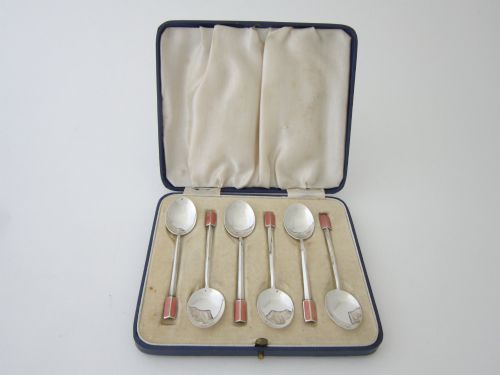
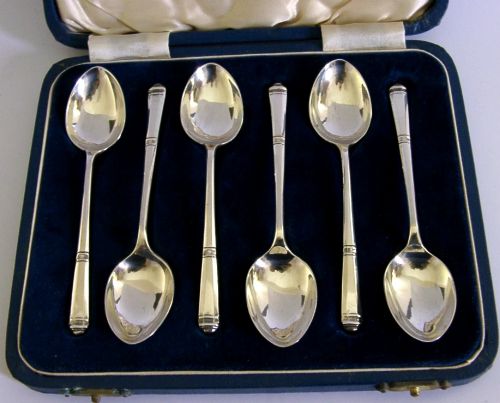
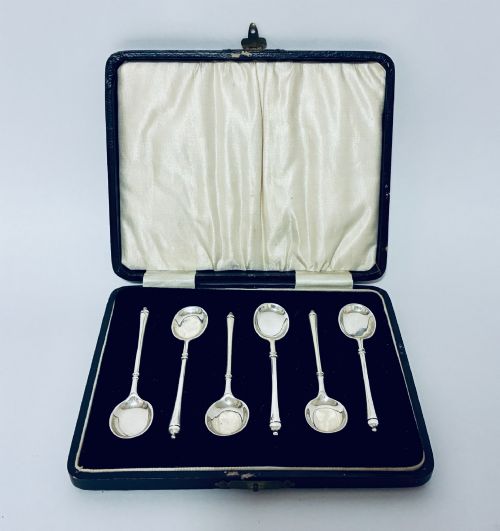
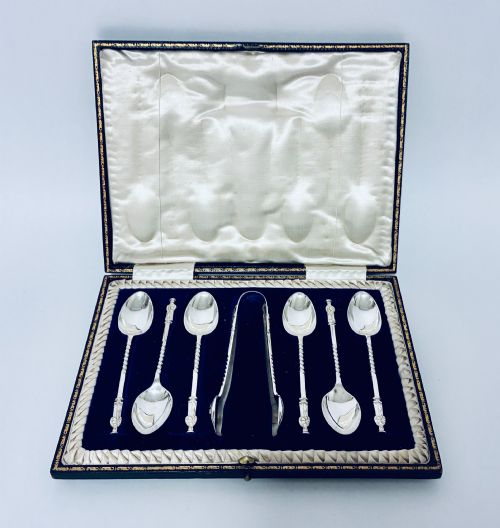
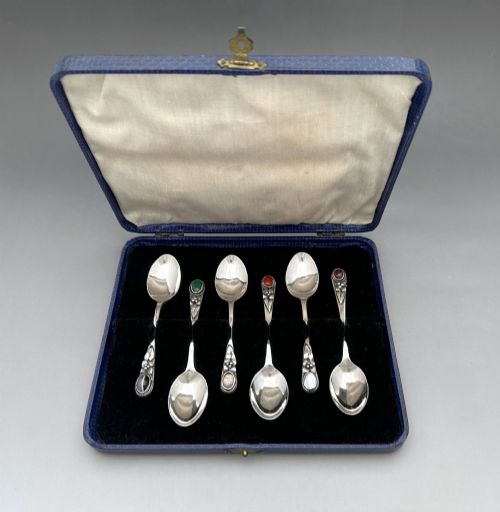
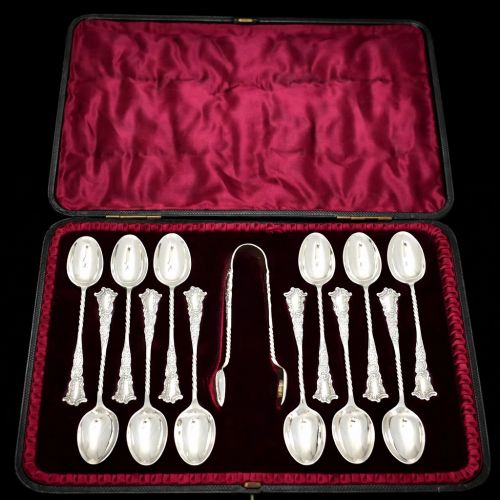
When you search for cased silver teaspoons, you encounter matched sets of flatware housed in custom fitted receptacles designed to protect the metal and display the contents. These sets frequently include accompanying sugar tongs or feature smaller coffee spoons and demi-tasse variations.
The pieces appearing here span from the Georgian period through the Victorian and Edwardian eras into Art Deco and mid-century designs. You meet sets configured for six or twelve place settings, sometimes paired with butter knives or apostle handles.
Originating largely from British assay offices in Birmingham, Sheffield, and London, these items also encompass continental European examples. The fitted containers preserve the spoons in presentation condition, keeping the silver and internal linings intact.
How they were made
Manufacturers formed the spoons from sterling silver or silver-gilt, occasionally applying guilloche enamel, semi-precious stones, or multi-coloured enamel decoration to the terminals. Smiths shaped the bowls and stems through traditional casting, stamping, and hand-finishing techniques.
The protective cases utilised a wooden or cardboard carcass covered in leatherette, satin, velvet, or silk linings. Interior fitted beds were moulded specifically to cradle each spoon and tong securely within the lid and base.
Cased Silver Teaspoons Retail Price Guide 2026
Typical asking prices for cased silver teaspoons among the pieces listed under this phrase on Sellingantiques today, from the lower quarter to the upper quarter. They describe what is for sale here now, not the wider market.
Deer hoof coffee spoons bring an unexpected touch of the hunt directly to the afternoon tea table.
What varies in quality
The standard of a set rests upon the crispness of the hallmarking, the thickness of the silver gauge, and the preservation of the delicate enamel work where applied. Master silversmiths executed cleaner lines and more substantial weights than mass-produced counterparts.
Box construction also dictates value, with sturdy leatherette exteriors and intact silk or velvet interiors distinguishing superior presentation sets from heavily worn housings. Complete sets with matching sugar tongs retain greater compositional integrity.
P A W Bateman·David Andersen·Walker and Hall·Robert Stebbings·Cooper Brothers and Sons·Bruchmann and Sohne·Georg Jensen·Robert Pringle and Sons
The Cased Silver Teaspoons Glossary
- Sterling silver
- An alloy consisting of 925 parts of silver per thousand by weight. This standard metal forms the primary body of most antique teaspoons.
- Silver-gilt
- Sterling silver that has been coated with a thin layer of gold through an electrolytic or fire-gilding process. This treatment imparts a rich yellow gold sheen to the spoon bowls and stems.
- Guilloche enamel
- Decorative technique where an intricate geometric pattern is mechanically engraved beneath a translucent enamel layer. It produces a luminous, shimmering effect across the spoon handles.
- Demi-tasse
- Small cup used for serving Turkish coffee or espresso. Spoons bearing this designation feature shorter handles and smaller bowls suited to diminutive cups.
- Apostle spoon
- Flatware featuring the figure of an apostle cast or engraved upon the terminal of the handle. These traditional designs often appear in matched sets with matching sugar tongs.
Cased Silver Teaspoons: Frequently Asked Questions
What are cased silver teaspoons?
These items are matched sets of sterling silver flatware housed in dedicated presentation boxes lined with silk or velvet. They were designed for formal hospitality and gift-giving.
The fitted enclosures protect the metal from tarnishing and keep the complete set of spoons and auxiliary tongs together.
How were cased silver teaspoons used?
Owners utilised these spoons during formal tea and coffee services, afternoon gatherings, and ceremonial dining occasions. The smaller coffee and demi-tasse variants served after-dinner drinks.
Sugar tongs included in many sets allowed guests to lift lumps cleanly into cups without handling them directly.
How do I care for cased silver teaspoons?
Keep the pieces stored inside their original fitted cases away from direct sunlight and damp environments to protect the textile linings. Minimal handling preserves any fragile enamel work.
Clean the silver only when necessary using appropriate non-abrasive polishes formulated specifically for sterling or silver-gilt.
How can I tell the period of these spoons?
Hallmarks stamped directly onto the silver indicate the assay office, standard mark, and date letter corresponding to the exact year of manufacture. Stylistic indicators like Art Deco geometric motifs or Victorian scrollwork also point to specific eras.
Case construction and typography on the interior silk lid linings provide additional clues regarding the retailer and decade.