



Cased Silver Presentation Set
A cased silver presentation set gathers silverware into fitted boxes, offering a complete service for formal dining, gifting, or special domestic rituals.
Cased Silver Presentation Set
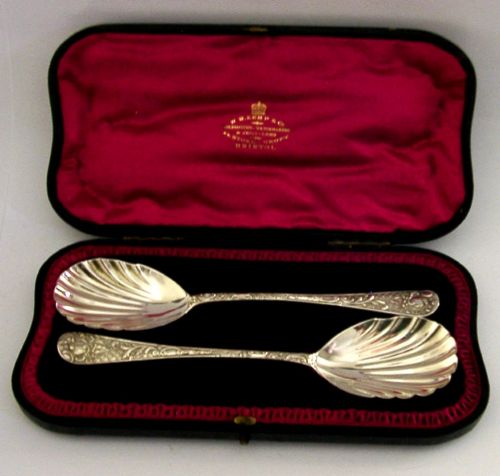
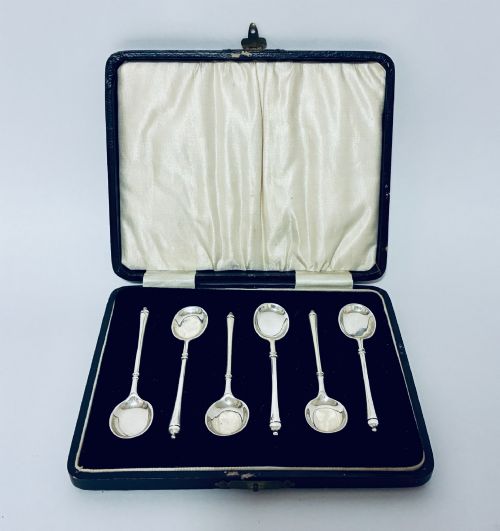
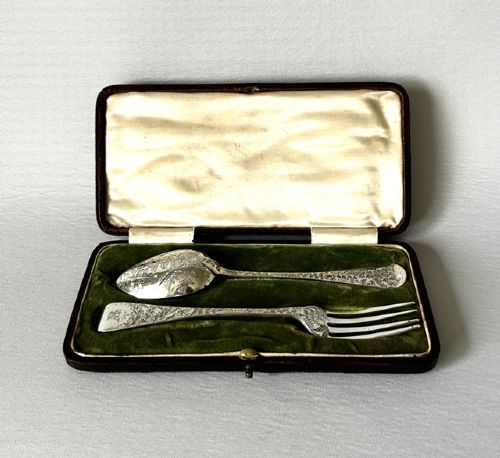
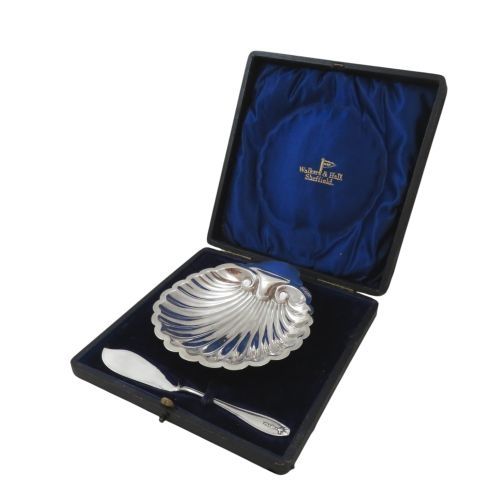
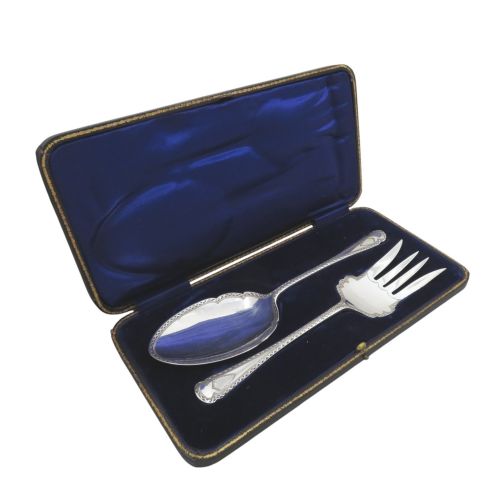
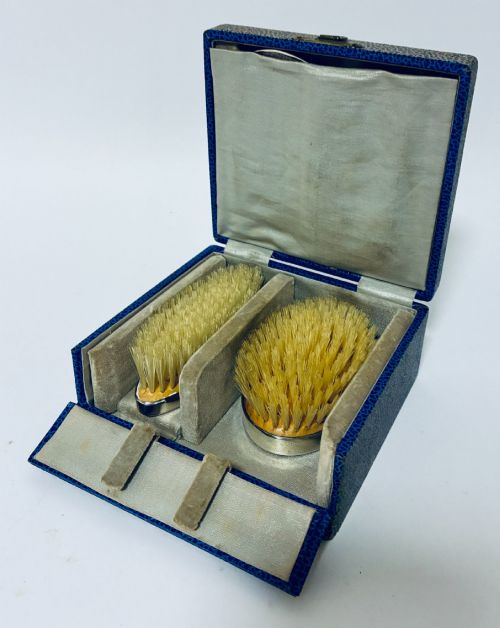
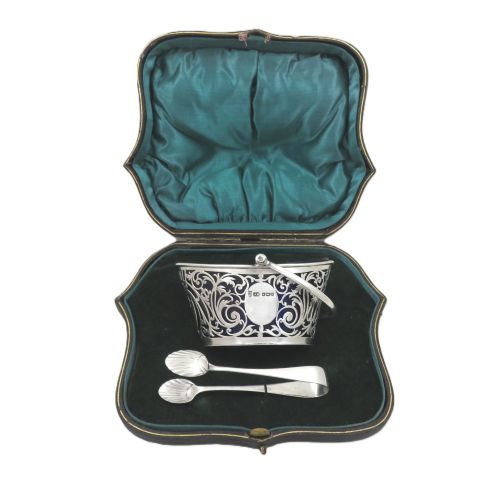
A cased silver presentation set comprises fitted boxes housing matched items such as serving spoons, christening sets, butter dishes, sugar bowls, and napkin rings. These groupings reflect formal dining habits and significant life events across the Victorian, Edwardian, and George V periods.
The objects inside range from single serving knives and forks to sets of six coffee spoons or napkin rings. Most examples originate from late nineteenth and early twentieth century workshops, combining functional silver with dedicated protective enclosures.
Buyers encounter varied configurations, from christening gifts containing spoons and bowls to fruit serving spoons and fish servers. The presence of the original case remains a defining characteristic of these matched assemblages.
Assessing quality and craftsmanship
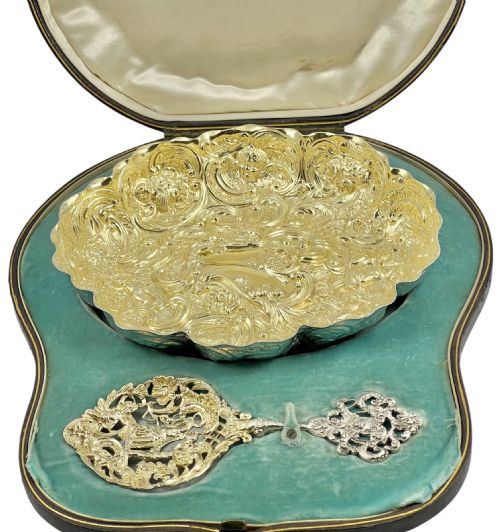
Distinction in quality arises from the weight and gauge of the silver, alongside the intricacy of decorative work such as chased patterns or silver gilt finishes. Substantial metal thickness in items like sugar bowls and serving spoons separates utilitarian pieces from finer presentation goods.
The integrity and preservation of the original fitted box heavily influence the overall character. Boxes retaining intact silk linings, sound hinges, and unblemished leather exteriors complement the quality of the enclosed silverware.
Listings span the Victorian, Edwardian, and George V periods, featuring sterling silver, silver plating, velvet, and leather.
Robert Stebbings·John Round
The Cased Silver Presentation Set Glossary
- Sterling silver
- A silver alloy containing 92.5 percent pure silver by mass, standard for quality British tableware. Hallmarks stamped into the metal indicate the assay office, standard, and date.
- Silver gilt
- Silver objects coated with a thin layer of gold on the surface, often seen on the interior of sugar bowls or specific spoons. This technique enhances visual warmth and protects the underlying metal.
- Presentation box
- A fitted container specifically built to hold a matched set of silverware securely. These enclosures frequently feature velvet or satin bases moulded to the exact contours of the objects.
- Christening set
- A traditional gift grouping, typically comprising a spoon and fork or a bowl, presented to mark a birth or baptism. These sets often date from the Victorian and Edwardian eras.
- Serving cutlery
- Large utensils such as fish servers, dessert spoons, and carving implements designed for table service rather than individual use. They frequently appear in dedicated presentation cases.
Cased Silver Presentation Set: Frequently Asked Questions
What is a cased silver presentation set?
A cased silver presentation set is a collection of matched silverware housed within a fitted, protective box lined with silk or velvet. These groups were typically created for formal dining or as significant gifts.
Such sets include christening gifts, spoon groupings, and serving utensils. The inclusion of the original enclosure distinguishes them from loose tableware.
How do I date a presentation set?
Dating relies primarily on the hallmarks stamped into the silver components, which indicate the assay office and year of manufacture. Stylistic indicators like Victorian ornamentation or Edwardian proportions also provide chronological context.
The materials and construction style of the exterior case further help narrow down the period of production. Comparing the hallmarks with established records gives the exact year.
How were these sets originally used?
Owners utilised these sets during formal meals, afternoon tea, or for specific domestic ceremonies like christenings. They were brought out for special guests or preserved as valued family possessions.
The fitted box ensured the silver remained polished and protected between uses. Many sets were kept specifically for gifting on landmark occasions.
How should I care for the velvet linings?
Velvet and silk linings require gentle treatment, avoiding moisture and direct sunlight to prevent fading and deterioration. Dust should be removed lightly using a soft, dry brush.
Keeping the silver clean without harsh chemicals prevents tarnishing gases from affecting the delicate fabric interior. Proper ventilation around the storage area preserves both box and contents.