


Cased Silver Dining Set
A cased silver dining set brings matched elegance to the table, housed in fitted containers lined with silk or velvet.
Cased Silver Dining Set
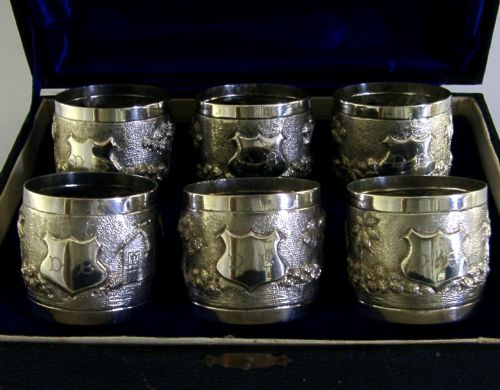
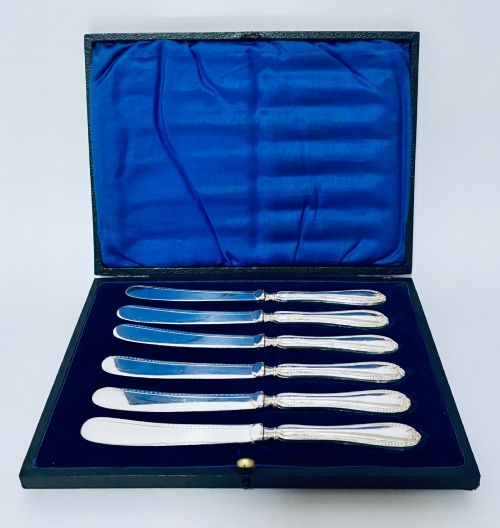
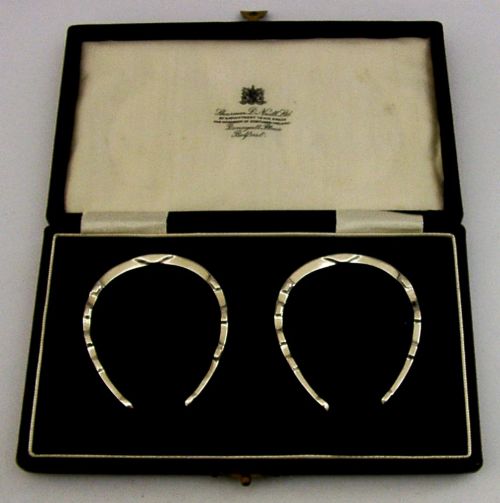
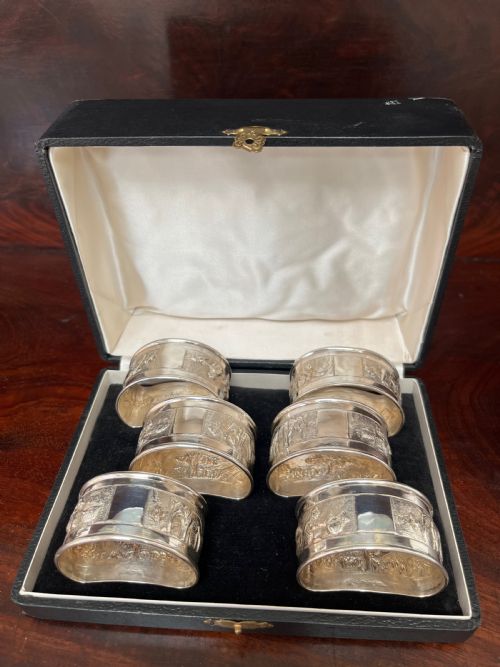
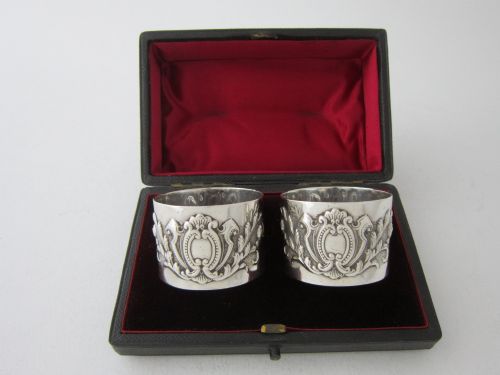
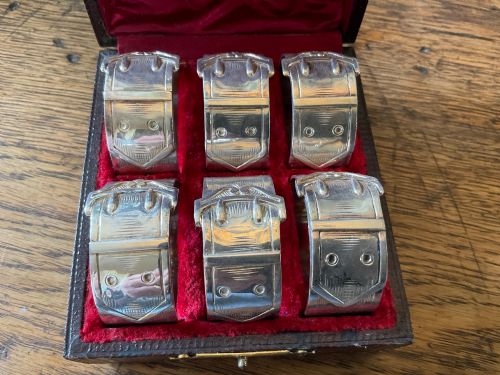
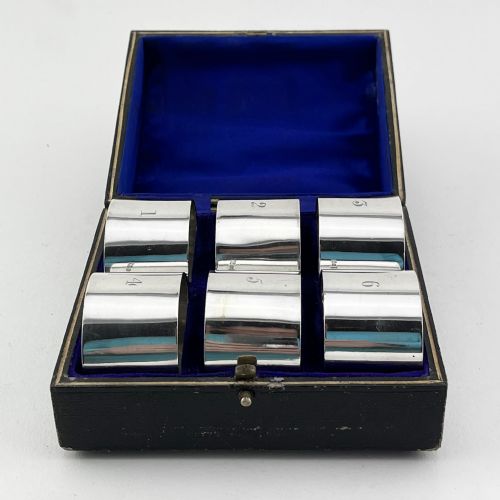
A cased silver dining set covers matched collections for the table, brought together in dedicated presentation boxes. When you search for a cased silver dining set, you most often encounter matched groupings of napkin rings, alongside fish servers, salt cellars, flatware, and hors d'oeuvres forks.
The selections span Victorian, Edwardian, and later twentieth-century periods, running from eighteen-eighty through to nineteen-fifty. These groupings reflect formal dining traditions where specialised implements for salt, fish, and napkins required secure storage.
Origin styles range from traditional British and George V pieces to French Rococo and Anglo-Indian designs. Sets frequently arrive in their original lined containers, preserving the contents through decades of use.
Materials and construction
The implements utilise sterling silver, silver plate, and steel, paired with organic elements such as mother-of-pearl, horn, and wood. Makers shaped the metal components through casting, engraving, and smithing, producing detailed surfaces like the hunting and dog motifs found on fish servers.
The protective containers rely on rigid structures finished in leatherette, housing interior beds upholstered in silk and velvet to cradle each individual piece securely.
Object forms span napkin rings, fish servers, salt cellars, flatware, menu holders, nutcrackers, and lobster picks.
Distinctions in quality
Quality separates through the weight of the metal and the precision of the smith's work, visible in crisp engraving and balanced forms. Substantial sterling silver sets with fully legible hallmarks stand apart from lighter plated alternatives.
The integrity of the presentation box influences the standing of the set. Original silk or velvet linings that remain intact and fitted cleanly to the implements elevate the whole grouping.
C.T. Burrows & Sons·Christofle
The Cased Silver Dining Set Glossary
- Sterling silver
- An alloy containing ninety-two point five percent silver by mass, with the remainder composed of other metals for durability. This standard appears frequently across British tableware.
- Silver plate
- A layer of silver applied to a base metal core, offering the appearance of solid silver. This technique appears on larger flatware services.
- Hallmark
- An official stamp applied to precious metals indicating the standard of purity, the assay office, and the date letter. These marks verify the origin of British silver.
- Hors d'oeuvres
- Small starter dishes served before the main meal, requiring specialised implements like small forks and mother-of-pearl handled knives.
- Presentation box
- A fitted container designed to hold a specific set of tableware securely, often lined with soft fabrics to protect the metal.
Cased Silver Dining Set: Frequently Asked Questions
What periods do these dining sets come from?
The pieces span from the late nineteenth century through the Edwardian era and into the mid-twentieth century. Victorian, Edwardian, and George V periods are strongly represented.
Production dates cluster around eighteen-eighty to nineteen-fifty, capturing changing dining habits across several decades.
Are the presentation boxes always original?
Many sets retain their original fitted containers lined in silk or velvet, designed specifically for the contents. These boxes protect the pieces and indicate how the set was stored.
Some groupings match implements with period-appropriate or later boxes, which is noted in the individual descriptions.
What materials are used besides silver?
Implements frequently combine metal with organic materials such as mother-of-pearl, horn, wood, and steel. Velvet, silk, and leatherette form the linings and exteriors of the storage cases.
Porter and server handles often utilise these contrasting textures for grip and decoration.
How do I care for cased silver sets?
Store the items within their lined containers to minimise exposure to air and tarnishing agents. Gentle cleaning with appropriate silver polish preserves the engraved details without removing the metal.
Keep organic elements like mother-of-pearl and horn away from excessive moisture and sudden temperature changes.