


Cased Coffee Spoons
Cased coffee spoons present matched sets of diminutive silver drinking implements nestled in tailored presentation boxes.
Cased Coffee Spoons
When you search for cased coffee spoons, you encounter miniature tableware designed specifically for after-dinner demitasse cups rather than standard tea drinking. The sets span from late Victorian origins through the Edwardian era into mid-century modernism, reflecting changing domestic habits.
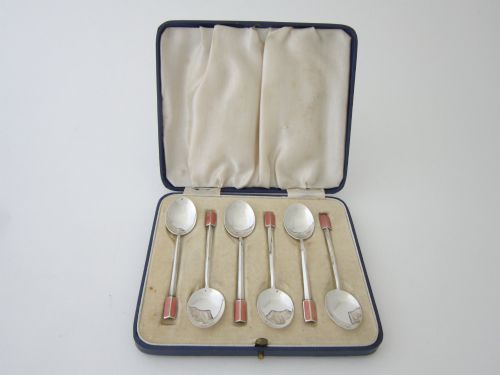
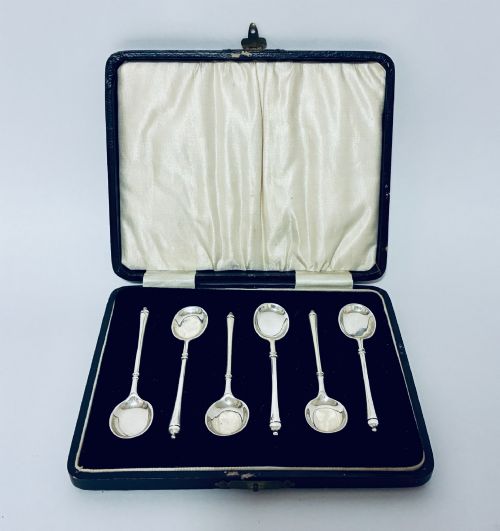
You are most likely to meet sets originating from the 1920s and 1930s featuring Art Deco geometric styling, colourful enamel work, or stylised finials such as coffee beans and seal tops. British provincial assay offices feature prominently alongside Scandinavian imports.
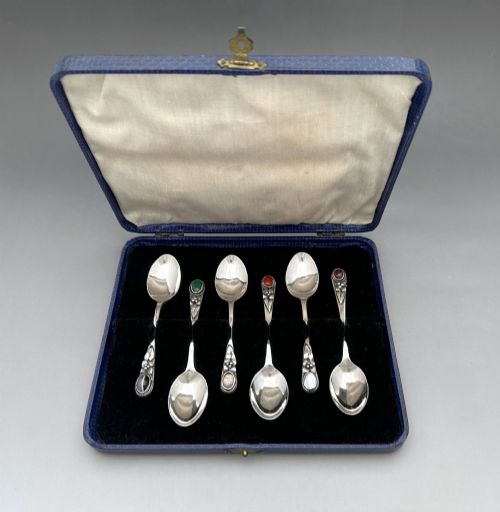
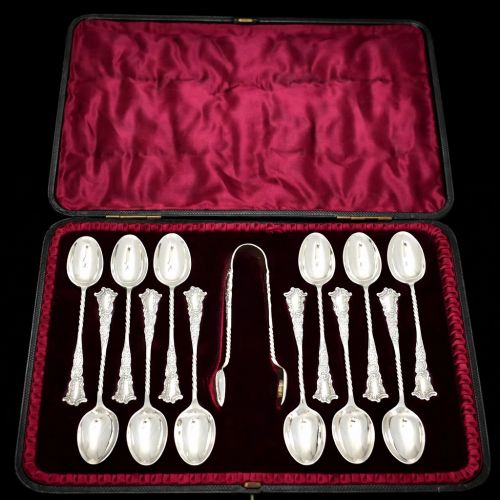
The accompanying boxes form an integral part of the survival, often lined in silk or velvet with fitted leatherette exteriors that protected the fragile silver and delicate glass-based decorations from daily knocks.
Materials and construction
Makers utilised sterling silver or silver-gilt, which involves applying a thin layer of gold over the solid silver base to create a rich warm tone and prevent tarnishing from coffee oils. Bowls and stems were frequently stamped or cast before receiving hand-finished details.
Vitreous enamel provides the bright colour seen on many examples, fused to the metal surface through high-temperature kilning. Guilloché techniques add engine-turned geometric patterns beneath translucent enamel layers, while cloisonné uses thin metal wires to separate distinct colour cells.
Presentation cases were constructed from sturdy wood or card carcases wrapped in textured leatherette or grained paper, then fitted internally with moulded bases lined in satin, velvet, or silk to cradle each individual spoon securely.
Certain sets feature tiny sculpted animal hooves and nautical sailing club motifs hiding inside the presentation slots.
Assessing manufacture and preservation
The standard of a set rests heavily on the crispness of the hallmark stamps, the weight of the silver in each small stem, and the complexity of the decorative motifs applied to the finials. Superior examples display precise mechanical engine-turning beneath unblemished enamel without chips or hairline fractures.
Box integrity dictates much of the appeal, as original fitted cases bearing maker stamps on the satin lid linings are significantly scarcer than replacement boxes. The survival of the inner fabric without staining or tearing preserves the context of the set.
Henry Clifford Davis·Walker & Hall·Turner & Simpson·David Andersen·Charles Horner
The Cased Coffee Spoons Glossary
- Demitasse
- A small cup used for serving strong black coffee or espresso, requiring shorter spoons than standard tea service. These vessels dictate the smaller scale of the accompanying cutlery.
- Guilloché
- A decorative engraving technique that etches precise intricate geometric patterns into metal using a mechanical lathe. Translucent enamel is then applied over the top to let the pattern catch the light.
- Silver-gilt
- Sterling silver that has been coated with a thin layer of pure gold through chemical or electrolytic processes. This finish enhances the visual warmth of the pieces and protects the underlying metal.
- Finial
- The uppermost ornamental termination at the end of a spoon handle, often shaped as a coffee bean, animal hoof, or abstract Deco form. These provide the primary visual focal point when the box is opened.
- Cloisonné
- An enamelwork technique where thin metal strips are soldered upright onto the base metal to create compartments that are subsequently filled with coloured glass paste and fired.
Cased Coffee Spoons: Frequently Asked Questions
How are cased coffee spoons different from standard teaspoons?
Coffee spoons are noticeably shorter in overall length and possess smaller bowls designed to fit inside demitasse cups. Their proportions accommodate smaller volumes of sugar and liquid.
Standard teaspoons measure longer and feature broader bowls intended for larger breakfast cups or afternoon tea vessels.
What periods do these silver sets usually date from?
The majority of surviving examples date from the early twentieth century, particularly the 1920s and 1930s during the height of Art Deco popularity. Late Victorian and mid-century pieces also appear regularly.
Earlier Georgian or William IV sets exist but remain exceptional discoveries compared to the mass production of the interwar decades.
Why do some spoons feature gold wash over the silver?
The gold wash, known as silver-gilt or vermeil, was applied to protect the silver from the corrosive acids found in coffee and citrus. It also offered a luxurious contrasting background for bright enamel work.
Over time, gentle cleaning can wear the gilding thin, making well-preserved golden surfaces desirable among collectors.
How should stored presentation boxes be maintained?
Cases require dry, stable environments away from direct sunlight to prevent the silk linings from fading and the leatherette from drying out. Maintaining moderate humidity stops the internal wood carcase from warping.
Avoid aggressive polishes near the velvet or satin interiors, as cleaning compounds can permanently stain delicate vintage fabrics.