
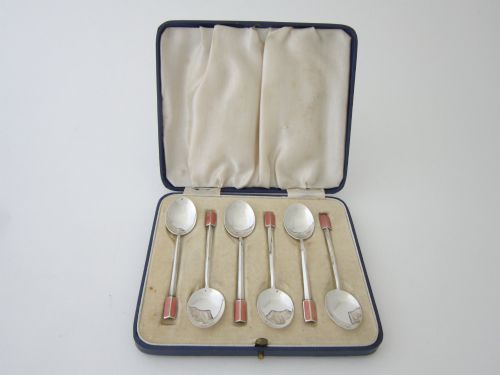
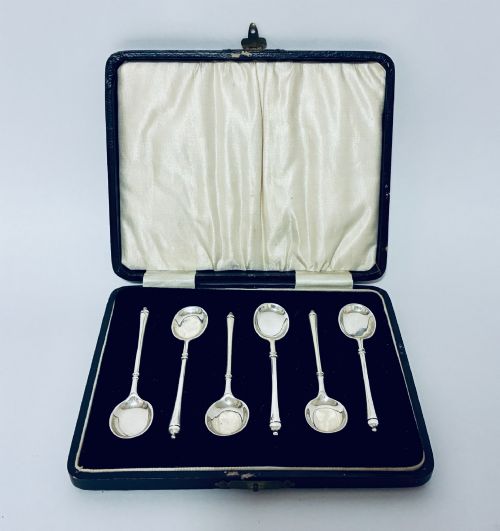


Cased Silver Demitasse Spoons
These cased silver demitasse spoons are matched sets of small spoons nestled in fitted boxes, designed for serving after-dinner coffee.
Cased Silver Demitasse Spoons
These cased silver demitasse spoons are matching sets of small spoons presented within fitted boxes lined with protective fabrics. When searching this phrase, buyers encounter sets containing six or twelve pieces designed specifically for after-dinner coffee service.
The selections on this page span from the late Victorian period through the Edwardian era into the Art Deco epoch. Forms include plain sterling pieces alongside vibrant enamelled designs and silver-gilt variations originating from British makers and international workshops.
How they were made
Makers shaped these spoons from sterling silver and silver gilt using traditional silversmithing techniques, often applying translucent enamel over guilloche engraving for decorative colour. Handles incorporate stylistic motifs reflecting the Victorian, Edwardian, Art Nouveau and Art Deco periods.
Presentation cases utilise rigid outer coverings of leatherette or textured leather lined internally with fitted beds of velvet, satin or silk. These protective housings secure each individual spoon within custom-moulded recesses.
Velvet case linings occasionally retain faint impressions where tiny spoons rested undisturbed for nearly a century.
What varies in quality
Quality rests upon the crispness of the hallmark stamps, the weight of the silver used in the bowls and stems, and the preservation of any applied enamel work. Intact, undamaged enamel without chips or hairline fractures elevates a set considerably.
The condition and integrity of the original fitted presentation case also dictate the overall standard. Cases with functioning clasps and uncompromised silk or velvet linings preserve the contents better over time.
David Andersen·Walker and Hall·Cooper Brothers and Sons
The Cased Silver Demitasse Spoons Glossary
- Demitasse
- A small cup used for serving after-dinner coffee, which these specific spoons accompany. The term derives from French origins meaning half-cup.
- Silver Gilt
- Silver objects that have been coated with a thin layer of gold on the surface. This technique produces a rich, warm yellow finish across the bowl and stem.
- Guilloche
- A decorative engraving technique producing precise, intricate geometric patterns beneath translucent enamel. This method was widely employed during the Art Deco period.
- Leatherette
- A simulated leather material utilised for the exterior covering of presentation cases. It provides a durable, protective shell for the velvet or satin interior.
- Hallmark
- An official stamp applied to precious metals indicating the standard of purity, the assay office, and the date of manufacture. These marks allow precise tracking of British silver.
Cased Silver Demitasse Spoons: Frequently Asked Questions
What is the difference between tea and coffee spoons?
Coffee spoons and demitasse spoons feature smaller bowls and shorter handles compared to standard teaspoons. They are proportioned specifically for use with small after-dinner coffee cups rather than standard mugs or teacups.
Teaspoons offer slightly larger dimensions to suit broader use with afternoon tea services. Both variations appear frequently within fitted presentation boxes.
How should silver spoons be cleaned?
Cleaning requires a soft microfibre cloth and specialised silver polish applied gently to avoid removing any delicate gilding. Enamelled pieces demand particular care to prevent harsh abrasive contact with the coloured glass surfaces.
Storing the spoons back inside their lined cases after use minimises exposure to atmospheric tarnish. Regular gentle maintenance preserves both the hallmarks and the polished finish.
Are these sets complete with all original spoons?
Most surviving cased sets contain either six or twelve matching spoons nestled into custom-moulded slots within the velvet or satin lining. Examining the individual slots reveals whether any pieces are missing from the original assembly.
Individual listings specify the exact count included within the presentation box. Matched sets remain the most sought-after configuration for collectors.
How do I identify the date of manufacture?
British pieces carry hallmarks stamped directly onto the reverse of the stem or bowl, including a specific letter code denoting the year. Reference books link these assay office letters to exact production dates spanning the Victorian and Art Deco eras.
Unmarked international pieces rely on stylistic indicators, case design, and maker marks for approximate dating. Enamel styles and geometric handle shapes often point toward specific decades like the nineteen-thirties.