




Cased Silverware
These cased antique silverware sets bring together matched silver services and their fitted protective boxes from Victorian, Edwardian, and Art Deco periods.
Cased Silverware
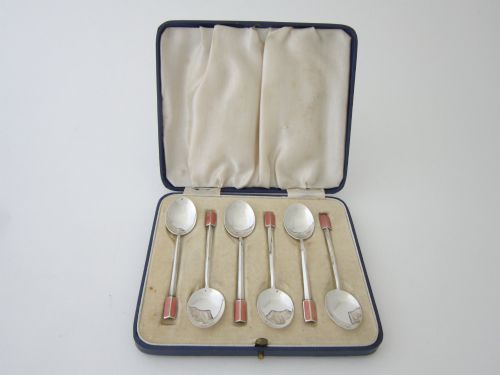
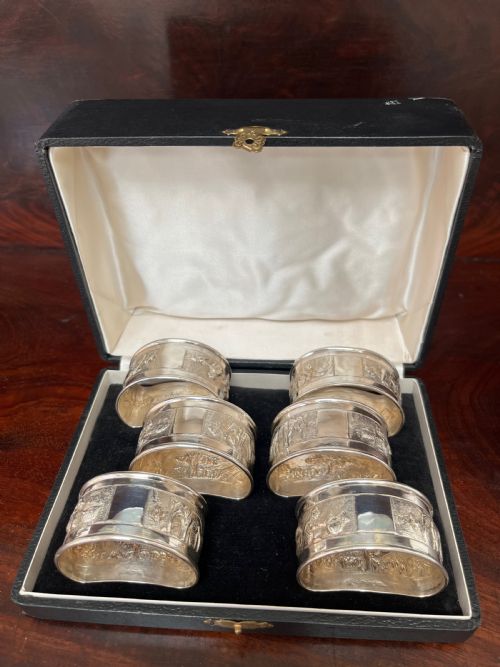
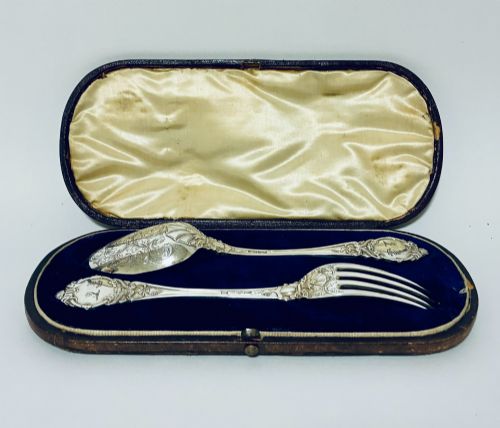
When you search for cased antique silverware, you encounter matched sets of cutlery, serving pieces, and table accessories housed in custom-fitted protective boxes. The listings here comprise items spanning from the early 1800s campaign pieces through Victorian christening sets and Edwardian cutlery to Art Deco enamel coffee spoons.
The most common forms you meet on this page are sets of spoons, napkin rings, and butter knives alongside specialist items like grape scissors and card cases. These objects originate from British and European makers, frequently presenting matching hallmarks across the metal components.
The protective cases form an integral part of the ensemble, designed to preserve delicate items like silver-gilt and enamel work. Surviving examples range from simple leatherette boxes to walnut canteens lined with silk and velvet.
How cased antique silverware was made
Makers fashioned the metal components from sterling silver or silver-gilt, utilising techniques such as casting, hammering, and engraving. Many pieces incorporate decorative vitreous enamel in vibrant colours, particularly visible on Art Deco and Arts and Crafts spoons and cigarette cases.
The fitted boxes rely on traditional woodworking and box-making methods, using structural woods like walnut covered in leather or leatherette. Artisans lined the interior recesses with plush materials including silk and velvet to cradle each specific utensil securely.
Listings feature items from the Victorian, Edwardian, and Art Deco eras, constructed from sterling silver, velvet, silk, leather, and vitreous enamel.
What varies in quality
Quality rests upon the preservation of both the silver and its original housing, where crisp hallmarks and intact interior linings elevate a set. Pieces featuring detailed work, such as hand-applied enamel or silver-gilt finishes, demand higher craftsmanship than plain utility flatware.
The integrity of the fitted case dictates much of the overall standing, noting whether the hinges remain sound and the silk or velvet lining stays clean and undisturbed. Complete sets retaining every original spoon, ring, or knife hold greater cohesion than those with later replacements.
LIBERTY & CO·Waring & Gillows·Robert Stebbings
The Cased Silverware Glossary
- Silver-gilt
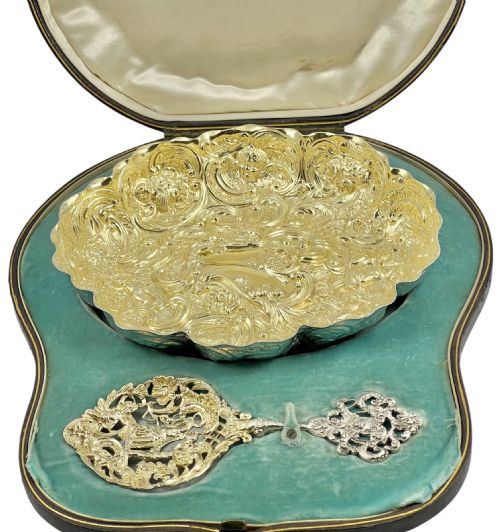
- Sterling silver that has been coated with a thin layer of gold on the surface. This technique produces a rich, golden appearance while retaining a solid silver base.
- Hallmark
- An official stamp or series of marks applied to precious metals in Britain and elsewhere. It indicates the standard of silver purity, the maker, and the year of assay.
- Vitreous enamel
- Glass powder fused to metal through high-temperature firing. This process creates a durable, glossy coloured decoration often seen on twentieth-century spoons and cases.
- Christening set
- A matched group of silver items, typically a spoon and fork or bowl, presented as a traditional gift for an infant. These are frequently found in fitted presentation boxes.
- Canteen
- A fitted box or cabinet designed specifically to hold a complete set of cutlery or silverware. They utilise internal trays and slots to organise each individual piece.
Cased Silverware: Frequently Asked Questions
Are these silver sets suitable for daily use?
Many solid silver items, such as napkin rings and standard spoons, remain robust enough for regular dining and entertaining. Pieces featuring delicate vitreous enamel, fine silver-gilt, or aged handles require gentler handling and hand washing rather than machine cleaning.
The fitted cases are designed for storage and transport rather than heavy everyday handling, so returning the pieces to their slots after use protects them from knocks and scratches.
How do I date cased antique silverware?
Examine the metal components for official hallmarks, which record assay offices, maker marks, and date letters that pinpoint the exact year of manufacture. The style of the decoration, such as George V or Art Deco motifs, provides a reliable secondary indicator of the period.
Inspect the construction methods of the accompanying case, noting the lining materials and exterior coverings like leatherette or walnut. Period boxes often employ specific hardware and interior layouts characteristic of Victorian, Edwardian, or mid-century workshops.
What does silver-gilt mean?
Silver-gilt describes sterling silver items that have undergone a process of gold plating to give them a rich golden finish. This technique was frequently applied to sugar bowls, spoons, and presentation sets to create a more luxurious appearance.
Over long periods of use and gentle cleaning, the thin gold layer may show subtle thinning, which reveals the silver underneath and forms part of the piece's history.