
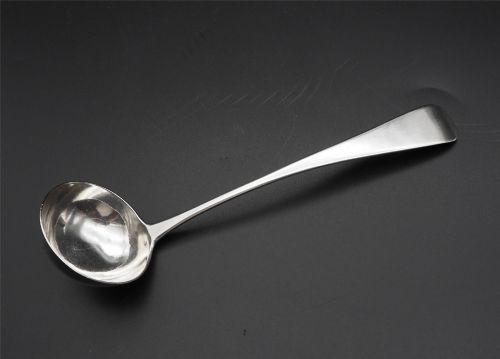
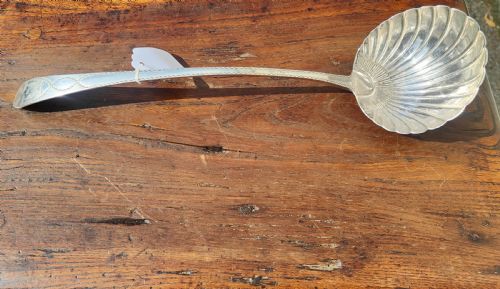
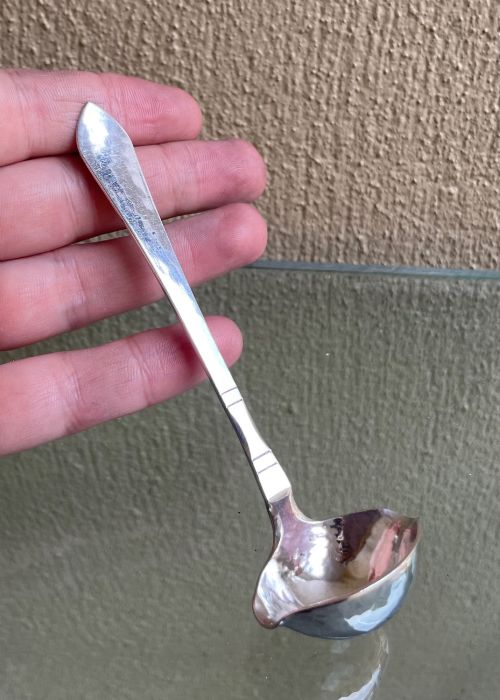
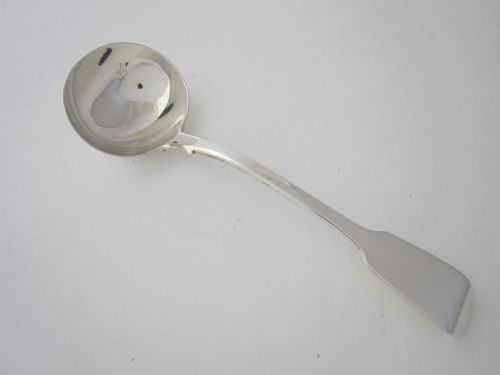




Sterling Silver Gravy Ladle
These sterling silver gravy ladle examples span Georgian to Victorian eras, offering collectors traditional service pieces crafted in solid silver and horn.
Sterling Silver Gravy Ladle
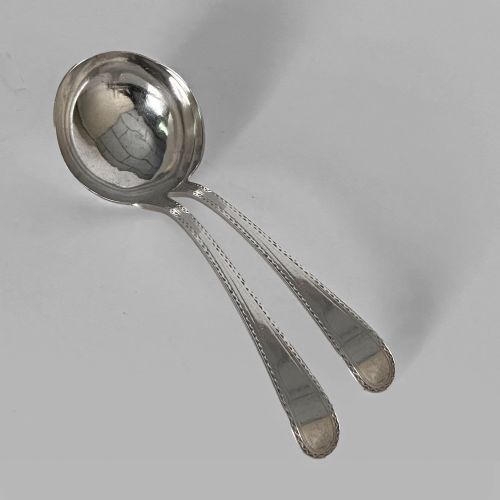
A sterling silver gravy ladle is a specialised serving utensil designed for portioning sauces and gravies at the dining table. The listings here primarily showcase traditional forms from the Georgian and Victorian periods, alongside early twentieth-century examples.
Buyers will encounter various regional styles, including Scottish provincial and Irish silver pieces, as well as continental and Danish modern variations. These utensils frequently appear singly or as matched pairs intended for formal table settings.
Object types range from standard sauce ladles and straining ladles to larger soup ladles and gravy spoons. Most examples utilise solid silver, occasionally paired with horn or wood handles.
Manufacturing and Materials
These pieces are predominantly formed from sterling silver or solid silver, hammered and shaped to create bowl and handle assemblies. Certain variations incorporate organic materials like horn and wood for the handle construction.
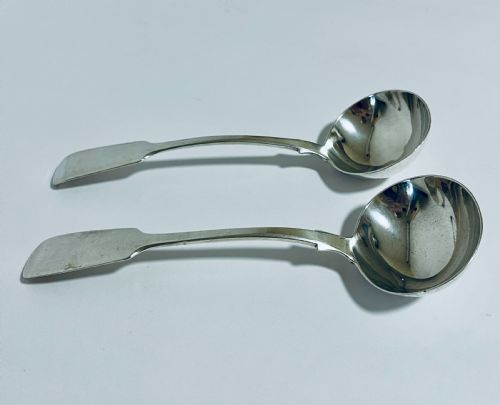
Silversmiths employed traditional techniques such as casting, hammering, and engraving to produce ornate scrollwork and specific patterns like the Fiddle pattern. Regional workshops applied distinct hallmarks and provincial motifs to identify their origins.
The listings here feature pieces from the Georgian, Victorian, and Edwardian periods, constructed primarily in sterling silver with occasional horn and wood elements.
Factors of Quality
Quality in these utensils rests upon the clarity of the maker marks, the weight of the solid silver, and the crispness of any engraved scrollwork or patterns. Pieces bearing recognised silversmith signatures command particular attention.
The integrity of the bowl shape and the secure attachment of handles made from alternative materials like horn or wood also dictate the overall standard of the piece.
Georg Jensen·Hester Bateman·Tiffany and Co
The Sterling Silver Gravy Ladle Glossary
- Sterling silver
- A silver alloy containing ninety-two point five percent silver by mass, with the remainder consisting of other metals. This standard composition ensures durability while maintaining a bright finish.
- Fiddle pattern
- A popular nineteenth-century flatware design characterised by a shoulder on the handle resembling a violin. It remains a standard shape found across many Victorian table service sets.
- Straining ladle
- A serving spoon featuring pierced holes in the bowl to separate liquids from solids during service. This form is common in nineteenth-century dining arrangements.
- Hallmark
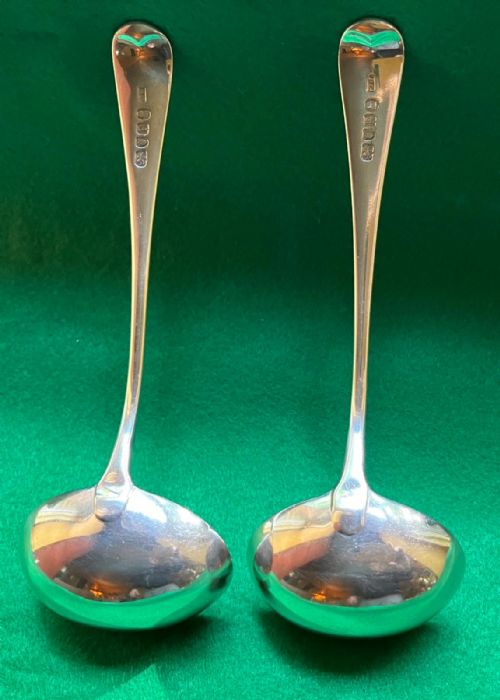
- An official stamp applied by an assay office to indicate the purity of the metal and the year of manufacture. These small marks provide historical provenance for antique silverware.
Sterling Silver Gravy Ladle: Frequently Asked Questions
What is a sterling silver gravy ladle used for?
These utensils are designed specifically for transferring liquid accompaniments, such as gravies and sauces, from a boat or tureen to individual plates. Their deep bowls and curved handles facilitate clean pouring at the table.
Historically, they formed an essential part of larger flatware and cutlery services used during formal dining occasions throughout the Georgian and Victorian periods.
How do I identify a Georgian silver ladle?
Georgian pieces typically display specific hallmarks indicating the reign of King George I through IV, alongside Dublin, Edinburgh, or London assay office marks. The styling tends to feature simpler forms or classic crested engraving compared to later Victorian ornamentation.
Examining the underside of the handle usually reveals the maker's mark and date letter necessary for precise attribution.
Can I use antique silver ladles daily?
Solid silver serving utensils are robust enough for regular use, provided they receive proper hand washing and gentle care. Avoid placing antique silverware in automatic dishwashers, which can damage horn handles or wear down delicate engravings.
Regular polishing with a soft cloth helps maintain the metal lustre without removing the underlying silver surface.
What makes provincial silver different?
Provincial pieces were manufactured outside major cities like London, often bearing unique local town marks alongside the silversmith's stamp. Scottish and Irish provincial items are particularly noted for regional variations in design and rarity.
These differences make provincial silver highly sought after by specialised collectors focusing on specific geographic regions.