

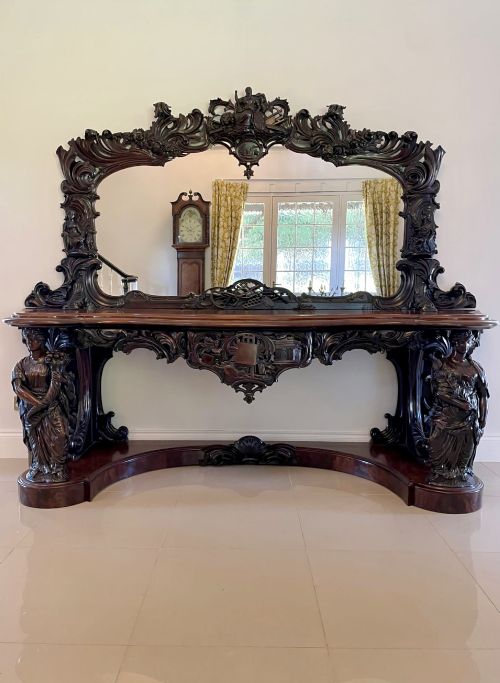
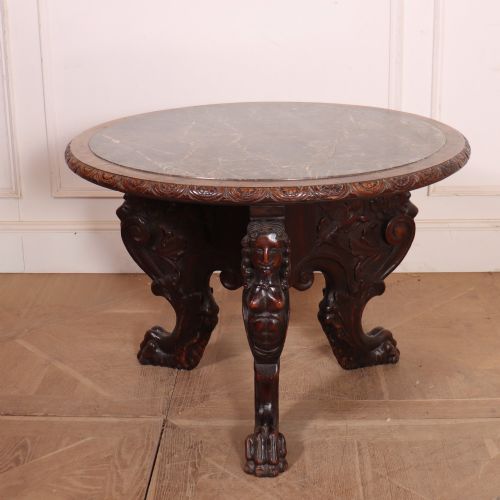


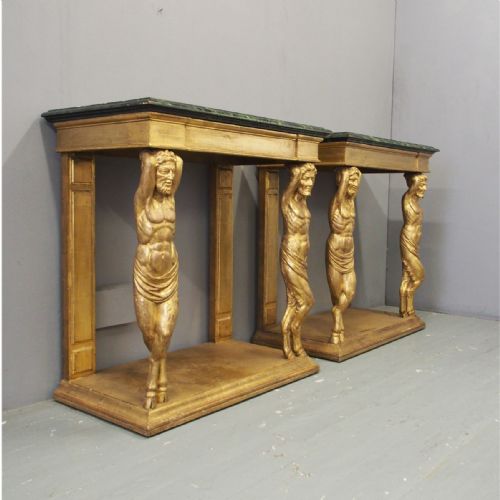


Caryatid Side Table
These caryatid side table pieces bring sculpted classical figures straight into your rooms to hold surfaces steady with ancient poise.
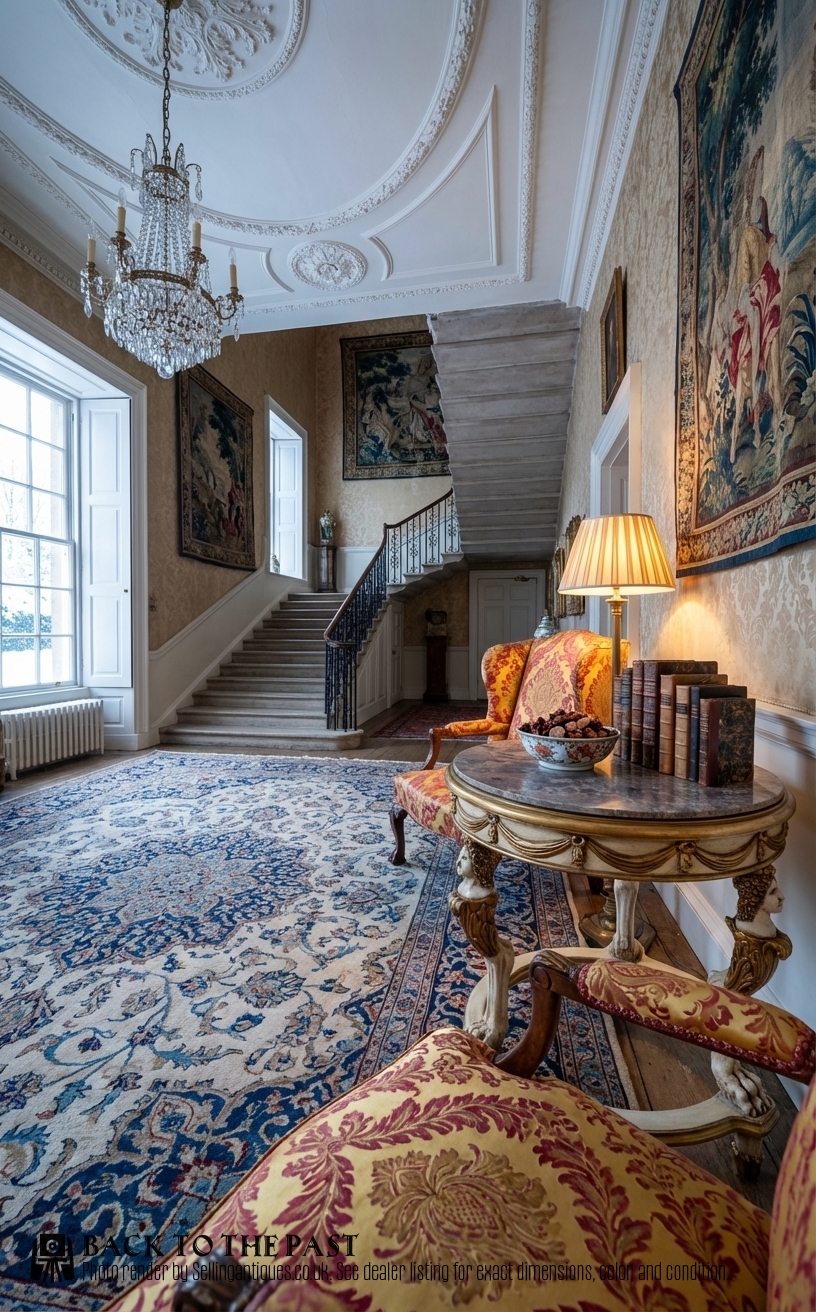
Caryatid Side Table
When you search for a caryatid side table, you encounter furniture and lighting supported by carved female figures taking the place of standard legs or columns. The selection spans the nineteenth century, including console tables, lamp tables, occasional pieces, and pedestals.
Most examples lean into Neoclassical, French Empire, and Italian Renaissance Revival tastes, often rendered in mahogany, walnut, or giltwood. Console tables with marble tops and mirror backs appear alongside smaller carved lamp tables and occasional stands.
Makers drew on classical antiquity to shape these supports, placing figures beneath timber or marble tops. The results function equally well as grand console tables against a hallway wall or smaller occasional pieces beside seating.
How they were made
Carvers shaped dense timbers like mahogany and walnut to form the structural figures, while other pieces received giltwood or painted and parcel gilt finishes. Marble tops add heavy, smooth surfaces above the carved timber bases.
Bronze and brass components appear in mounts and lamp fittings, combining metalwork with carved wood structures. Glass and mirror elements complete the larger console tables, reflecting light behind the sculpted figures.
Caryatid Side Table Retail Price Guide 2026
Typical asking prices for caryatid side table among the pieces listed under this phrase on Sellingantiques today, from the lower quarter to the upper quarter. They describe what is for sale here now, not the wider market.
Centaur designs join human caryatids on this page, proving that mythological beasts are just as capable of holding up your afternoon tea.
What varies in quality
The depth and sensitivity of the carving dictate the distinction between ordinary and exceptional figures. Subtle facial expressions, detailed drapery, and crisp anatomical rendering separate finer nineteenth-century work from simpler production.
Materials also divide the range, from painted occasional tables to substantial console tables featuring thick marble slabs and exhibition-quality mahogany. The cohesion between the supporting figure and the overall architectural form determines visual success.
The Caryatid Side Table Glossary
- Caryatid
- A sculpted female figure serving as an architectural support in place of a column or pier. These figures carry entablatures or table tops on their heads.
- Console table
- A table designed to stand against a wall, frequently secured to it with brackets or resting on front legs. They often feature marble tops and mirror backs.
- Giltwood
- Timber coated with a thin layer of gold leaf or gold paint. This finish creates a bright, reflective surface popular in Neoclassical and revival furniture.
- Gueridon
- A small circular table supported by a central column or figures. Originating in seventeenth-century France, the form persisted into the nineteenth century.
- Pier table
- A table designed to fit against the wall space between two windows. They frequently matched large wall mirrors in nineteenth-century interiors.
Caryatid Side Table: Frequently Asked Questions
Where should I place a console table?
These tables suit entrance halls, drawing rooms, or dining rooms where wall space allows them to anchor a room. Placing them beneath a mirror or painting creates a traditional focal point.
Because many examples feature finished backs or marble tops, they hold their presence well in open spaces or against panelled walls.
How do I care for marble tops?
Marble requires gentle cleaning with warm water and a soft cloth, avoiding acidic cleaners that etch the polished surface. Using coasters prevents ring marks on older stone.
Periodic waxing is unnecessary for marble, unlike the surrounding carved wood elements which benefit from mild furniture wax.
What is the difference between an occasional table and a console table?
Occasional tables are freestanding pieces designed to be moved around a room as needed for lamps or drinks. Console tables are traditionally deeper and meant to rest flush against a wall.
Console tables often incorporate wall fixings or heavy bases because of their size and marble tops.
How do I date a nineteenth-century piece?
Dating relies on examining timber species, construction joints, and stylistic revival markers typical of the period. Nineteenth-century pieces often combine machine-prepared timber with hand-carved decorative elements.
Comparing the carving style to known Neoclassical or Empire design books helps narrow the decade.