



Carved Wooden Toy Horse
A carved wooden toy horse brings the tactile weight of past childhoods into a room, offering enduring craft through simple timber and paint.
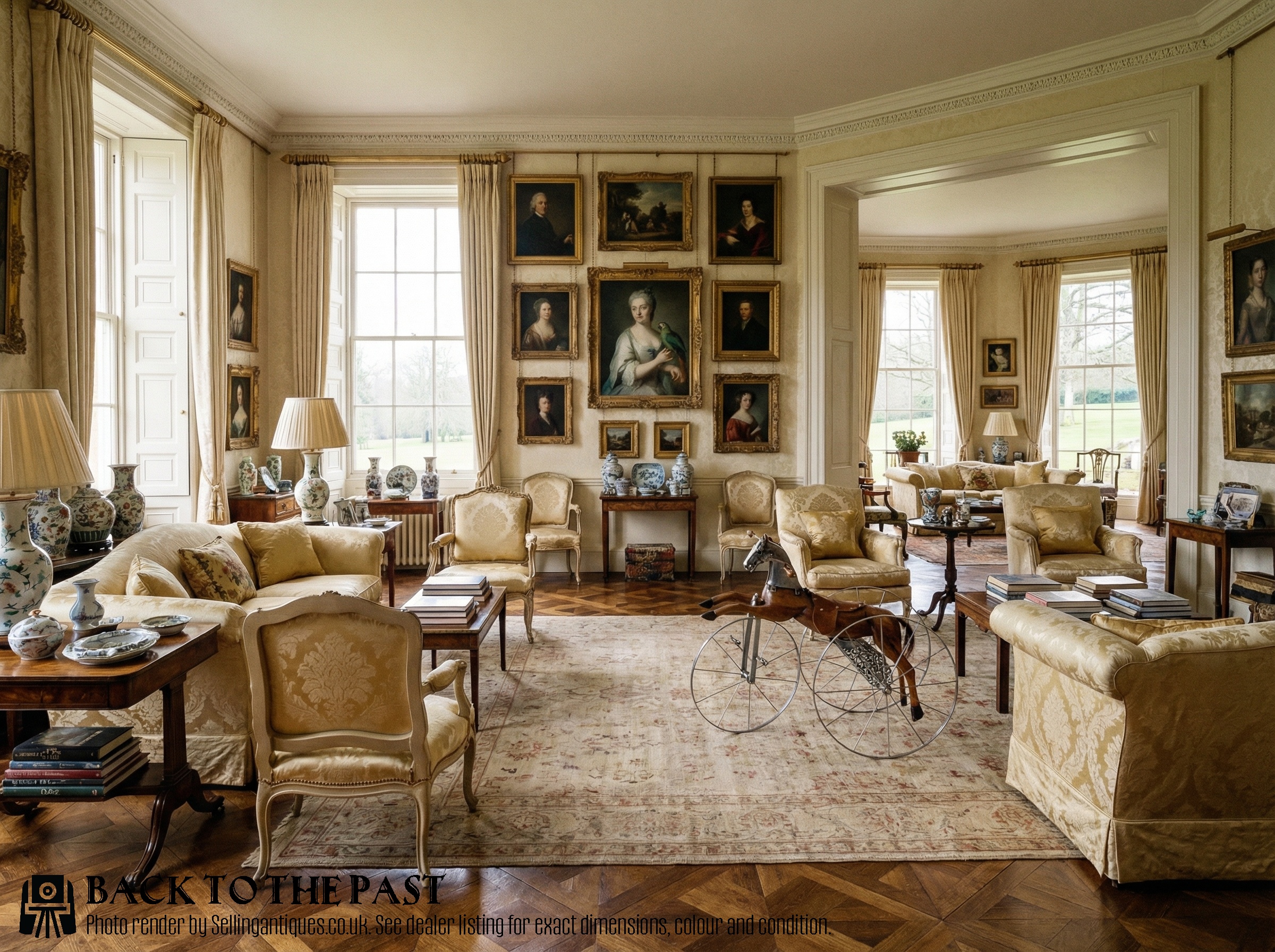
Carved Wooden Toy Horse
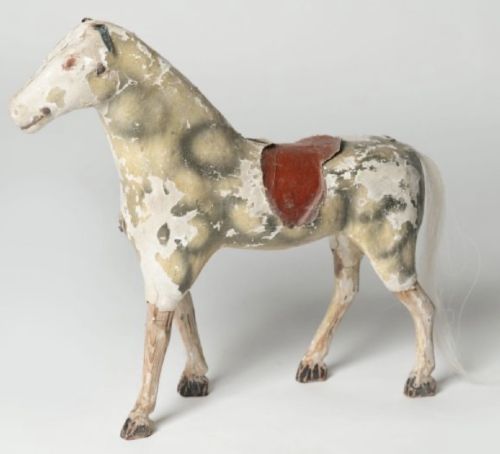
When you search for a carved wooden toy horse, you encounter a range of objects dominated by rocking horses alongside smaller folk art sculptures and decorative models. These pieces span from the eighteenth century through the Victorian era and into the interwar period.
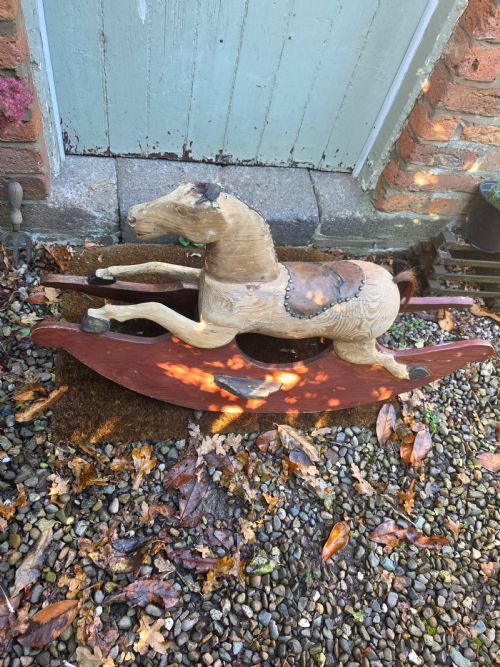
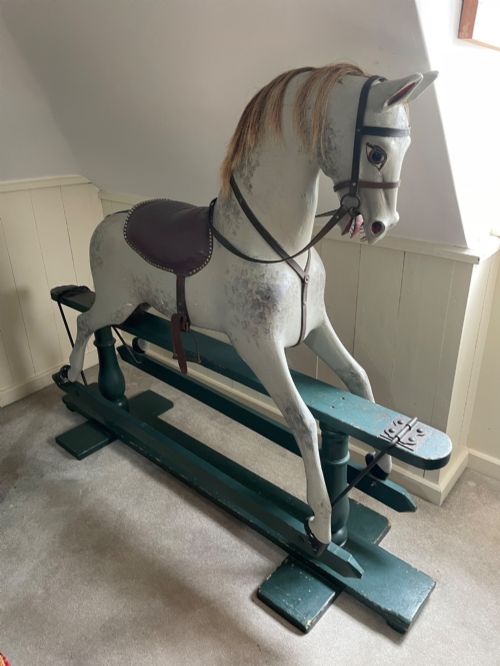
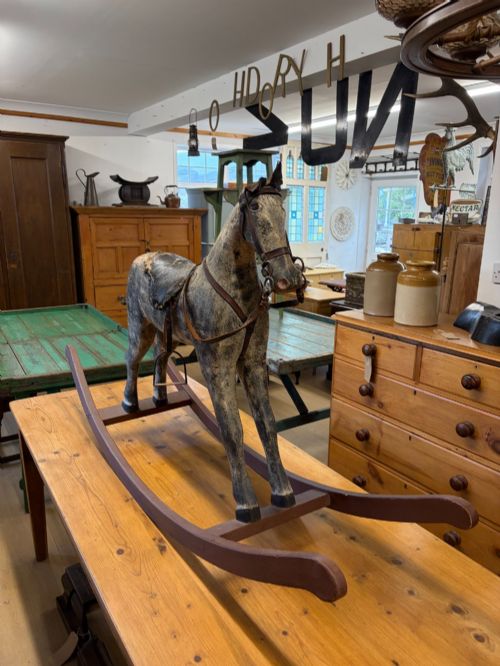
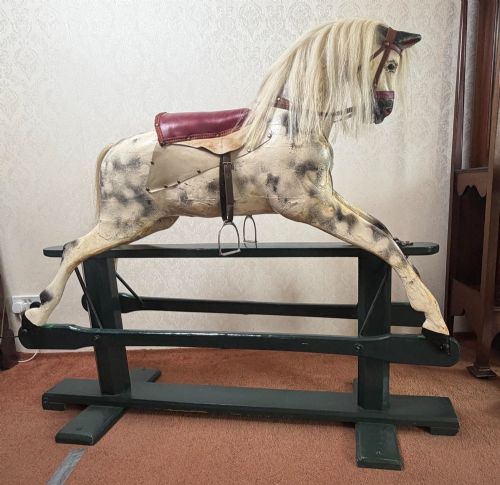
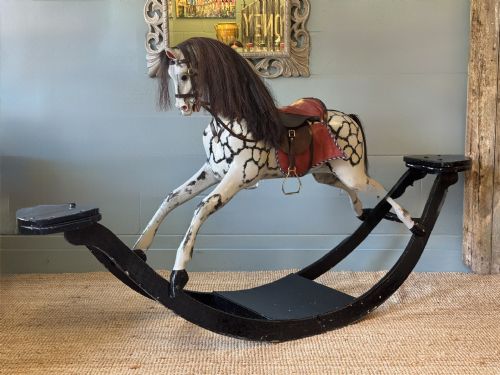
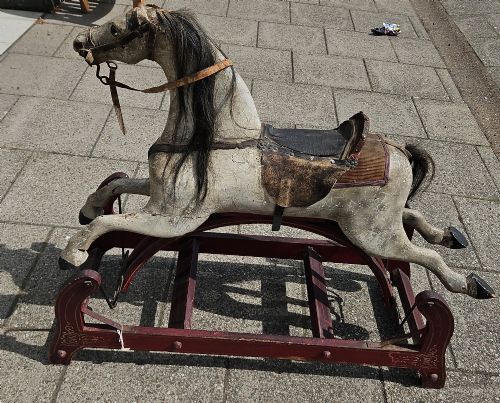
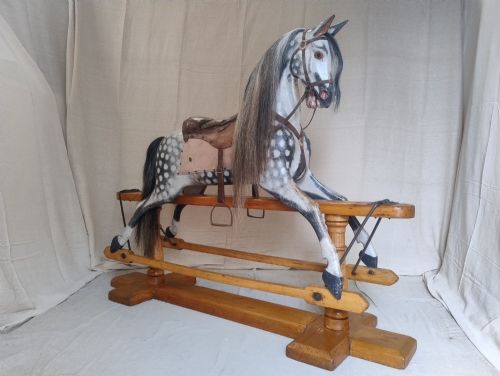
The version you are most likely to meet on this page is the nineteenth century rocking horse, often mounted on its original bow rockers or a safety stand. They appear in varying sizes, from pine models meant for nursery play to substantial workshop examples.
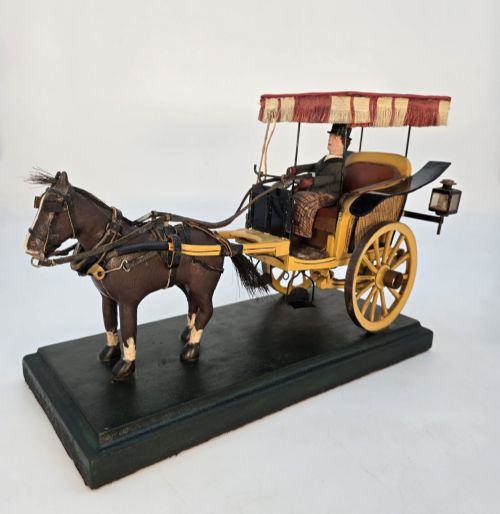
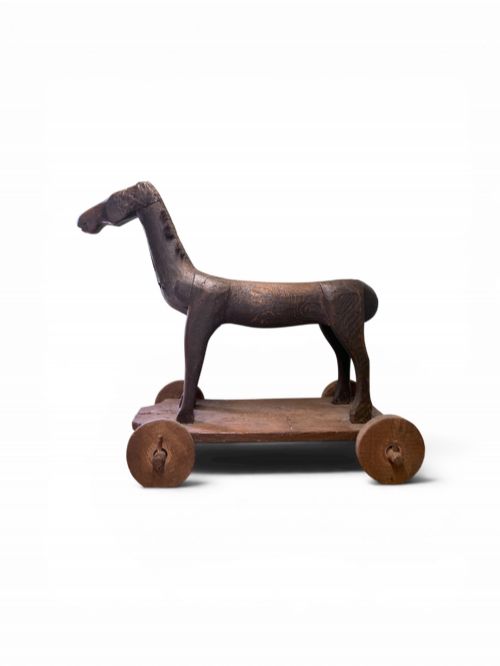
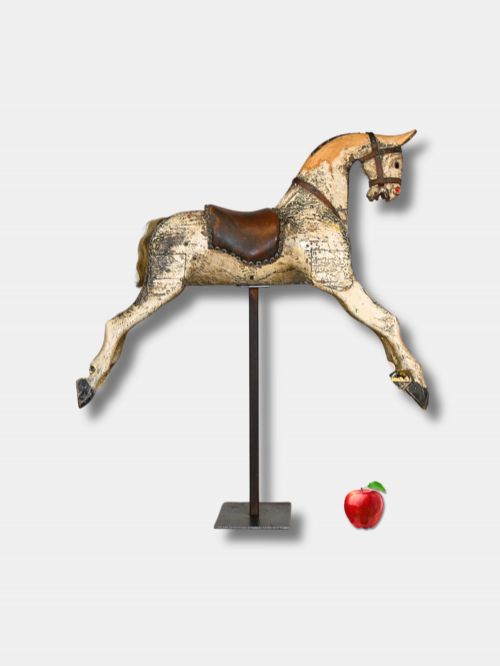
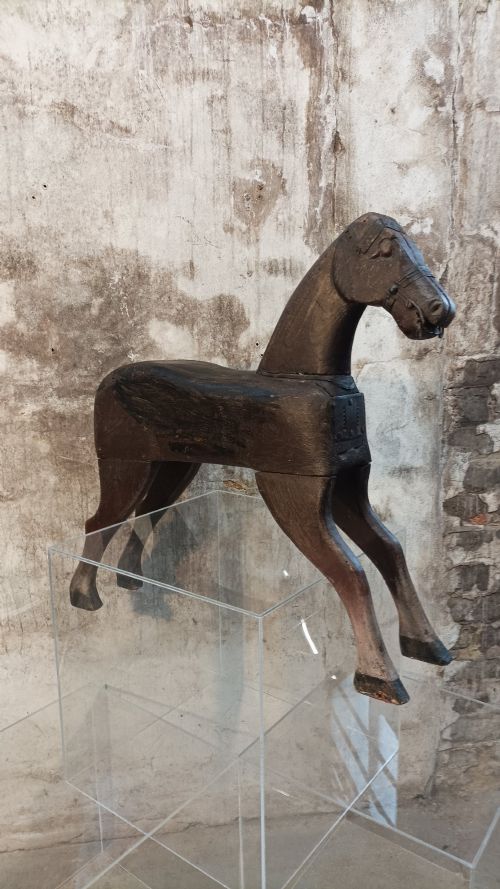
Beyond rocking toys, the selection includes naive painted sculptures and models such as a scratch built Paris chaise carriage with a horse and driver. Origins range from British workshops to French and Spanish examples.
Materials and construction
Makers shaped these horses primarily from solid timbers like pine and carved wood, sometimes utilising iron for mechanical brackets or structural braces within the stands. Leather harness straps, real horsehair manes, and metal tacks completed the upholstery details on larger nursery models.
Surface decoration relied on oil paint to create dappled coats or simple primitive finishes, often applied directly over the bare timber. Many retain their original paint layers, showing the wear of decades of use by children.
Carved Wooden Toy Horse Retail Price Guide 2026
Typical asking prices for carved wooden toy horse among the pieces listed under this phrase on Sellingantiques today, from the lower quarter to the upper quarter. They describe what is for sale here now, not the wider market.
Listings feature pieces built from pine and carved wood, decorated with leather, horsehair, and iron.
Judging quality and character
Quality in these pieces rests upon the confidence of the carving and the preservation of the original surface. A master carver captured the musculature and spirit of the animal with economy and precision, whereas simpler naive works relied on charm and heavy proportions.
The survival of original paint, leather tack, and horsehair mane elevates an example far above one stripped or heavily restored in later years. Makers who marked their work or supplied through prominent toy factories also command attention from collectors.
G & J Lines of London·F.H.Ayres·Collinson·Lines Bros Sportiboy
The Carved Wooden Toy Horse Glossary
- Rocking horse
- A toy horse mounted on curved wooden rockers or a standing frame designed for children to ride. These range from small nursery toys to large workshop productions.
- Folk art
- Objects created by self-taught makers or within regional traditions, prioritising expressive form over academic precision. These pieces often display naive charm and direct material use.
- Bow rockers
- Curved wooden pieces attached to the feet of a rocking horse to allow motion. Original rockers are integral to the piece's historical integrity.
- Original paint
- The initial surface coating applied by the maker or factory. Its survival in unrefreshed condition is central to the piece's character.
- Tack
- The harness, saddle, and reins fitted to a toy horse. They are frequently made from leather and metal components.
Carved Wooden Toy Horse: Frequently Asked Questions
How do I date an antique rocking horse?
Dating relies on construction methods, nail types, and the style of the carving. Earlier eighteenth and nineteenth century models tend to feature heavier, more primitive proportions and pegged joints.
Later Victorian and Edwardian examples often incorporated sophisticated iron swing frames and factory stamps from known makers.
Are these toys safe for children today?
Most antique pieces function primarily as decorative objects or static sculptures rather than modern playground toys. Their historical paint, aged timber, and vintage leather require careful handling.
Collectors generally place them in living spaces as display focal points rather than active children's playrooms.
How do I maintain wood and horsehair?
Keep wooden surfaces away from direct sunlight and dramatic temperature shifts to prevent timber splitting. Dust gently with a dry, soft cloth without applying modern chemical polishes.
Leave the original horsehair manes and leather tack untouched by heavy conditioning treatments.