





Carved Wooden Stick Stand
A carved wooden stick stand is a practical piece of hallway furniture designed to hold wet umbrellas and walking sticks.
Carved Wooden Stick Stand
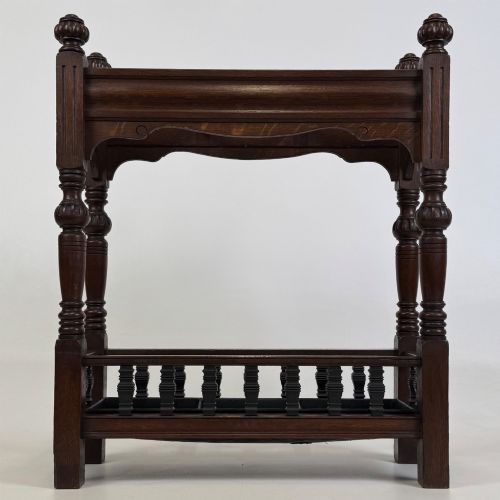
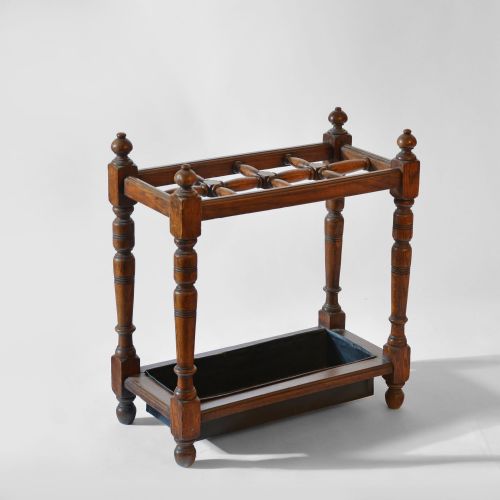
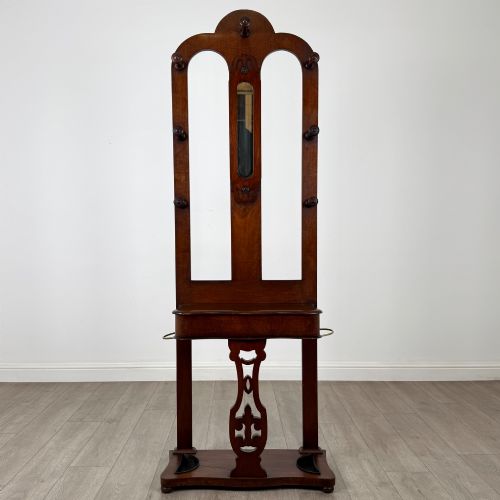
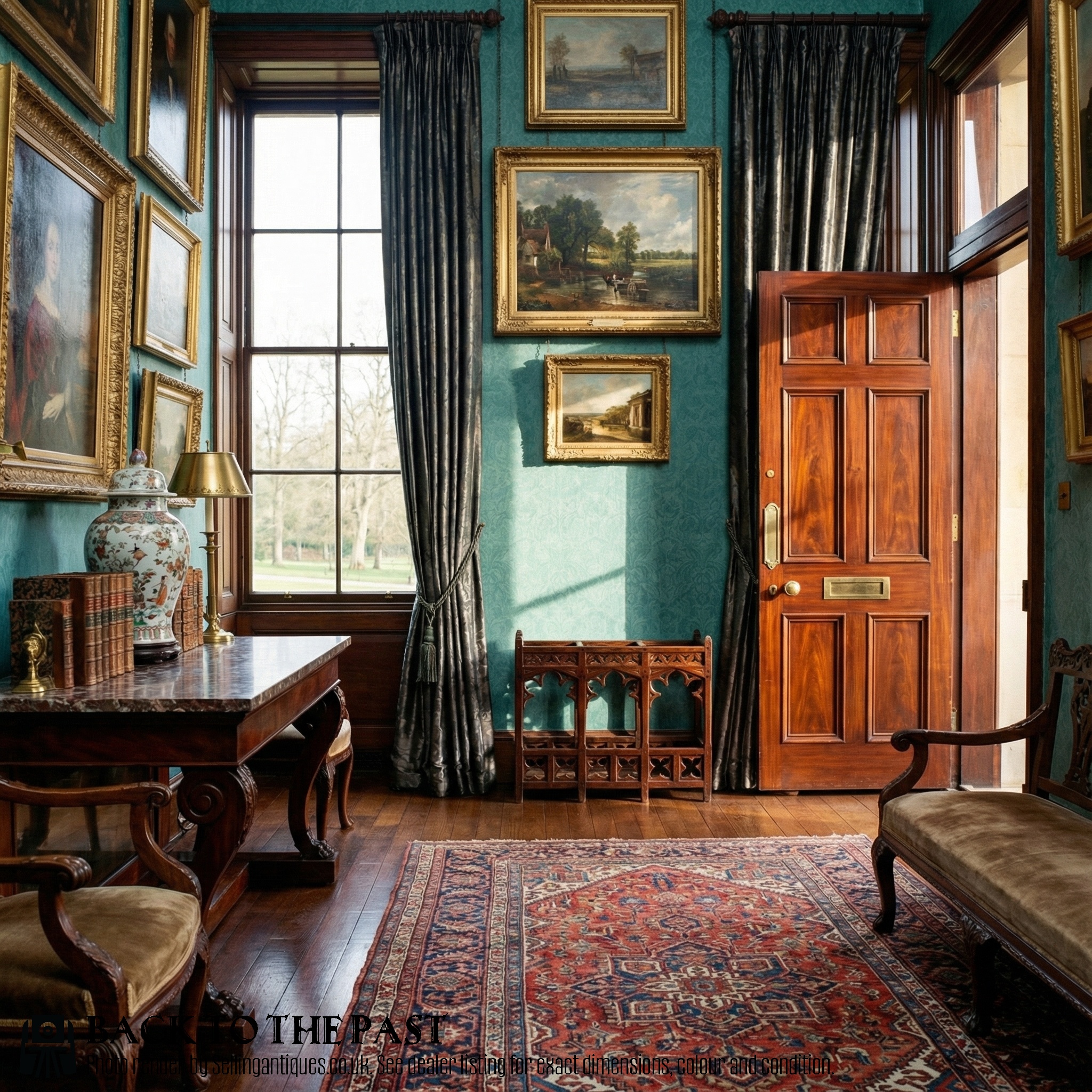
A carved wooden stick stand serves as a functional and decorative focal point for entrance halls, designed specifically to contain umbrellas and walking sticks. These items appear across the nineteenth and early twentieth centuries, with Victorian and Edwardian examples forming the majority of the pieces found here.
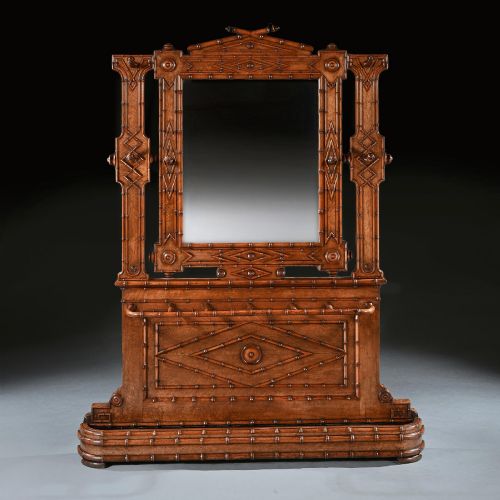
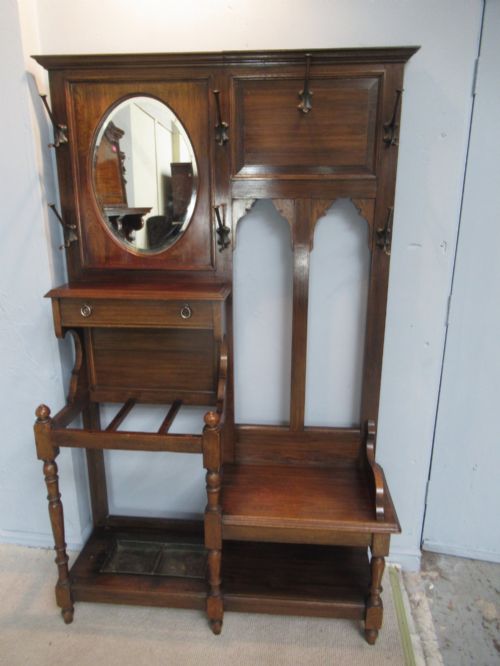
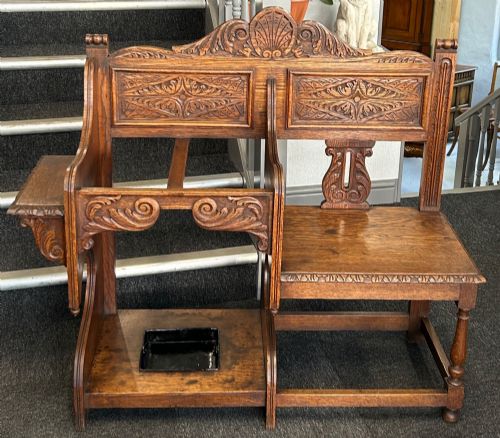
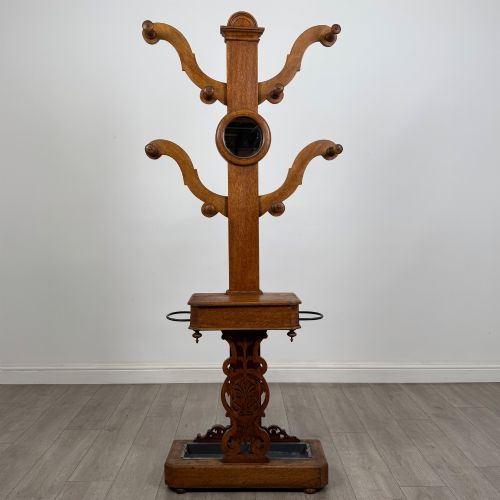
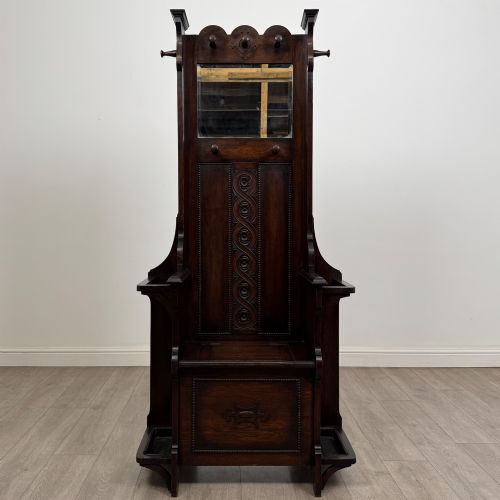
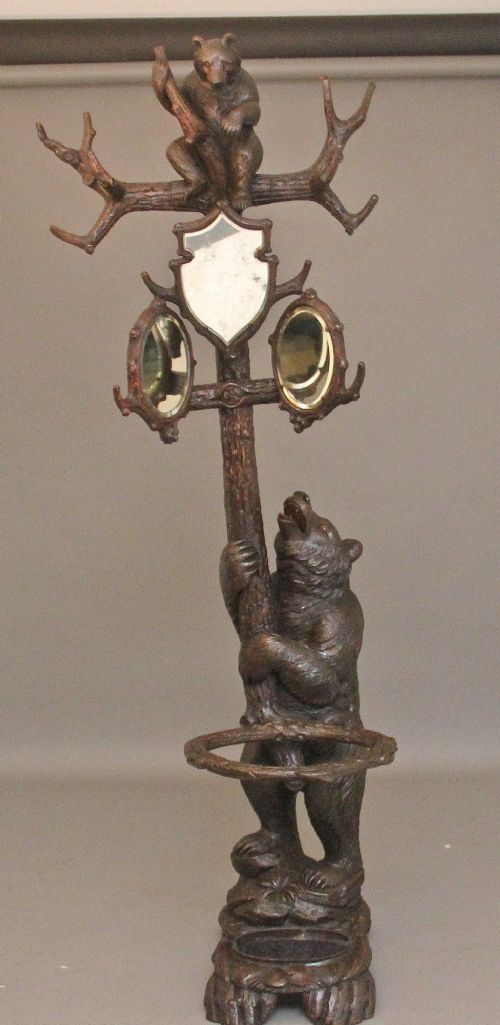
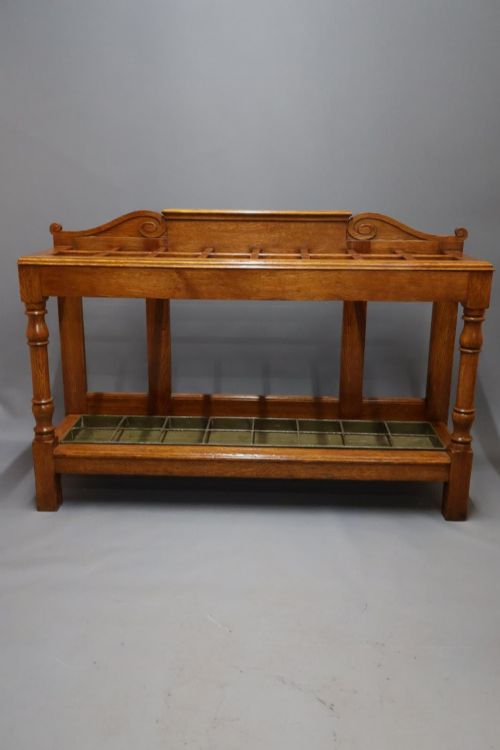
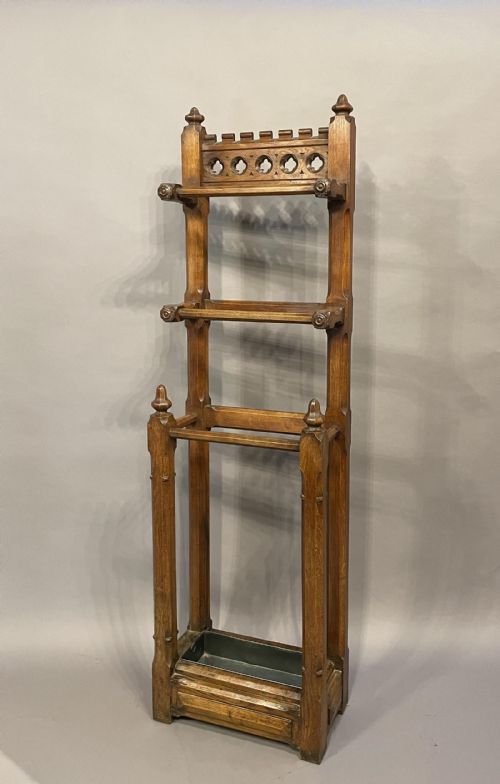
The forms vary from simple oak and mahogany frames to more elaborate Black Forest carved bear designs and combinations incorporating hall seats or mirrors. Oak and mahogany dominate the materials, often shaped in styles ranging from Gothic Revival and Arts and Crafts to Aesthetic Movement and Jacobean Revival.
How they were made
Craftsmen built these stands primarily using solid hardwoods such as oak, mahogany, and walnut, often employing coopering techniques for barrel-shaped bodies or heavy carving for figural Black Forest pieces. Structural elements frequently incorporated metal liners, drip pans in brass or iron, and occasional glass components to manage moisture from wet umbrellas.
Hand carving defined the decorative details, seen in foliage, panels, and animal figures, while structural joinery relied on traditional methods suited to heavy daily use in busy hallways.
Design styles represented include Black Forest, Arts and Crafts, Gothic Revival, and Aesthetic Movement.
What varies in quality
Quality rests in the depth and precision of the carving, the selection of figured timber, and the integrity of the original construction rather than minor surface wear. Pieces featuring intricate figural work, such as Black Forest bears or deep Gothic Revival ornamentation, require superior carving skill compared to plain turned or flat-panelled examples.
The survival of original supporting elements, such as metal or brass drip trays beneath the sticks, distinguishes well-preserved domestic items from those altered or stripped of their functional water retention basins over time.
The Carved Wooden Stick Stand Glossary
- Black Forest
- A style of wood carving originating from the mountainous region of Central Europe, well known for realistic animal figures including bears. These pieces often doubled as hall stands and furniture.
- Drip tray
- A metal or brass pan fitted at the base of a stick stand to catch water from wet umbrellas. They protect the wooden floor of the stand from rot.
- Hall stand
- A larger piece of entrance furniture that frequently combines a stick stand with coat hooks, a mirror, and sometimes a seat. They dominated Victorian and Edwardian hallways.
- Coopered
- A method of construction where narrow staves of wood are joined vertically and bound with bands, similar to barrel making. This technique appears in cylindrical wooden umbrella stands.
- Arts and Crafts
- A design movement valuing traditional craftsmanship and simple forms over mass production. Stick stands in this style often highlight plain oak grains and honest joinery.
Carved Wooden Stick Stand: Frequently Asked Questions
Where should I place a stick stand?
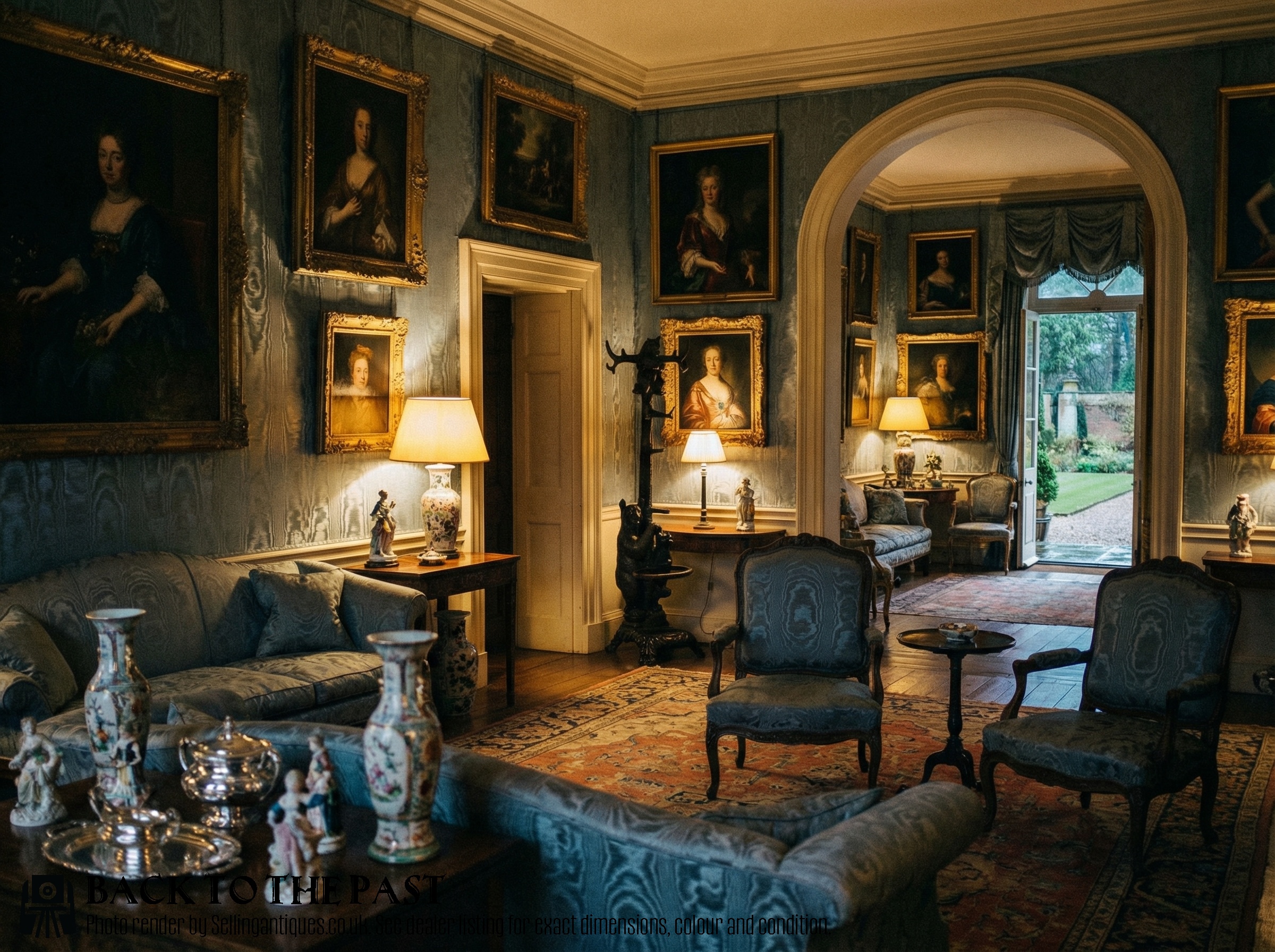
These pieces belong naturally in a hallway, porch, or boot room where guests enter the house. They function best near the main door for immediate placement of walking sticks and wet umbrellas.
Ensure the floor beneath or the internal metal tray is properly maintained to protect against residual moisture from damp items.
How do I care for wooden stick stands?
Regular dusting and occasional application of appropriate beeswax help maintain the finish of the carved wood. Keep the inner metal or brass drip trays clean and dry to prevent rust and wood damage.
Position the stand away from direct heat sources and strong radiators to prevent the timber from splitting or warping over time.
Are these stands suitable for daily use?
Most of these pieces were built for practical domestic duty in busy nineteenth and early twentieth century homes. Solid oak and mahogany construction handles regular placement of umbrellas and walking sticks without issue.
Use modern plastic inserts inside old metal trays if you need extra protection against very wet umbrellas.
How can I tell Victorian from Edwardian stands?
Victorian examples often feature heavier, darker timbers like mahogany and oak, with denser carving influenced by Gothic Revival or Black Forest styles. They tend to be substantial and imposing.
Edwardian pieces generally present a lighter aesthetic, sometimes utilising simpler Arts and Crafts lines or brighter oak finishes suited to smaller entrance spaces.