



Carved Wooden Statuette
A carved wooden statuette brings tangible warmth and individual character into a room through the direct touch of the maker's hand.
Carved Wooden Statuette
A carved wooden statuette encompasses small sculptural figures fashioned from timber across multiple centuries, ranging from European animal studies to human portraits. When you examine a carved wooden statuette on this page, you frequently encounter regional European items alongside pieces from Japanese Meiji and Raj period traditions. These objects serve as decorative ornaments, desk accessories and cabinet pieces that capture distinct cultural moments.
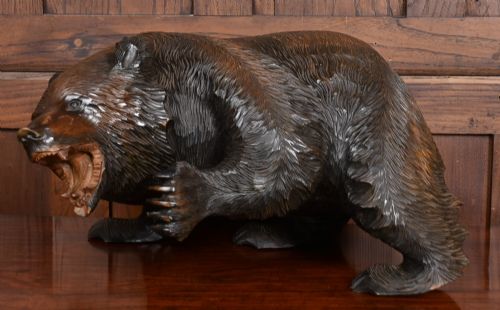
The selection ranges from early Georgian figures and German Baroque boxwood carvings to later Black Forest bears and Art Deco panthers. A carved wooden statuette often depicts domestic animals, wildlife, historical personalities or mythical subjects rendered with varying degrees of realism. These sculptures reflect the aesthetic preferences of their originating workshops, whether European folk traditions or refined Asian carving schools.
Materials and construction
Hand tools including gouges, chisels and knives shaped the raw timber directly, leaving tool marks that reveal the rhythm of the carver's labour. Some figures received a dark stain, a gilt finish, or polychrome paint to enhance surface texture and simulate natural colouring. The grain of the wood often determined the orientation of the sculpture to ensure structural stability over centuries.
Several centuries of European and Asian carvers found eternal inspiration in the humble domestic cow, immortalising bovine expression in solid timber.
Assessing craftsmanship
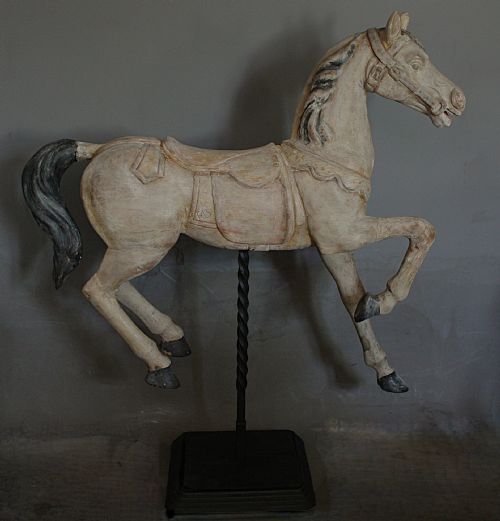
Quality rests upon the naturalism of the form and the confidence with which the carver handled the grain. Superior pieces display anatomical accuracy and expressive energy, capturing the tension in a horse's muscle or the texture of animal fur without stiffness. Lesser examples exhibit flat planes, heavy sanding that obliterates tool marks, or clumsy proportions.
The depth of relief and the ambition of the composition also separate standard items from exceptional works. Fine carvings integrate natural imperfections in the timber gracefully into the design rather than concealing structural flaws beneath thick finishes. The distinction lies in whether the sculpture possesses a distinct presence or remains merely mechanical.
Valentino Besarel·Simon Troger·Tomochika
The Carved Wooden Statuette Glossary
- Black Forest
- A style of wood carving originating in the Brienz region of Switzerland, renowned for realistic animal studies such as bears, deer, and ibex. These pieces often feature dark stained walnut or linden wood.
- Okimono
- A Japanese term for a small decorative statue, frequently carved from wood during the Meiji period. They display meticulous attention to everyday subjects, animals and folklore.
- Boxwood
- A dense, pale hardwood prized by carvers for centuries due to its fine, uniform grain. It permits microscopic detail without splintering, making it ideal for miniature portraits and religious groups.
Carved Wooden Statuette: Frequently Asked Questions
How do I clean a carved wooden statuette?
Dust the statuette gently using a soft, dry artist's brush or a microfiber cloth to prevent dirt settling into crevices.
Avoid using water, liquid cleaners, or wax polishes unless you are certain the original finish requires conditioning, as moisture can raise the grain.
Where should I place these sculptures at home?
Position your statuette away from direct sunlight and strong heat sources such as radiators to prevent the timber from drying out and splitting.
Stable indoor humidity levels ensure the wood remains intact and the joins do not warp over time.
How do I identify a Black Forest carving?
Look for deep brown stained walnut timber, highly realistic animal subjects - particularly bears and forest fauna - and rugged natural bases.
Many of these pieces originated in Swiss workshops during the nineteenth century to satisfy the European tourism market.
What is a Japanese Meiji period carving?
These pieces date from the late nineteenth or early twentieth century and showcase exceptional naturalist observation in subjects like tigers and rabbits.
They often bear signatures or artist seals on the underside or base, reflecting the high status of sculpture during this era.