

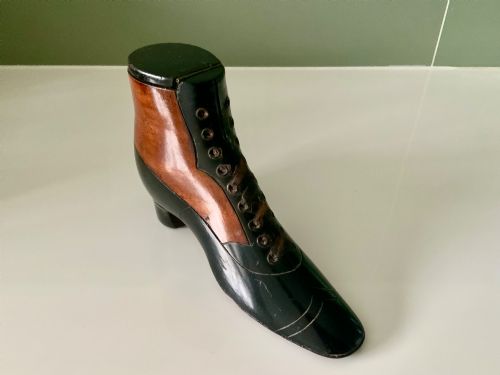

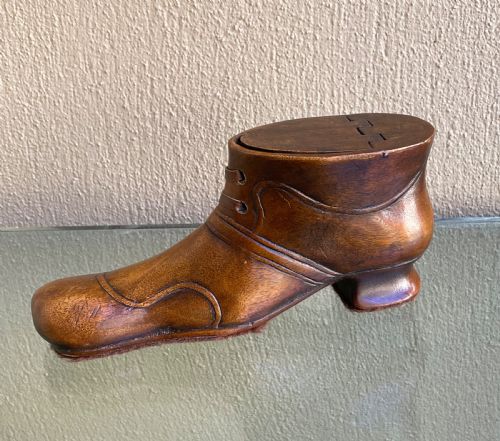


Carved Wooden Snuff Shoe
These carved wooden snuff shoe pieces are small, pocket-sized containers shaped like footwear, designed to hold ground tobacco while showing remarkable folk art detail.
Carved Wooden Snuff Shoe
When you search for a carved wooden snuff shoe, you are looking at miniature containers shaped precisely like boots, slippers, or ladies' shoes with open toes. These objects served a social purpose in holding powdered tobacco, which users inhaled or placed against the inside of the nose.
The versions you are most likely to meet on this page hail from the Georgian, Victorian, and Edwardian eras, alongside pieces simply classed by century. Makers shaped these novelty containers from dense timbers, frequently designing them with double openings or sliding lids to access the compartment.
Many examples sit within the folk art tradition, showing intimate hand-carved details such as inlaid diamonds, pictorial scenes under glass, or delicate metal wirework. They range from small single pocket items to larger double-opening forms made for table use.
How they were made
Cabinet makers and folk artisans carved these shoe forms from solid blocks of wood, utilising domestic fruitwoods, rich mahogany, and various dense hardwoods. The selection of these tight-grained timbers allowed carvers to achieve sharp contours for heels, soles, and laces without the wood splitting.
Decoration relied on meticulous hand techniques, including brass pique work that laid tiny wire and pins into the surface to form foliage and flowers. Other methods incorporated small framed pictures under glass, bone inlays, and geometric diamond patterns set directly into the wood.
Years of handling and natural skin oils created a rich, deep patina on the surface of the timber. Craftsmen finished the wood to accentuate the grain, bringing out warm tones across the curved toe and heel sections.
Carved Wooden Snuff Shoe Retail Price Guide 2026
Typical asking prices for carved wooden snuff shoe among the pieces listed under this phrase on Sellingantiques today, from the lower quarter to the upper quarter. They describe what is for sale here now, not the wider market.
Object forms here range from single pocket items to large table containers, with several pieces featuring double openings.
What varies in quality
The distinction between ordinary and superior pieces rests on the crispness of the carving and the ambition of the ornamentation. Finer examples display realistic proportions in the heel and toe, accompanied by complex decorative schemes like pique work or integrated pictorial panels.
Surface finish and the preservation of the original patina dictate the visual depth of the timber. Pieces that retain a deep, warm gloss without obscuring the hand-carved details demonstrate superior age and better material selection.
Mechanical complexity also separates the tiers, with double-opening compartments and neatly fitted sliding lids showing a higher standard of craftsmanship than single solid blocks.
The Carved Wooden Snuff Shoe Glossary
- Treen
- Small handmade wooden domestic objects. This term covers everything from small boxes to bowls created before the widespread use of plastic.
- Pique work
- A decorative technique using tiny metal pins or wire inlaid into a solid base material. Artisans arranged these metallic pieces to form floral patterns or geometric designs.
- Snuff
- Ground tobacco leaves taken nasally. Users kept this powder in small personal containers designed to fit in a pocket or sit on a table.
- Patina
- The surface sheen and colour acquired by wood through age and frequent handling. This appearance develops naturally over decades of use.
Carved Wooden Snuff Shoe: Frequently Asked Questions
What is a carved wooden snuff shoe?
A carved wooden snuff shoe is a small container shaped like a shoe or boot, created to hold powdered tobacco during the eighteenth and nineteenth centuries.
Craftsmen carved these miniature footwear items from dense hardwoods and fruitwoods, often incorporating sliding lids or double openings for practical use.
How were these shoe boxes used?
Owners carried these small containers in their pockets or placed them on tables to dispense snuff during social gatherings. The user would slide or lift the lid to access the tobacco powder inside.
The small scale made them personal accessories that showed off the owner's taste through carved decorations and inlaid metal work.
How do I date a wooden snuff shoe?
Dating relies on stylistic clues, the type of wood utilised, and decorative techniques like brass pique work or inserted pictures. Georgian pieces often feature rich mahogany, while Victorian examples lean towards folk art interpretations.
Examining the depth of the patina and the wear patterns on the timber also helps establish the age of the piece.
Are all snuff shoes made of wood?
While the pieces listed here are carved from wood, makers also employed bone, metal, and glass elements for decoration. Timber such as fruitwood and mahogany formed the primary body of the shoe.
Additional materials like brass wire and glass panels served purely as ornamental additions to enhance the visual appeal.