

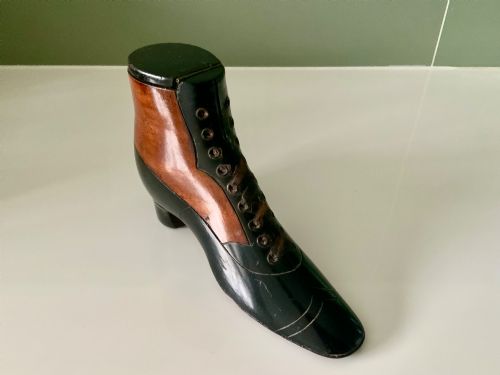

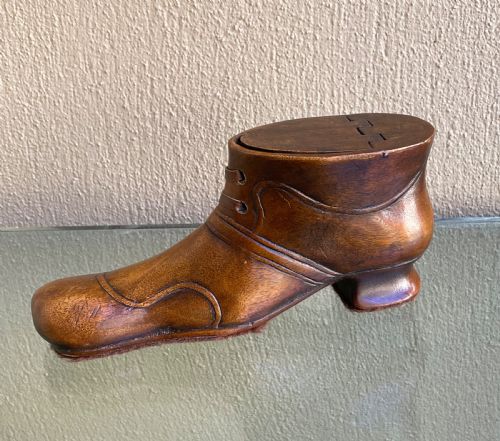


Carved Shoe Snuff Box
These carved shoe snuff box examples are pocket-sized pieces of treen folk art designed to hold tobacco.
Carved Shoe Snuff Box
A carved shoe snuff box takes the whimsical form of footwear, fashioned to hold dry tobacco for inhalation. These small treen objects surface most frequently from the Georgian, Victorian, and 19th century periods.
Makers shaped these boxes from wood to resemble ladies' shoes and boots, sometimes forming double-opening compartments or pairs. Examples appear with carved lace decoration, chip carving, or inlaid details.
The objects served as sociable pocket items for gentlemen and ladies during the eighteenth and nineteenth centuries. Collectors encounter single shoes, double boxes, and novelty tobacco containers reflecting folk art traditions.
How they were made
Carvers shaped fruitwood, mahogany, and other hardwoods using hand gouges and knives to achieve the contoured shape of a shoe. Surface ornamentation often includes brass wire pique work, inlaid diamonds, and carved depictions of birds or figures.
Many boxes feature sliding lids or double openings integrated into the heel or sole of the shoe. Artisans applied chip carving to texture the wooden uppers, mimicking the appearance of leather and fabric footwear.
Carved Shoe Snuff Box Retail Price Guide 2026
Typical asking prices for carved shoe snuff box among the pieces listed under this phrase on Sellingantiques today, from the lower quarter to the upper quarter. They describe what is for sale here now, not the wider market.
Some shoe boxes include tiny painted pictures of ladies hidden beneath sliding wooden soles.
What varies in quality
Quality rests upon the crispness of the carving and the complexity of the surface decoration, such as inlaid brass wire or detailed pictorial insertions. Plain turned timber lacks the visual interest found in pieces featuring intricate lace motifs or chip carved patterns.
The depth and warmth of the surface finish distinguish superior boxes from simpler specimens. Well-handled examples develop a rich deep patina through decades of use.
The Carved Shoe Snuff Box Glossary
- Treen
- Small handmade wooden objects for domestic use. This term embraces the vast range of turned and carved wooden snuff boxes found in these collections.
- Snuff
- Ground tobacco inhaled through the nose. The habit generated a large market for small, portable pocket containers.
- Pique work
- Inlay of tiny pins or wire in a pattern. Artisans used brass wire to ornament the wooden surfaces of shoe boxes.
- Chip carving
- Surface decoration made by chipping away small triangles of wood. This technique created geometric patterns on early nineteenth-century examples.
Carved Shoe Snuff Box: Frequently Asked Questions
What is a carved shoe snuff box?
A carved shoe snuff box is a small wooden container shaped like a shoe or boot, created to hold powdered tobacco. Artisans carved these novelty pieces from hardwoods during the eighteenth and nineteenth centuries.
These pocket-sized objects combine practical function with folk art sculpture. Many feature sliding lids, inlaid brass wire, or detailed lace carvings.
How were these shoe boxes used?
Owners carried these small containers in pockets or waistcoats for social tobacco use. Slipping open the lid allowed access to the dry snuff contained within.
The novelty shape provided a topic of conversation in company. Dual compartments sometimes held different blends of tobacco.
What woods were used for shoe snuff boxes?
Carvers utilised dense local and exotic timbers that could hold fine detail without splitting. Mahogany and fruitwood appear frequently across the surviving items.
These close-grained hardwoods allowed artisans to execute sharp chip carving and delicate inlay work. The timber choice directly influenced the final patina.
How do I date an old shoe snuff box?
Dating relies on stylistic clues, construction methods, and surface wear. Georgian and eighteenth-century examples often display simpler mahogany forms, while Victorian pieces lean toward elaborate folk art.
Inlay techniques and hardware styles help narrow the period of origin. Natural handling marks and a deep patina indicate genuine age.