


Carved Wooden Shoe Box
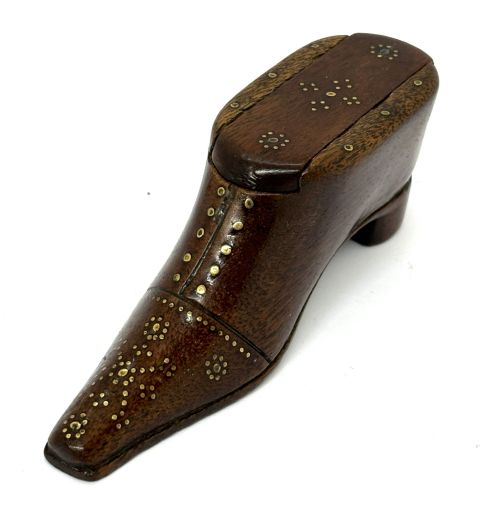
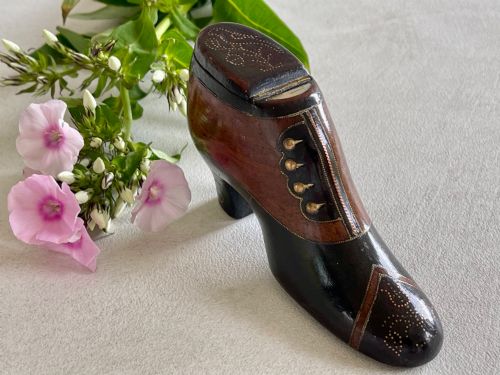
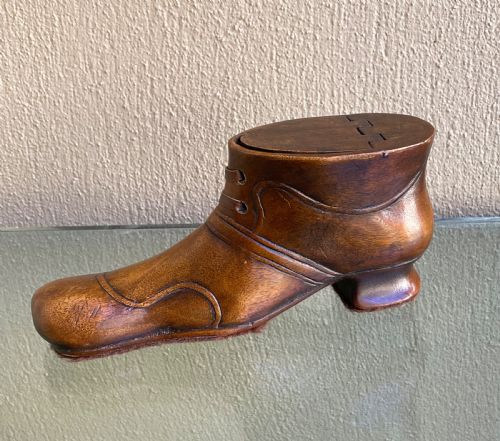
These carved wooden shoe box examples are miniature snuff boxes shaped like footwear, prized by collectors for their intricate folk art detail and clever hidden compartments.
Identifying carved wooden shoe box pieces
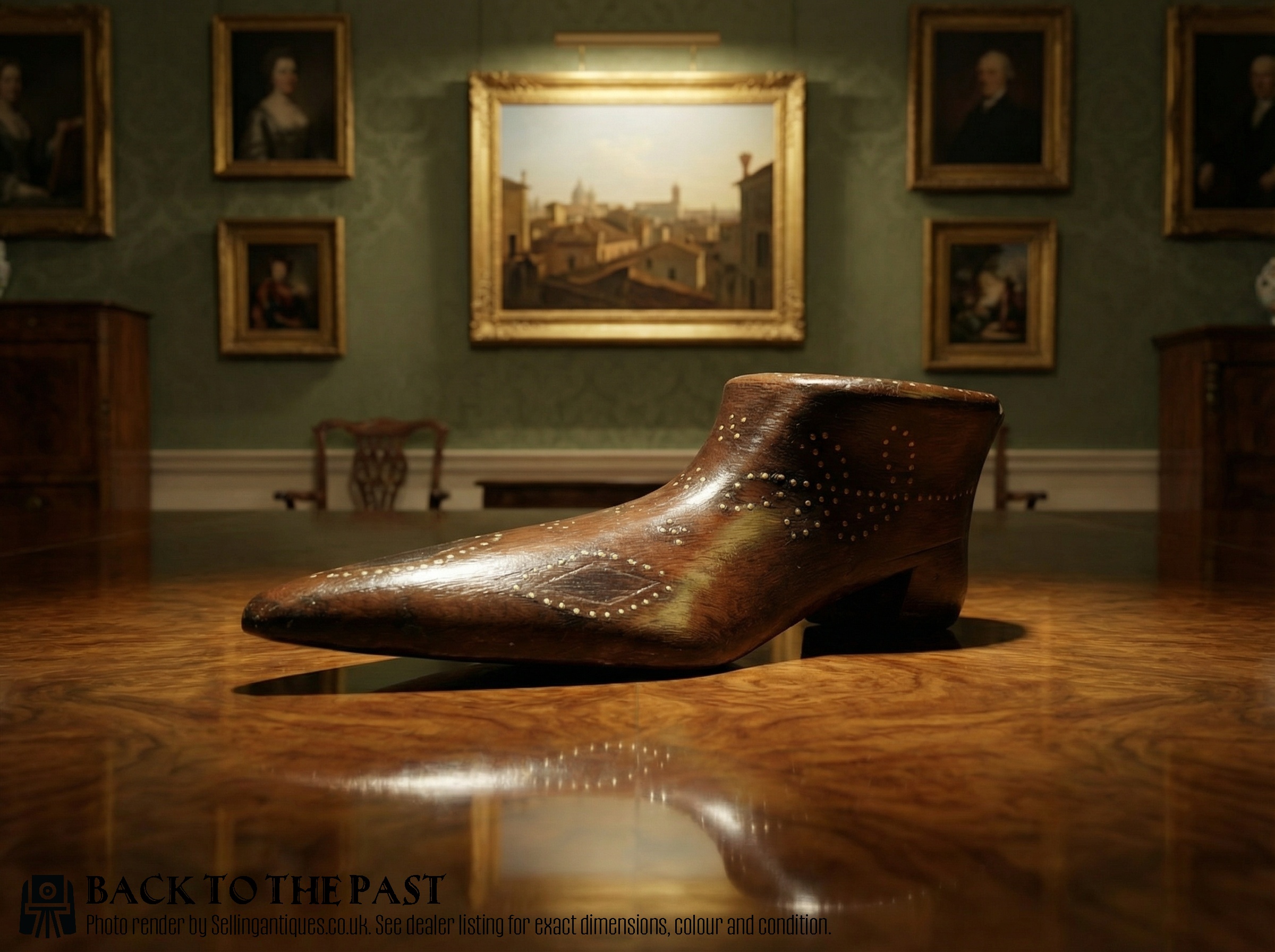
A carved wooden shoe box takes the form of a miniature shoe or boot, created to hold snuff rather than footwear. These curious containers appear across the Georgian, 19th Century, and Edwardian periods.
Georgian and Victorian folk art traditions heavily influence these designs. The examples found here range from mahogany table snuff boxes to smaller pocket versions.
Materials and construction
Artisans carved these objects from dense timbers including mahogany and general hardwood. The natural grain of the wood provides a rich deep patina developed through handling and age.
Decoration often incorporates contrasting materials embedded into the wooden surface. Brass pique work foliage, inlaid diamonds, and bone details embellish the exterior of the carved forms.
Retail Price Guide 2026
Typical UK retail prices for carved wooden shoe box, calculated from the Sellingantiques database of over a million retail prices indexed since 2003. This retail price guide relies exclusively on Sellingantiques data; no external sources or auction records are used, so the figures do not describe the wider market.
Current listings span the Georgian, 19th Century, and Edwardian periods, featuring both mahogany and general hardwood constructions.
Assessing quality in carved footwear boxes
Superior examples demonstrate high sculptural skill in the shaping of the toe, heel, and instep. The depth and precision of the carving separate standard turned items from masterworks of Victorian folk art.
The integration of decorative embellishments dictates the refinement of the piece. Subtle inlay work and well preserved brass pique foliage indicate greater maker effort than plain wooden surfaces.
The Carved Wooden Shoe Box Glossary
- Snuff box
- A small container designed to hold powdered tobacco called snuff. These items often feature tightly fitted lids to preserve the contents.
- Treen
- Small domestic wooden objects made by turning or carving. This term covers functional items produced before the widespread use of plastics.
- Pique work
- A decorative technique involving tiny points of metal such as brass inlaid into a non-metallic base. This method creates delicate patterns across the wooden surface.
- Patina
- The surface sheen and colour acquired by materials through age and use. A rich patina indicates long handling over many generations.
Frequently Asked Questions
What is a carved wooden shoe box used for?
These small containers served to hold and dispense dry snuff for personal consumption. Owners carried them in pockets or displayed them on tables for guests.
The hinged lids and sliding panels kept the scented tobacco fresh and secure. Today, they function primarily as decorative cabinet pieces for folk art collections.
How old are these shoe snuff boxes?
The examples available span from the Georgian era through the 19th Century and into the Edwardian period. Each era brings distinct stylistic touches to the carving.
Earlier pieces often display restrained mahogany shaping, while Victorian versions lean towards ornate folk art detailing and inlaid decoration.
What woods were used to make them?
Carvers selected dense hardwoods, notably mahogany, which accepted fine detail without splitting. The timber choice allowed artisans to shape realistic heels and toes.
Over decades of use, these woods developed a deep patina that highlights the original grain and carving contours.
How do I care for antique treen?
Keep wooden snuff boxes away from direct sunlight and sudden temperature changes to prevent the wood from drying out. Avoid harsh chemical cleaners and excessive moisture.
A light application of appropriate wax helps maintain the surface sheen and preserves the metal inlay without harming the aged patina.