

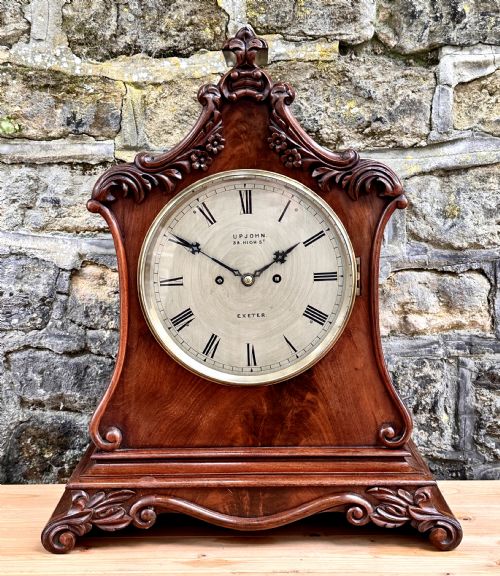
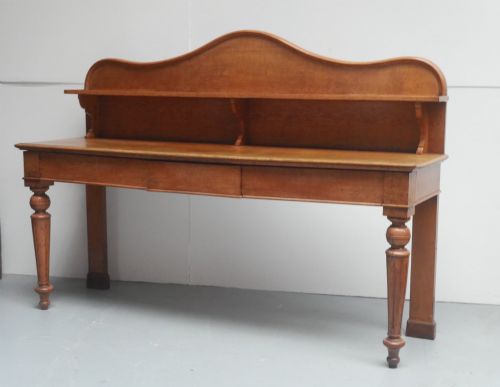
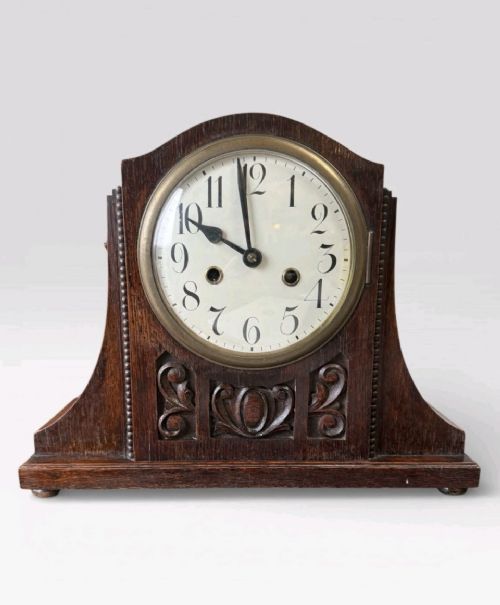
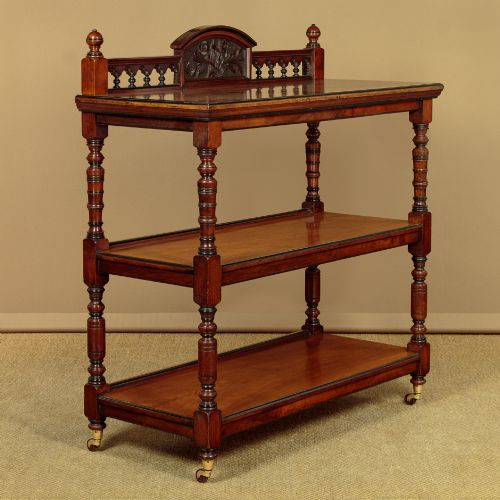
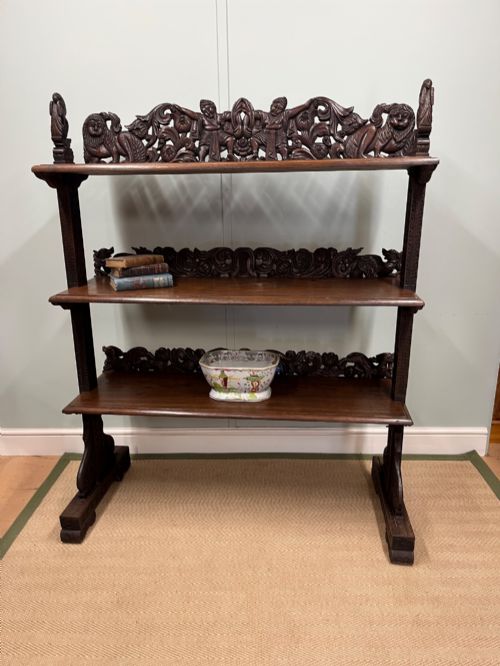
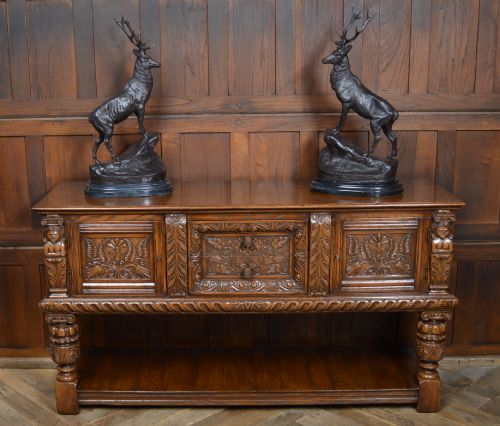

Carved Wooden Shelf Table
A carved wooden shelf table brings structured display space and rich tactile depth to a room through traditional timber craftsmanship.
Carved Wooden Shelf Table
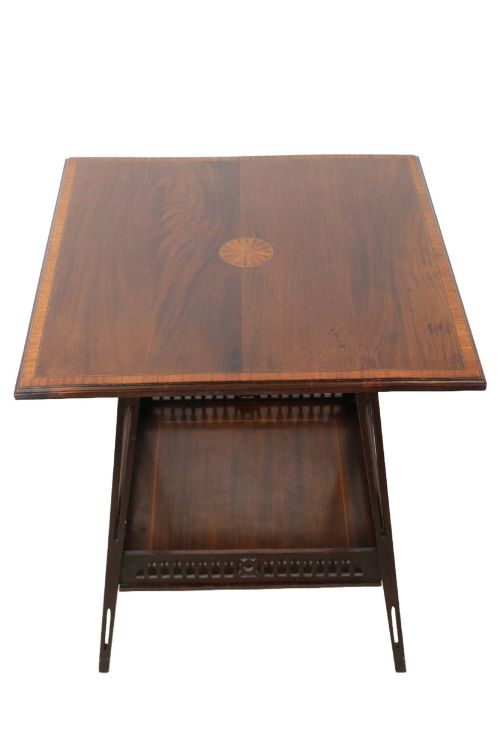
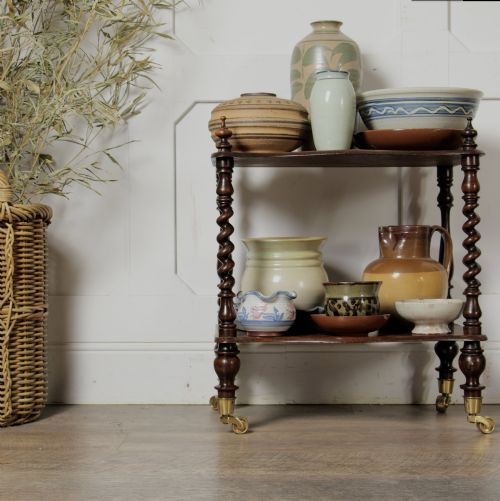
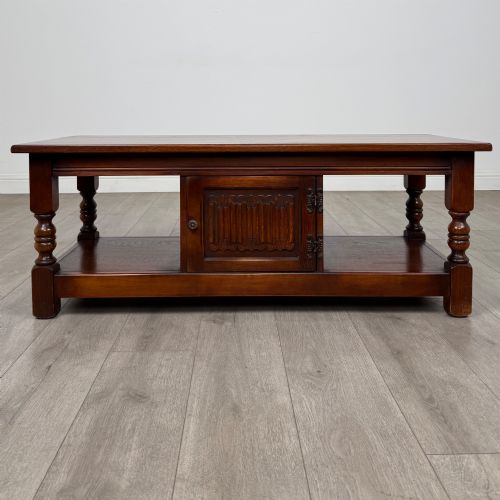
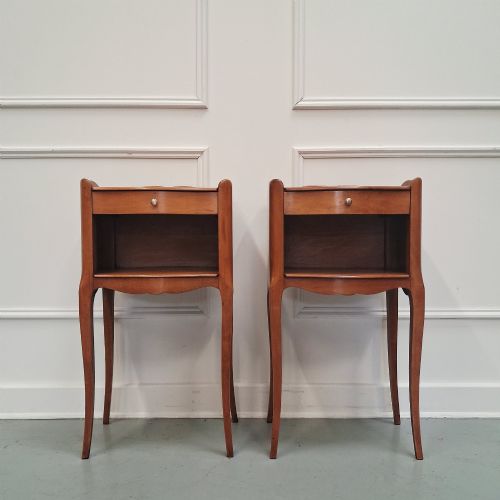
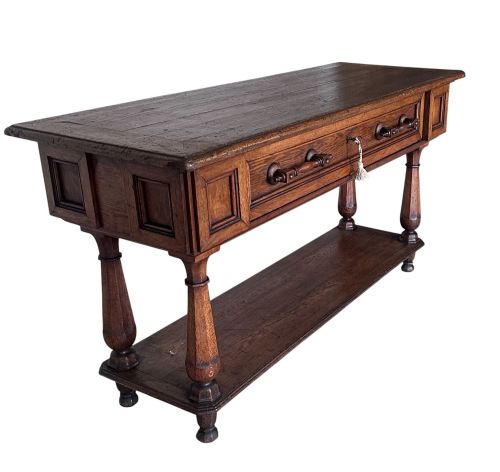
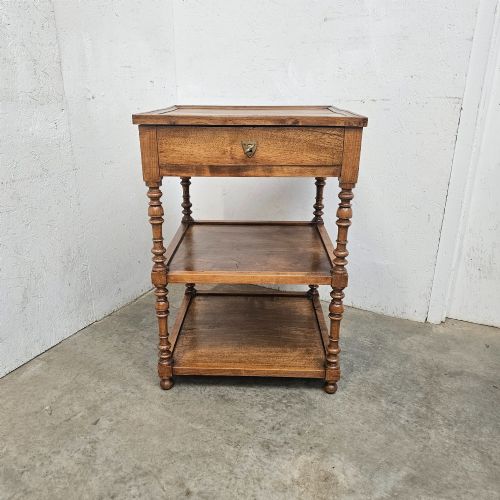
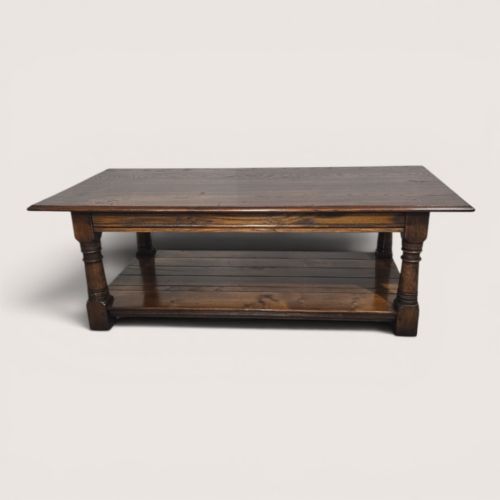
A carved wooden shelf table combines surface utility with tiered levels, appearing across the inventory in forms such as occasional tables, etageres, and whatnots. Buyers seeking a carved wooden shelf table will encounter pieces ranging from compact Edwardian occasional designs to larger Victorian tiered furniture.
The material palette is dominated by oak, mahogany, and walnut, frequently enriched with detailed woodwork. These tiered surfaces function primarily to display decorative objects or house daily items while anchoring a room with period character.
Originating from periods spanning the nineteenth century through the early twentieth century, these tables reflect diverse regional workshops. Examples stretch from British Edwardian and Victorian iterations to continental styles including French Provincial and Black Forest carving.
Distinguishing quality across pieces
Quality separates through the depth, sharpness, and execution of the carved ornamentation rather than the mere presence of decoration. Skilled hand-carving displays undercut details and fluid lines, whereas lesser examples rely on shallow stamping or repetitive machine routing.
The choice of timber grain and the integrity of the joinery further divide the tier of execution. Superior pieces utilise well-figured mahogany, walnut, or oak with tight joints that maintain rigidity across multiple tiers without relying on excessive modern fasteners.
Design influences span French Provincial, Black Forest, and Arts and Crafts traditions.
Trevor Page Co·Lenzkirch·Piggin Norwich·Funnell of Brighton
The Carved Wooden Shelf Table Glossary
- Etagere
- A piece of furniture consisting of a series of open shelves for displaying small objects. The term originates from France and often describes lighter, decorative tiered tables.
- Barley twist
- A type of column or leg turned to resemble a spiral rope or twist. This decorative turning technique appears frequently on nineteenth-century supports and table legs.
- Fretwork
- Ornamental work consisting of interlaced or perforated patterns carved into wood. It provides delicate textural contrast on aprons and brackets.
- Occasional table
- A small table designed for transient use in a room, such as beside a chair or sofa. These versatile pieces frequently incorporate lower shelves for storage.
Carved Wooden Shelf Table: Frequently Asked Questions
What is a carved wooden shelf table?
A carved wooden shelf table is a tiered piece of furniture that combines a primary surface with one or more lower open shelves for display. These tables utilise hardwoods like oak, walnut, and mahogany, ornamented with carved details.
They serve both functional and decorative roles within domestic interiors, drawing on design vocabularies from the Victorian, Edwardian, and earlier periods.
Where should I place a shelf table?
These tables suit hallways, sitting rooms, or drawing rooms where tiered surfaces allow for the arrangement of decorative objects or lighting. Their open structure keeps floor spaces feeling light while multiplying display options.
Peculiarities of height and tier spacing dictate whether a particular piece functions best beside seating or as a standalone focal point against a wall.
How do I identify the period?
Dating relies upon observing wood choice, construction methods, and stylistic cues present in the carving and turning. Victorian examples often feature dark, heavy timbers and deep, elaborate mouldings, whereas Edwardian pieces can display lighter mahogany or inlaid accents.
Reference to specific revival styles, such as Jacobean or Art Nouveau, further narrows the timeframe of manufacture alongside any documented workshop marks.
Are these tables sturdy enough for daily use?
Hardwood construction ensures structural integrity for everyday placement of lamps, books, and decorative items. The multi-tiered design distributes weight across sturdy uprights and traditional joinery.
Careful placement away from extreme temperature fluctuations protects the timber and maintains the stability of the shelf joints over time.