

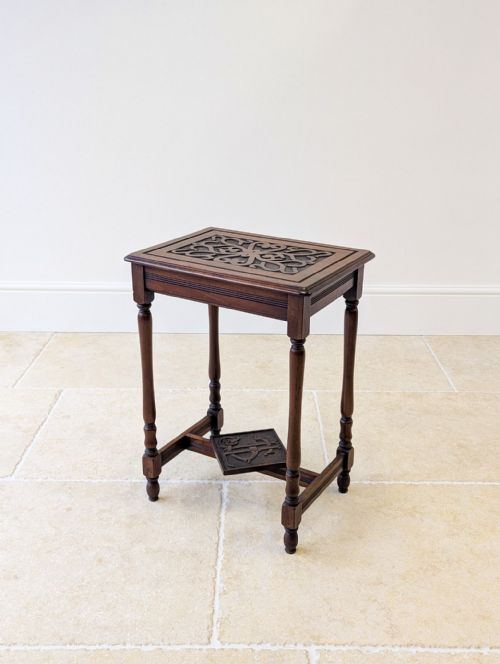


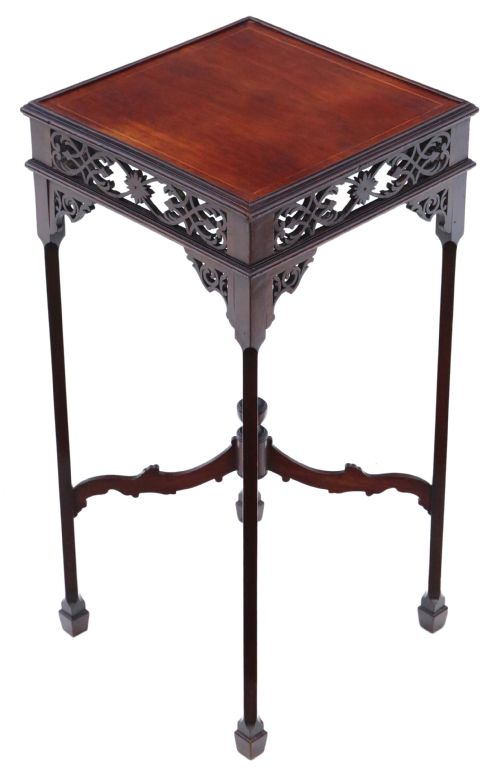
Vintage Fretwork Plant Stand
These vintage fretwork plant stand pieces bring pierced woodwork and elevated display together, offering compact display surfaces rooted in historical revivals.
Vintage Fretwork Plant Stand
When you search for a vintage fretwork plant stand, you look at elevated display furniture designed to hold potted plants, jardiniere bowls or lamps in Victorian, Edwardian and early twentieth century interiors. These pieces take the form of small occasional tables, torcheres, octagonal tables and tall stands originating from periods spanning the mid nineteenth century to the nineteen twenties.
You are most likely to meet mahogany, walnut and teak versions on this page, reflecting the woods favoured by makers working in revival styles, Arts and Crafts designs and Anglo Indian traditions. The selection includes square, circular and multi sided tops supported by slender legs and pierced brackets.
The architectural character of these stands relies on pierced wooden panels, fretwork galleries and carved aprons that lift greenery or decorative objects above floor level. They serve practical domestic functions while introducing intricate geometric or organic patterns into a room.
How they were made
Cabinetmakers constructed these stands using dense timbers such as mahogany, satinwood, walnut and teak, often combining solid sections with turned elements and applied mouldings. Woodworkers shaped the components using hand saws, chisels and lathes to create the slender legs and tiered platforms required for supporting weight safely.
Fretwork elements were pierced and carved by hand or fret saw, requiring patient labour to produce the openwork patterns seen on brackets and galleries. Some examples incorporate brass inlay or painted details on satinwood surfaces, demonstrating decorative techniques applied directly to the primary timber.
Vintage Fretwork Plant Stand Retail Price Guide 2026
Typical asking prices for vintage fretwork plant stand among the pieces listed under this phrase on Sellingantiques today, from the lower quarter to the upper quarter. They describe what is for sale here now, not the wider market.
Listings feature periods spanning from eighteen sixty through to nineteen twenty, covering Victorian, Edwardian and early twentieth century production.
What varies in quality
The calibre of timber selection and joinery execution defines the upper tier of these stands, where dense grains and stable construction endure through decades of domestic use. Heavier woods and precise corner joints provide structural rigidity to tall profiles that might otherwise wobble under heavy ceramic pots.
The crispness and depth of the carved fretwork distinguish finer workshops from simpler production pieces, with sharp internal corners and smooth sanded apertures showing superior craftsmanship. Surface finishes that preserve the natural grain without obscuring carved details indicate thoughtful upkeep and original material integrity.
The Vintage Fretwork Plant Stand Glossary
- Fretwork
- Openwork woodwork created by cutting patterns through thin boards with a piercing saw. This technique forms the decorative panels and brackets characteristic of many display stands.
- Jardiniere
- An ornamental pot or stand designed to hold a plant or flower arrangement. These containers sit atop pedestals or tables specifically built for elevated botanical display.
- Torchere
- A tall standing floor lamp or pedestal designed to support a light source or decorative object. In furniture terms, it refers to slender column stands used for display.
- Occasional table
- A small, movable table intended for specific, intermittent domestic uses such as holding a lamp or plant. These items fill corners and small spaces within period rooms.
Vintage Fretwork Plant Stand: Frequently Asked Questions
What is a fretwork plant stand?
A fretwork plant stand is a small piece of elevated furniture featuring pierced wooden panels, designed to hold indoor plants or decorative objects.
These stands range from compact occasional tables to tall torcheres, produced in various revival styles during the Victorian and Edwardian eras.
How were plant stands used historically?
In period homes, these stands elevated potted ferns and flowering plants to catch natural light near windows and protect interior floor surfaces.
They also served as display platforms for ceramic bowls, lamps and decorative ornaments in principal reception rooms.
What woods are commonly found?
Makers utilised dense hardwoods including mahogany, walnut, satinwood, oak and teak to ensure sufficient strength in slender load bearing legs.
Exotic imports like carved teak also appear, reflecting Anglo Indian design influences popular during the late nineteenth century.
How do I date a stand?
Dating relies on identifying the prevailing style, such as Aesthetic Movement, Arts and Crafts or Chippendale Revival, alongside timber choice and construction methods.
Design cues like brass inlay or specific leg turning help narrow the period of manufacture between the mid Victorian era and the nineteen twenties.
Can they hold heavy plants?
Most stands handle moderate weight, but their slender legs and pierced brackets require care with exceptionally heavy ceramic pots.
Placing them on level flooring prevents strain on the joints and maintains the stability of tall, narrow structures.