

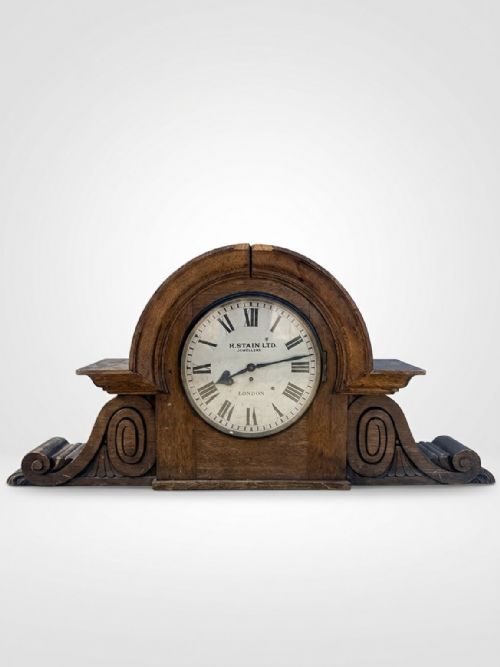
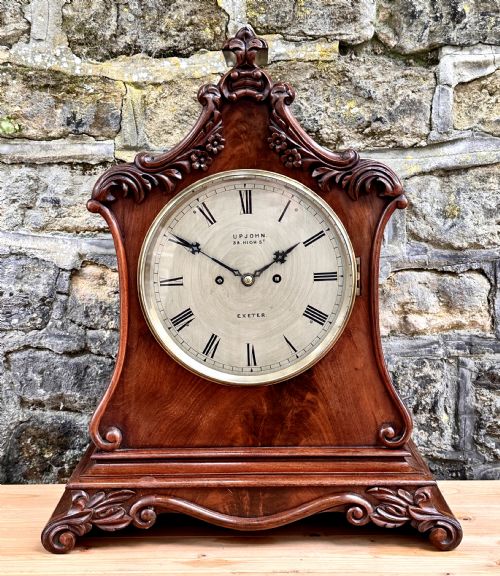
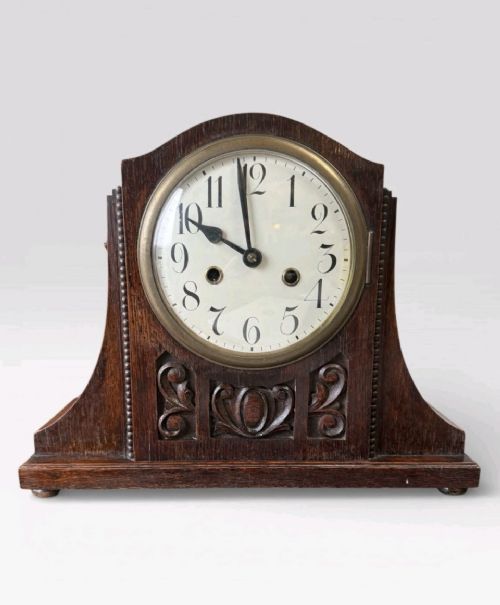
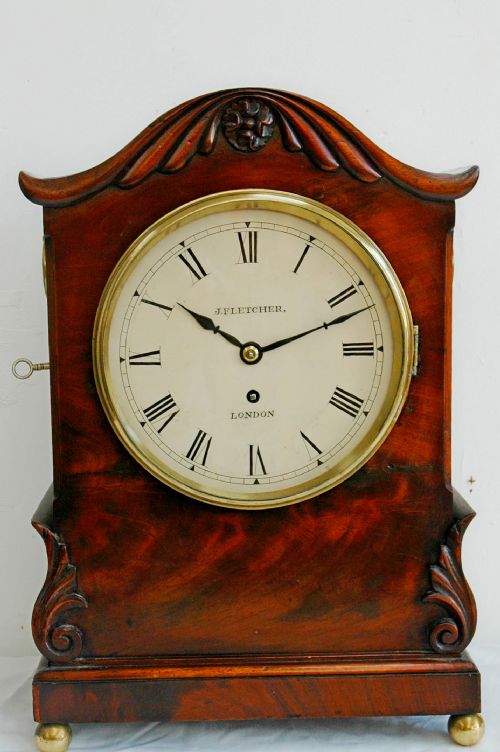


Carved Wooden Shelf Clock
These carved wooden shelf clock examples offer mechanical timekeeping housed in timber cases that range from Black Forest carvings to Victorian mahogany.

Carved Wooden Shelf Clock
A carved wooden shelf clock brings together functional mechanical timekeeping and decorative cabinet work designed to sit on a mantel, bracket or shelf. The selection on this page spans the nineteenth century, the Edwardian era and the interwar decades, showing forms described variously as mantel clocks, bracket clocks and wall shelves.
Makers utilised timber casings shaped by turners and carvers, housing movements that range from simple timepieces to striking mechanisms. Buyers encounter styles derived from Victorian, Regency, Art Nouveau and Art Deco periods, alongside distinct Black Forest regional carvings.
Materials and construction
Cases rely primarily on hardwoods such as mahogany, oak, walnut and burr walnut, sometimes enhanced with inlaid details or ebonised finishes. Dial surrounds and bezels incorporate brass, glass, enamel and silvered metal to frame the numeric face.
Movements inside these timber housings rely on mechanical gear trains, including fusee movements and fourteen-day striking configurations. Carved wooden elements are shaped directly from the solid timber or applied in distinct decorative sections.
Listings feature clocks from the nineteenth century, Edwardian period and nineteen-twenties, constructed in oak, walnut, mahogany and carved wood.
Judgments of quality
Quality rests in the crispness of the timber carving and the selection of figured veneers such as burr walnut or figured mahogany. Cases built with tight joinery and substantial timber thickness distinguish the higher tiers of production.
The sophistication of the mechanical movement, whether signed by known retailers or makers, separates standard workshop output from finer examples. Dial legibility, original matching hands and well-fitted bezels further indicate the care taken during manufacture.
Piggin Norwich·Connell of London·J Kingerley Manchester·Lenzkirch
The Carved Wooden Shelf Clock Glossary
- Bracket clock
- A portable timekeeper originally designed to sit upon a wall bracket or shelf. Many later examples retained the name despite standing directly on mantelpieces.
- Fusee
- A conical pulley connected to the mainspring by a chain or cord, designed to equalise the force of the spring as it winds down. This mechanism helps maintain steady timekeeping.
- Single fusee
- A movement driven by a single fusee train that powers the timekeeping mechanism without striking a bell or gong. It represents a straightforward mechanical layout.
- Burr walnut
- Wood taken from a tree growth or burl, yielding swirling, highly figured grain patterns. Cabinet makers prized it for decorative veneer panels.
- Black Forest
- A mountainous region in Germany noted for distinct carved woodwork and timber clocks. Pieces from this area often feature deep relief foliage and animal motifs.
Carved Wooden Shelf Clock: Frequently Asked Questions
How do I wind a mechanical clock?
Mechanical movements require a key inserted into the winding holes on the dial face to tension the internal springs or weights. Care must be taken not to overwind the mechanism.
Different movements require winding at intervals ranging from daily to fortnightly, depending on whether they are standard timepieces or striking clocks.
Where should I place my clock?
Shelf clocks need a stable, level surface such as a mantelpiece, sideboard or dedicated wall bracket to ensure the pendulum or balance wheel operates evenly. Vibrating surfaces can interfere with the beat.
Keeping timber cases away from direct heat sources and strong sunlight prevents the wood from drying out and protects the veneer.
What is a striking mechanism?
A striking mechanism sounds the hours or quarters on a bell, gong or rod using an auxiliary gear train driven by its own spring or weight. These systems add auditory depth to the room.
Some models feature Westminster chimes, which play a familiar four-note melody before sounding the full hour.
How do I identify the period?
Period attribution relies on stylistic cues such as Regency proportions, Victorian mass, Art Nouveau curves or Art Deco geometric lines. Timber choices and dial construction also provide chronological clues.
Maker signatures or retailer marks stamped on the backplate of the movement offer further confirmation of the date.