
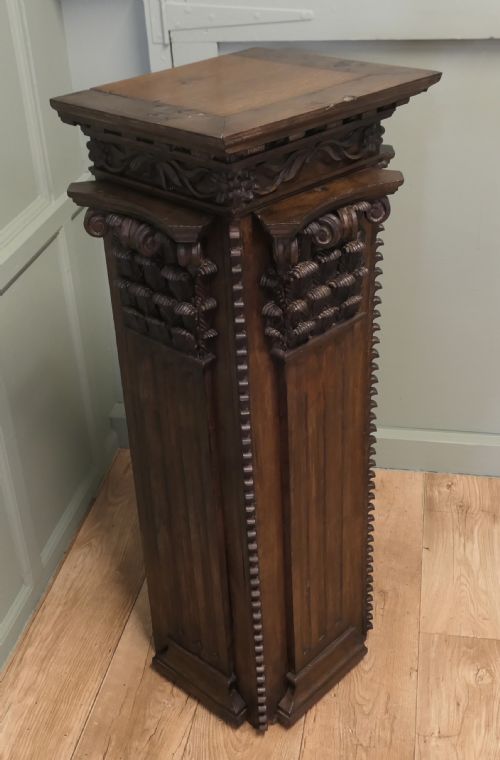

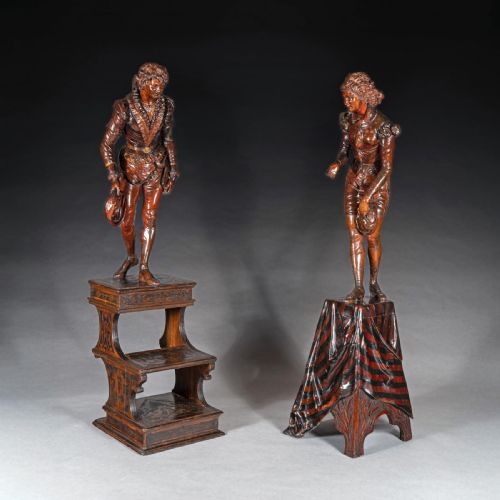
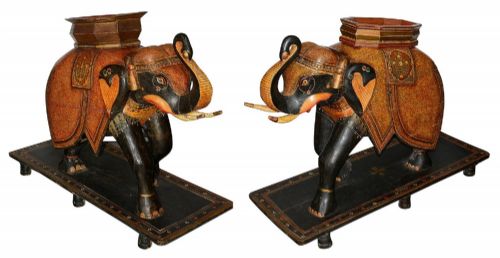


Carved Wooden Pedestal Statue
A carved wooden pedestal statue brings drama to a corner, merging sculptural form with functional elevation.
Carved Wooden Pedestal Statue
A carved wooden pedestal statue combines figurative sculpture with a supporting stand, drawing on diverse global traditions from Venetian baroque figures to Chinese deities. When looking for a carved wooden pedestal statue, buyers frequently encounter 19th-century European examples alongside Asian carvings and Anglo-Indian works.
The selection ranges from grand Venetian figures holding torcheres to serene Buddhist immortals and intricately decorated pedestals. These objects serve as standalone focal points or as raised plinths designed to display other works of art.
Origins stretch from 18th-century workshops to the late Victorian era, encompassing styles such as French Renaissance Revival, Neoclassical, and Qing Dynasty. Pieces often combine the human form with architectural or plant motifs to create an imposing vertical presence.
Distinctions in quality
The integrity of the original surface finish defines the upper tier of pieces, particularly where giltwood, gesso, and polychrome paint survive intact. Greater sculptural ambition, such as complex multi-figure compositions or finely rendered proportions, separates exceptional work from standard studio output.
A stately wooden swan shares company with Venetian gondoliers, divine immortals, and lacquered elephants.
Valentino Besarel
The Carved Wooden Pedestal Statue Glossary
- Polychrome
- Painted in several colours. This finish adds vibrant realism to carved wooden figures and architectural elements.
- Gesso
- A plaster mixture applied to wood as a base for paint or gold leaf. It provides a smooth surface for intricate detailing.
- Giltwood
- Wood covered with a thin layer of gold leaf. It creates a radiant, reflective surface favoured in baroque design.
- Torchere
- A tall stand or ornamental candlestick. These pieces often take the form of figures holding lights.
- Blackamoor
- A historical term for decorative European figures depicted with dark complexions. They frequently appear as torcheres or pedestals from the 18th and 19th centuries.
Carved Wooden Pedestal Statue: Frequently Asked Questions
What is a carved wooden pedestal statue used for?
These pieces function primarily as decorative anchor points within a room, combining sculpture with display space. Many hold lights or elevate secondary ornaments while commanding visual attention on their own.
Historically, grand houses utilised them in hallways and reception rooms to project status and taste. Today, they serve a similar role in domestic interiors, filling empty architectural corners with vertical interest.
How do I date a carved wooden pedestal statue?
Dating relies on stylistic clues, tool marks, and the ageing of underlying materials like gesso and pine or oak bases. Venetian baroque and neoclassical motifs point towards the 18th or 19th centuries, while Victorian revival styles display distinct Victorian manufacturing traits.
Examining the original paint or gilding under magnification reveals layer structures consistent with specific historical periods. Comparing the joinery and wood preparation methods against known regional practices further clarifies the timeline.
Where should I place a pedestal statue at home?
A pedestal statue suits transition zones such as entryways, landings, or the end of a long hallway where vertical proportion matters. They require sufficient floor space to be viewed in the round without causing obstruction.
Placement should avoid direct sunlight and fluctuating radiator heat to protect the underlying wood and delicate polychrome surfaces. Positioning them against a neutral wall allows complex carvings and original gilding to stand out.
How do I care for antique polychrome wood?
Maintenance requires a stable indoor climate with minimal humidity changes to prevent the wood from expanding and cracking the gesso layer. Dusting should be done gently with a dry, soft brush rather than treated cloths.
Avoid applying modern furniture polishes or moisture to painted and gilt surfaces, as these can dissolve historic binders. Professional conservators should handle any structural repairs or flaking pigment.