



Carved Wooden Monks Bench
A carved wooden monks bench is a dual-purpose timber seat that transforms into a table, offering historic utility for modern hallways.
Carved Wooden Monks Bench
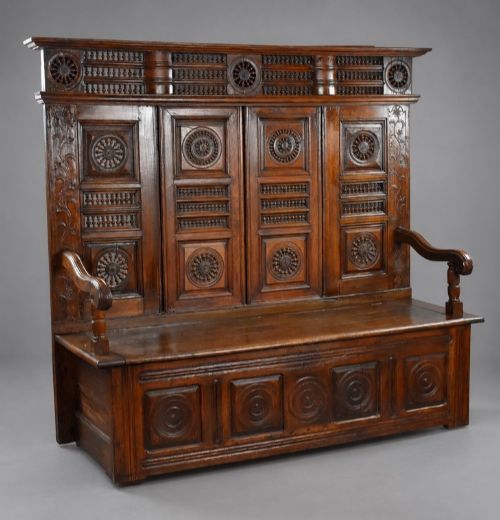
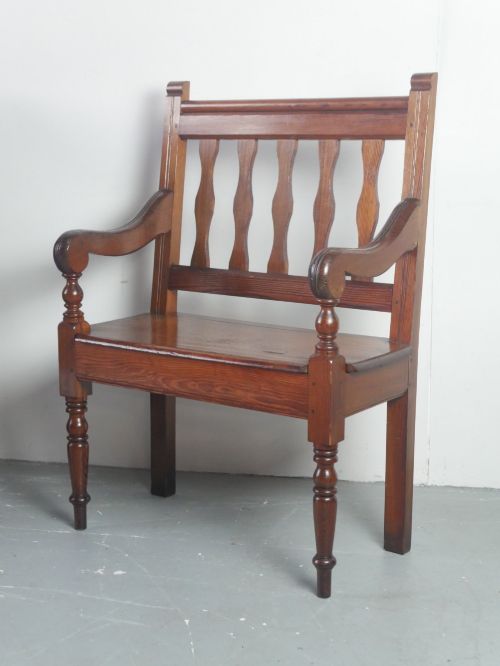
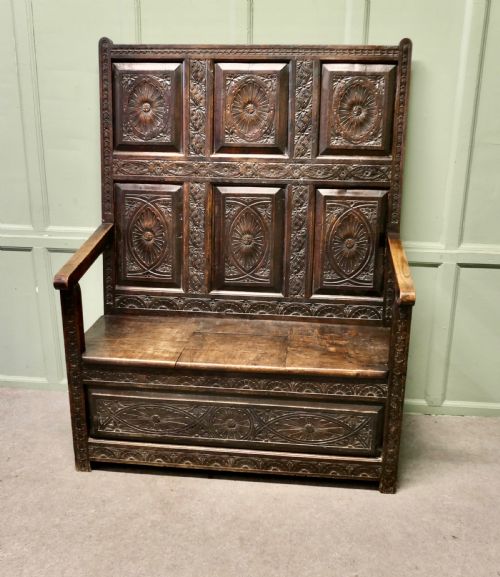
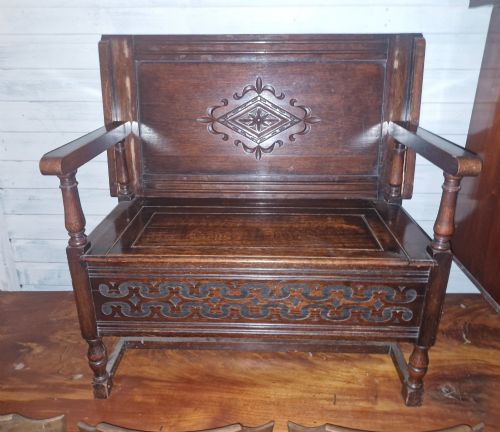
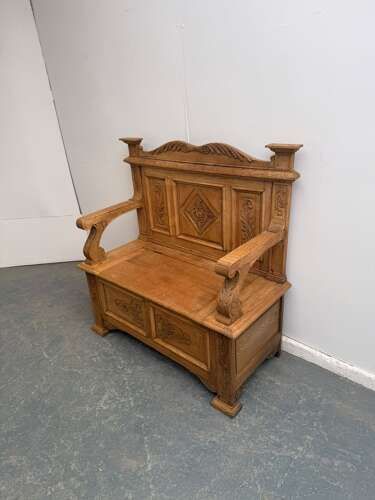
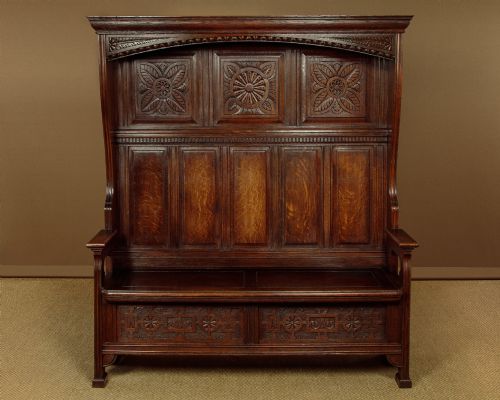
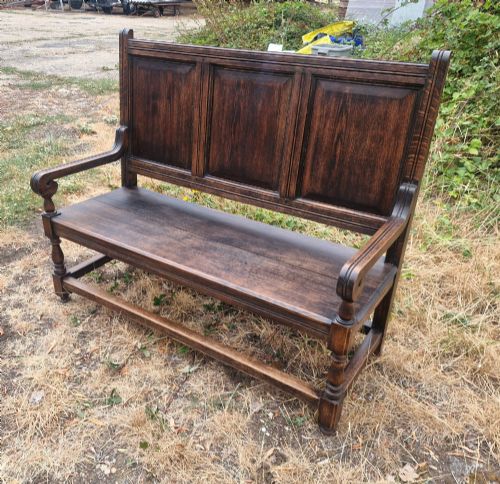
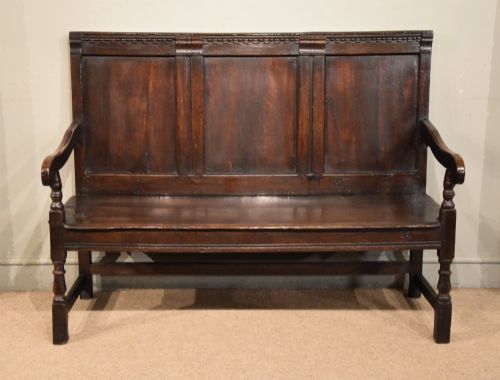
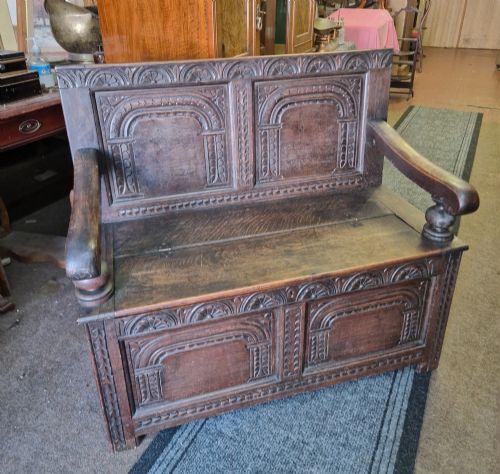
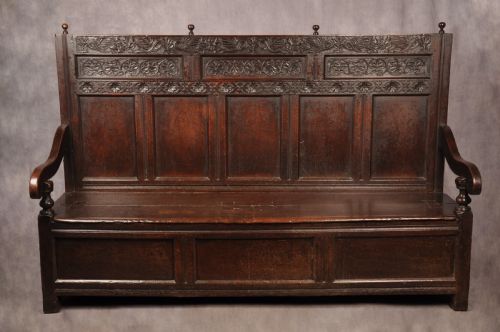
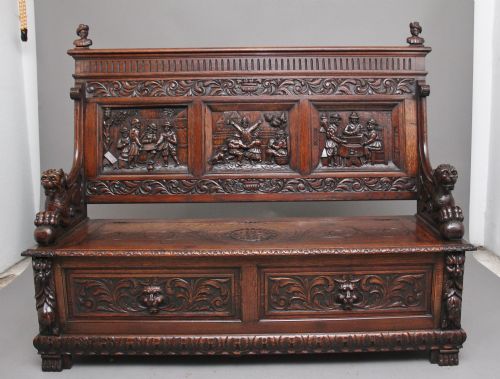
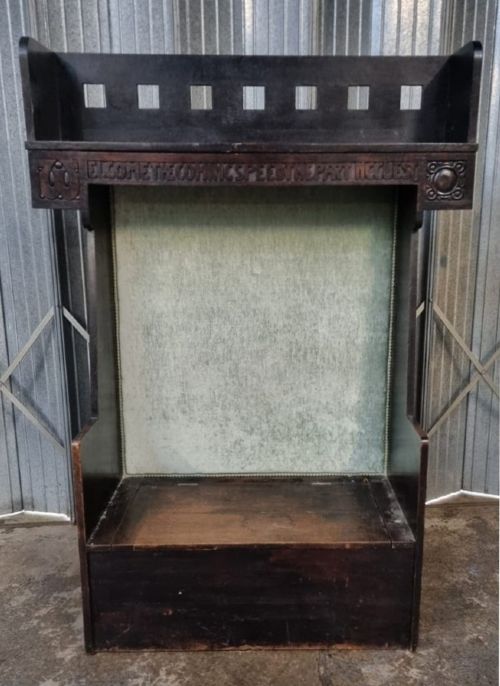
A carved wooden monks bench is a heavy timber seat designed to double as a table via a hinged back that folds flat over the arms. These items appear in various forms on this page, including high-back box settles, panelled hall seats, and smaller tables with integrated storage. Examples span multiple centuries, with Victorian revivals and earlier 17th-century or 18th-century country pieces appearing frequently.
Buyers encounter substantial oak construction across nearly all listings, often shaped by Jacobean, Gothic, or Renaissance revival styles. Many pieces incorporate lift-up seats or under-bench drawers, serving practical storage functions in entryways and reception halls. The selection ranges from plain country furniture to heavily carved baronial designs with canopy tops and panelled backs.
Distinctions in quality and execution
Quality rests upon the crispness of the hand-carved detailing and the structural integrity of the pivoting mechanism. Finer examples display deeply undercut mouldings and well-proportioned panels, whereas lesser pieces show mechanical stiffness or later alterations to the top and arms.
The integrity of the original timber determines the standing of a piece, with undisturbed patination and minimal replacement wood elevating the work. Early examples retain original iron hardware and sturdy box bases, while heavily restored or later simulated items lack the authentic weight and wear of genuine age.
Early bench arms double as clandestine storage spots for walking sticks and umbrellas.
Shapland and Petter·Liberty
The Carved Wooden Monks Bench Glossary
- Settle
- A wooden bench with a high back, solid arms, and often a closed box base for storage. It protected medieval and early modern inhabitants from draughts.
- Box settle
- A variant featuring a hinged seat lid opening onto a storage compartment beneath. This design kept blankets and household goods dry and secure.
- Canopy top
- An overhead wooden hood projecting above the high back of a seat. It deflected cold air and added architectural presence to grand hall furniture.
- Jacobean revival
- A 19th-century stylistic movement copying 17th-century English furniture forms. It relies on dark polished oak, geometric panelling, and strapwork carving.
- Strapwork
- A carved decorative motif resembling flat interlaced bands or leather straps. It appears frequently on friezes and panels of 17th-century and revival furniture.
Carved Wooden Monks Bench: Frequently Asked Questions
How does the folding top work?
The upper back is attached to the arms by wooden pins or metal pivots, allowing the entire panel to swing forward over the seat structure. This converts the backrest into a flat horizontal surface usable as a table.
Users should check that the pivot points move freely without straining the surrounding timber framework.
Where were these benches placed?
These items traditionally stood in the entrance halls or great rooms of country houses and domestic dwellings. Their high backs helped block cold draughts blowing in from external doors.
Today, they function well in hallways and landings where surface space and seating are both required.
How do I spot a later revival piece?
Revival pieces from the Victorian and Edwardian eras often use machine-sawn timber or uniform factory carving techniques. The oak may also have a darker, more even chemical stain rather than centuries of natural wax build-up.
Inspect the undersides and interior box compartments for modern screw fixings or plywood linings that indicate later intervention.
How do I care for antique oak?
Maintain the timber by applying traditional beeswax sparingly and buffing with a soft cloth to preserve the sheen. Avoid placing the bench near direct heat sources or radiators, which cause old oak to dry out and split.
Keep indoor humidity stable to protect both the solid panels and the iron or brass hardware.