

Carved Mahogany Hall Seat
A carved mahogany hall seat is a sturdy reception furniture piece designed for entrances, offering formal presence and enduring hardwood construction.
Carved Mahogany Hall Seat
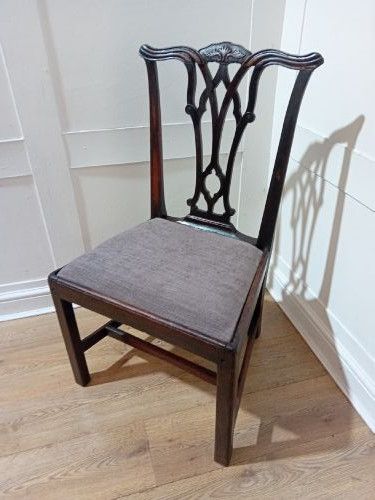
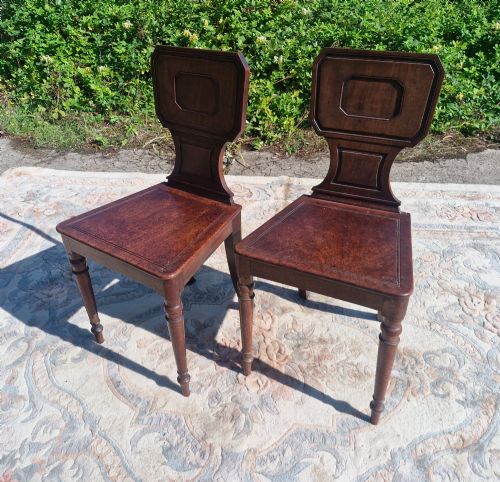
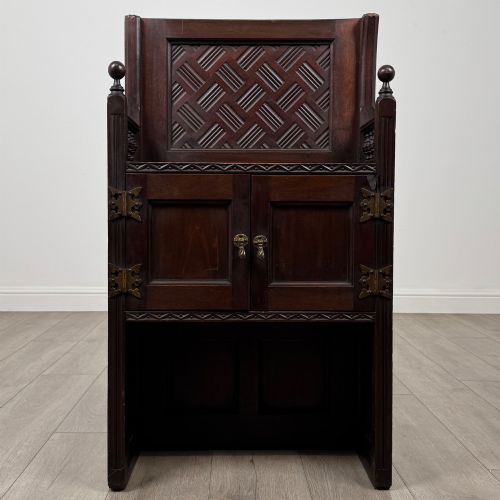
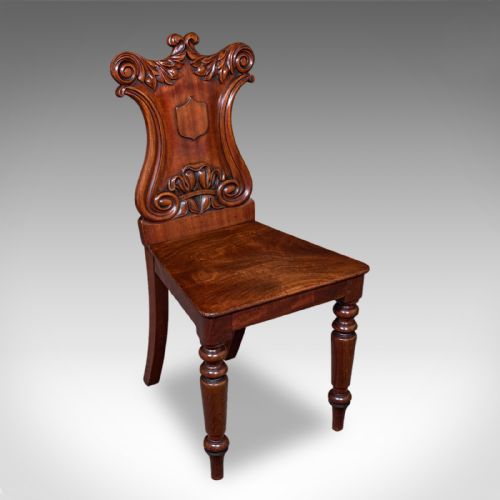
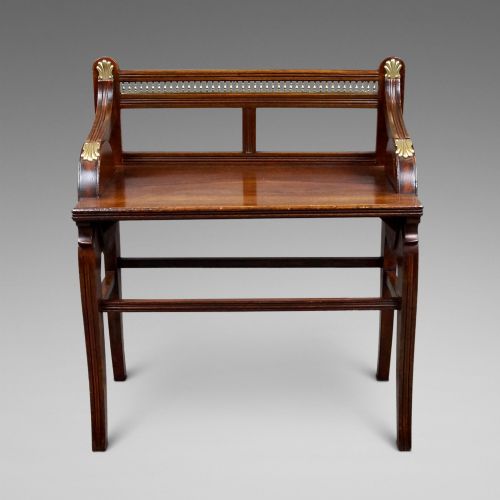
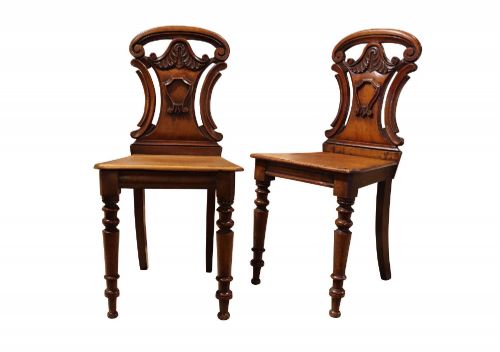
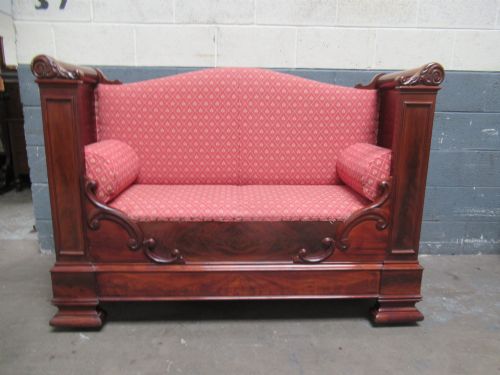
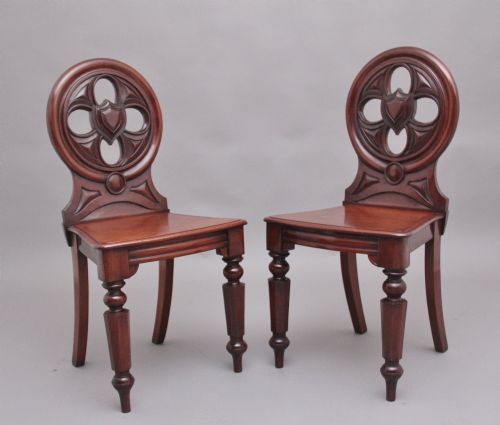
A carved mahogany hall seat encompasses rigid reception furniture such as hall chairs, window seats, and benches originating from the eighteenth, nineteenth, and early twentieth centuries. These pieces function primarily as formal seating in entranceways, hallways, and reception rooms.
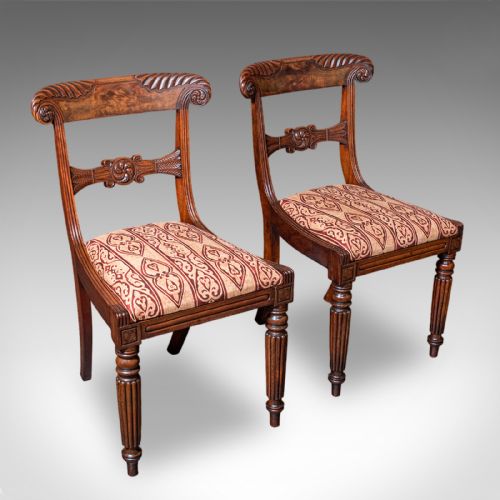
The most common examples encountered in this selection are nineteenth century Victorian and Regency hall chairs, alongside George III and William IV pieces. They frequently appear individually or in pairs, featuring solid timber seats and carved backs.
Quality and Craftsmanship
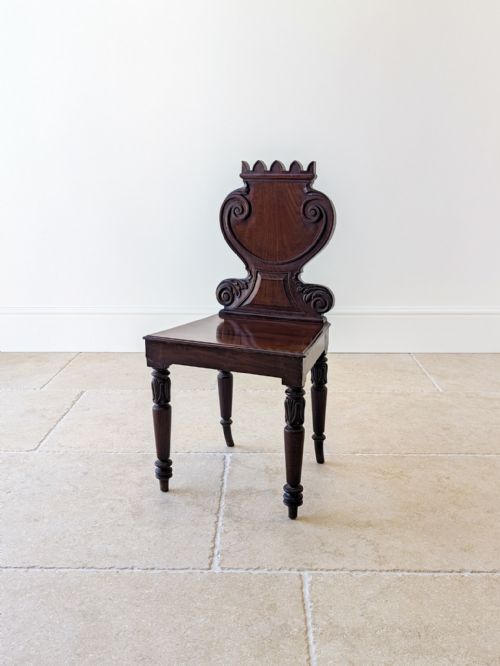
Quality in a carved mahogany hall seat is distinguished by the crispness of the timber carving and the density of the mahogany used by the cabinet-maker. Finer examples display deeply undercut details, balanced proportions, and well-executed armorial crests rather than shallow or mechanical shaping.
The integrity of the construction and the proportional balance between the seat and the carved back separate standard utility items from pieces commissioned for prominent country houses and reception spaces.
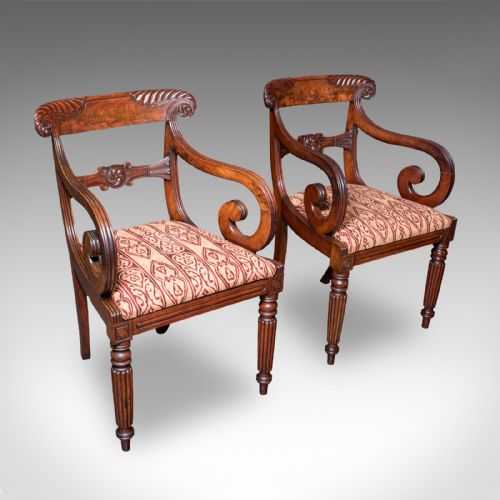
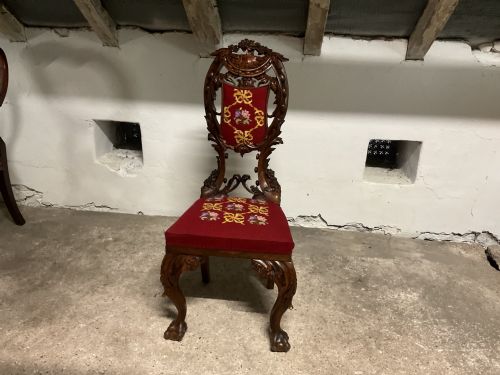
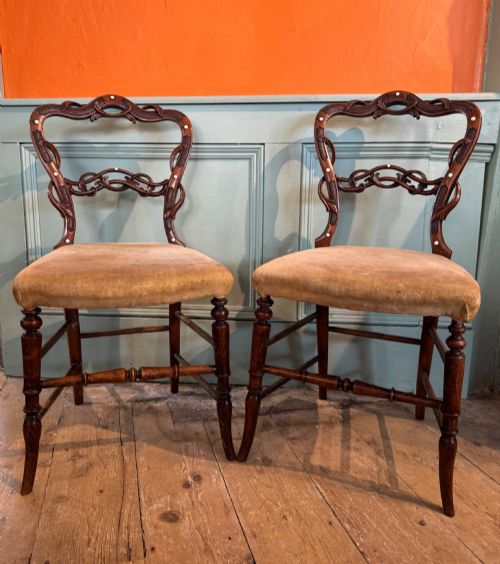
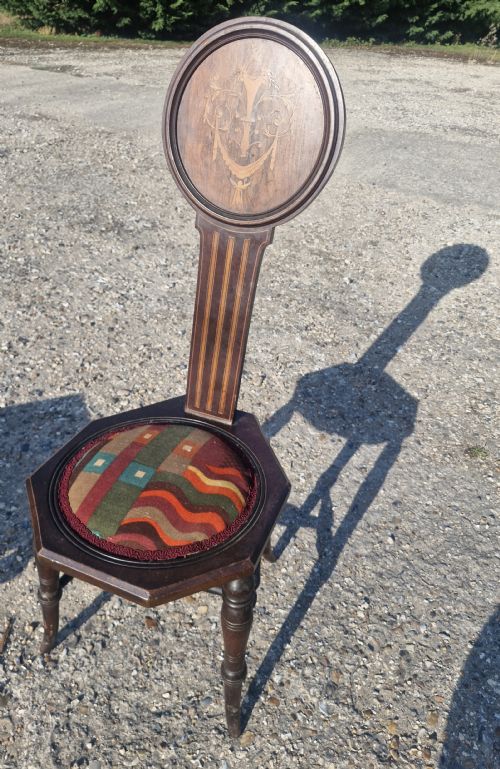
Some Victorian spinning chairs designed for domestic comfort sit alongside rigid hall seats, proving that Victorians enjoyed a softer side to their timber seating.
Gillows·Jas Shoolbred
The Carved Mahogany Hall Seat Glossary
- Mahogany
- A durable tropical hardwood known for its reddish-brown colour and fine grain, utilised extensively in quality cabinet-making. It provides the primary structural and visual medium for these seats.
- Armorial
- Relating to heraldic bearings or crests. These are frequently carved into the solid timber backs of formal reception chairs.
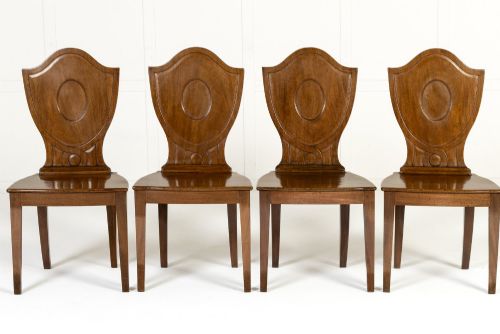
- Pelta back
- A shield-shaped chair back design resembling an ancient Greek pelta shield. This distinct outline appears on specific nineteenth-century hall seating.
- Window seat
- An elongated bench form specifically proportioned to fit within a window recess. These often feature upholstered tops or scrolled ends.
Carved Mahogany Hall Seat: Frequently Asked Questions
What is a carved mahogany hall seat used for?
These pieces served as formal seating in grand hallways, vestibules, and reception rooms, where visitors waited before being admitted. Their firm timber construction discouraged lingering while offering a striking visual statement upon entry.
Today, they function well in modern entranceways and corridors as practical seating while maintaining a strong historic aesthetic.
How do I identify a Regency hall chair?
Regency examples typically date from the early nineteenth century and display classical revival influences, such as sabre legs and bold carved back panels. They often incorporate classical motifs inspired by Greek and Roman design.
Look for robust mahogany construction paired with architectural lines that reflect the formal neoclassical taste of the period.
Are these seats comfortable for daily use?
Most historic hall seating was designed for brief waiting periods rather than extended lounging. Consequently, the wooden seats are generally unpadded and feature upright carved backs.
If utilised in a living space or bedroom, they excel as decorative occasional chairs or striking accent pieces rather than primary lounging seats.
How do I care for antique mahogany furniture?
Preserve the timber by keeping the piece away from direct heat sources and fluctuating humidity, which can cause the mahogany to split. Regular dusting with a soft, dry cloth maintains the polished surface without the need for heavy chemical polishes.
Applying a traditional beeswax polish occasionally will nourish the wood and enhance the natural grain of the mahogany.