
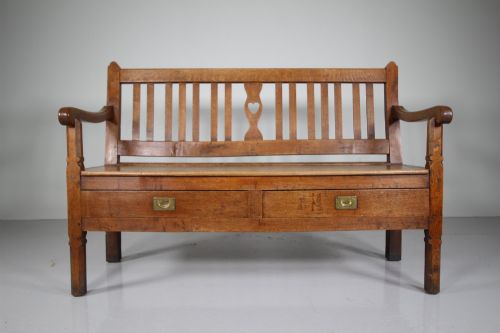
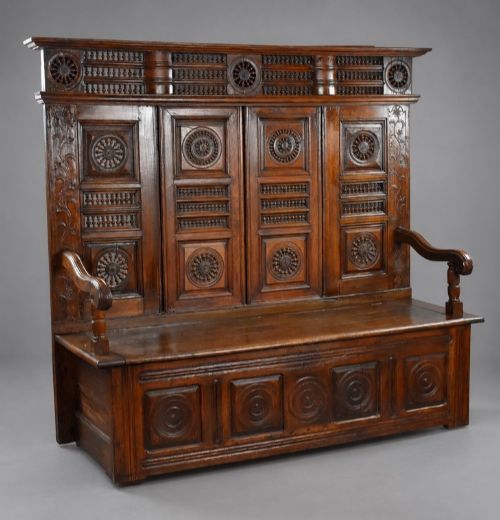
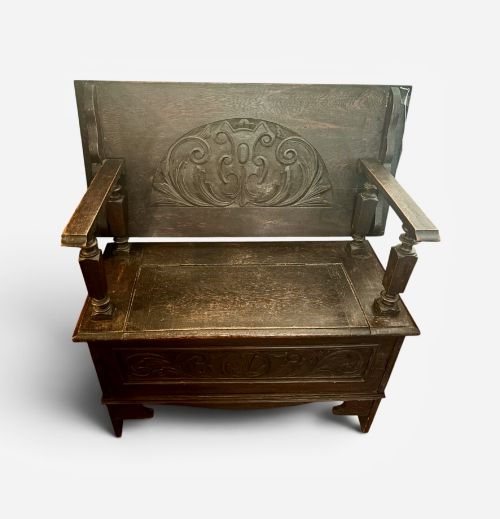
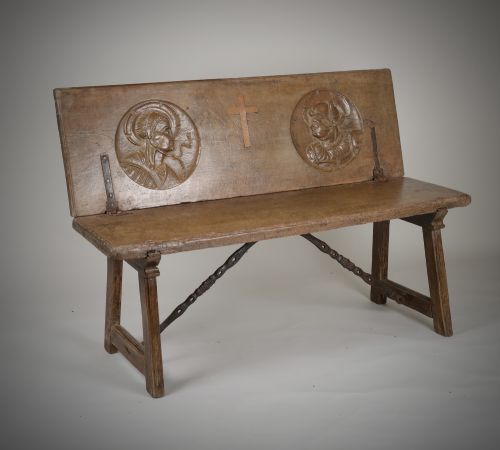
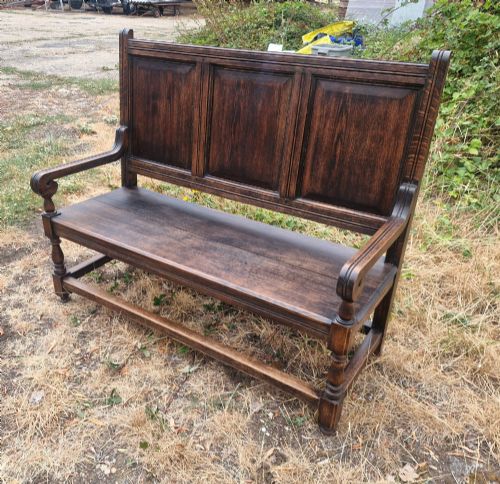
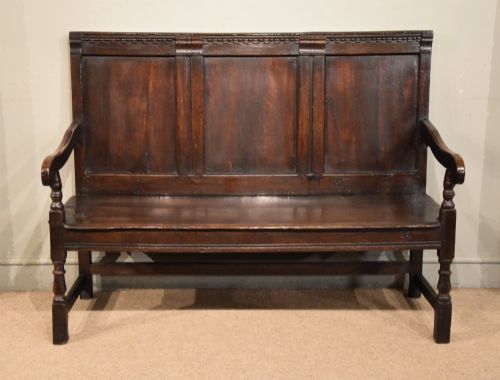
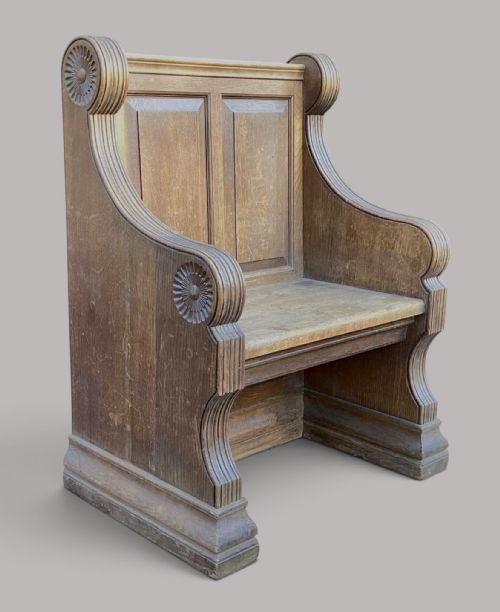
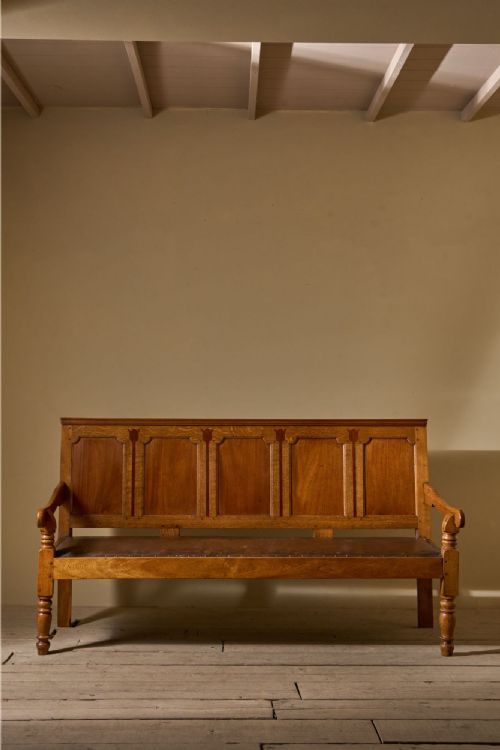
Carved Oak Hall Settle
When choosing a carved oak hall settle, you select a substantial entrance seat that combines robust construction with deep historic character.
Carved Oak Hall Settle
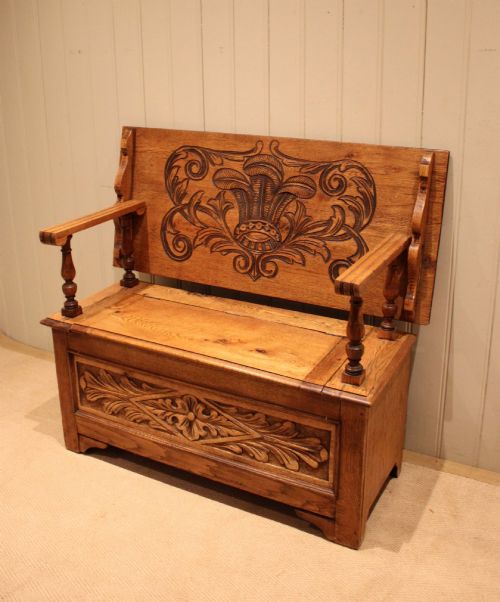
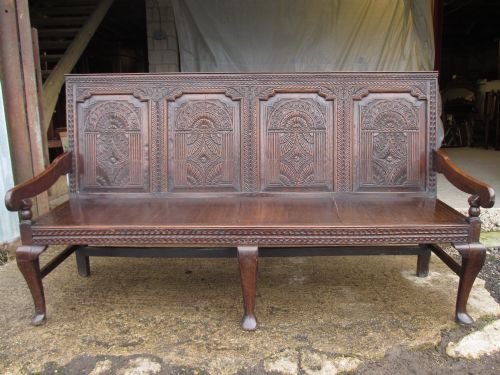
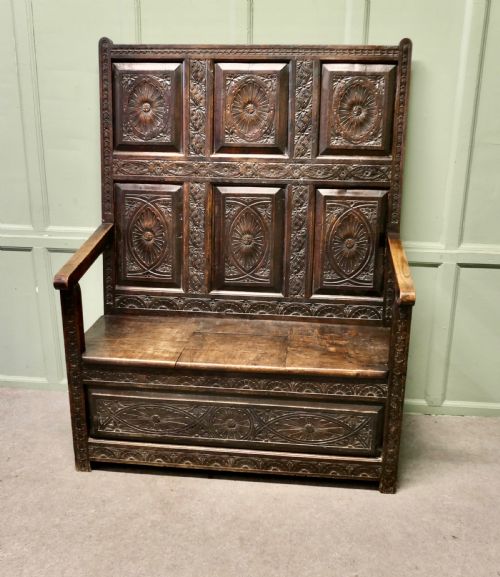
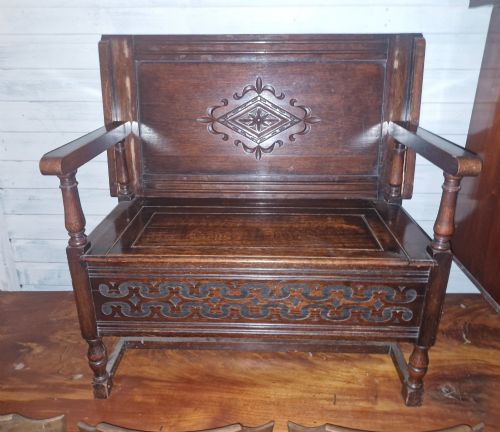
A carved oak hall settle serves as a prominent entryway seat, combining panelled backs and substantial timber construction to anchor a hallway or reception space. These pieces frequently incorporate storage elements, appearing as box settles with lift-up seats or as versatile monk's benches with fold-over tops.
Examples span several centuries, with the selection ranging from 17th-century country pieces and 18th-century high-back box forms to 19th-century Victorian Gothic revivals and early 20th-century golden oak variants. The most common forms met on this page are Victorian and 19th-century interpretations heavily influenced by earlier Jacobean and Renaissance styles.
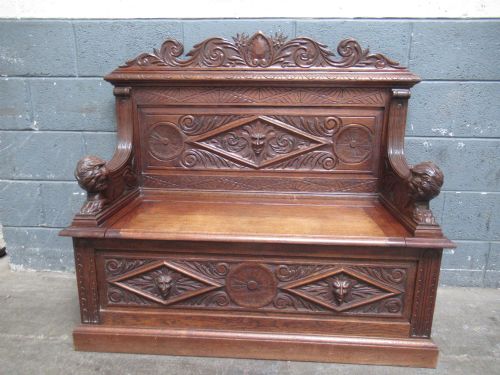
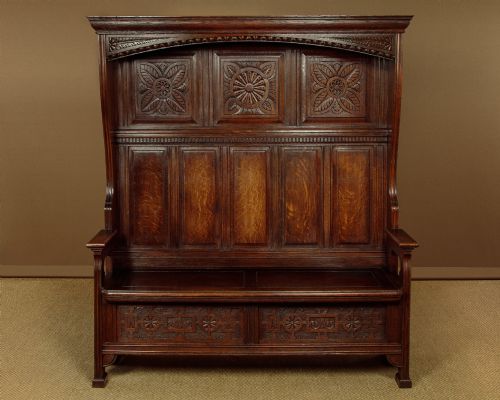
Makers recorded in the broader tradition include established cabinet makers such as Gillows, Edwards and Roberts, and firms working in the manner of Shapland and Petter or Liberty. These makers produced hall seats and settles displaying architectural forms, canopy tops, and detailed Green Man carvings.
How They Were Made
Carpenters constructed these settles primarily from solid oak, utilising traditional joinery methods such as mortise and tenon framing to build rigid panelled backs and sturdy bases. Metal components like brass and iron hinges, alongside wrought iron fixings, support the opening mechanisms on box seats and folding tops.
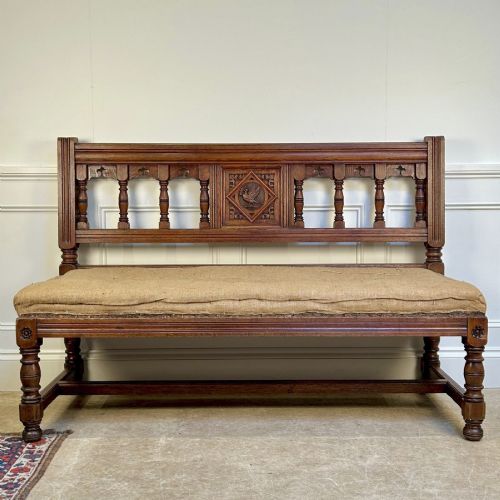
Carving represents the primary decorative technique, featuring relief work, geometric panels, and figurative motifs executed directly into the dense timber. Surfaces are frequently finished with wax to protect the grain, while some examples incorporate secondary materials including leather, fabric, or hessian upholstery.
Listings span the 17th century through the 1930s, featuring solid oak, wrought iron fittings, and upholstered elements like leather and hessian.
What Varies in Quality
The degree of sculptural refinement distinguishes exceptional examples from standard production, particularly in the depth and execution of the carved panelling, arm rests, and figural details. Architectural ambition also sets pieces apart, where canopy tops, elaborate box bases, and integrated stick stands elevate the design.
The integrity of the timber and the retention of original construction elements dictate the standard of survival across older periods. Heavy, solid oak scantlings and well-preserved waxed finishes maintain the structural presence expected of high-grade country and revival seating.
Gillows·Edwards and Roberts·Shapland and Petter·Liberty
The Carved Oak Hall Settle Glossary
- Settle
- A wooden bench with high back, solid arms, and often a closed base to block draughts in a hallway. It provides rigid seating alongside architectural presence.
- Monks Bench
- A dual-purpose piece featuring a hinged back that folds down flat to transform the seat into a table top. This clever conversion offers functional versatility in smaller spaces.
- Box Settle
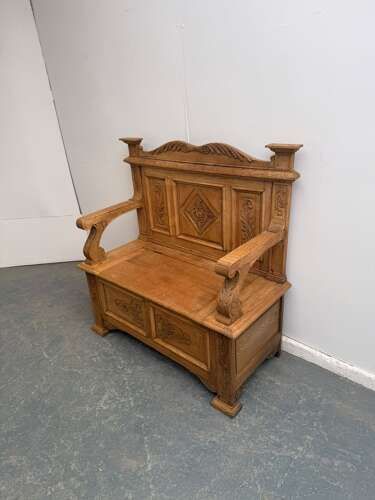
- A variant incorporating a hinged seat panel opening to a deep storage compartment beneath. It functions as both a heavy entrance bench and a practical chest.
- Green Man
- A sculptural motif depicting a human face emerging from or entwined with foliage and vines. It appears frequently as a decorative corbel or central carving on revival seating.
- Jacobean Revival
- A 19th-century decorative style emulating 17th-century English furniture characteristics. It relies heavily on sombre oak, geometric mouldings, and strapwork carving.
Carved Oak Hall Settle: Frequently Asked Questions
How do I use a hall settle today?
A hall settle provides sturdy entrance seating while offering concealed storage beneath lift-up lids for boots, umbrellas, and winter accessories.
Positioning the high back against a wall creates a defined reception area that blocks draughts and anchors an entryway or corridor layout.
How do I distinguish 17th-century oak from later revivals?
Early 17th-century pieces exhibit hand-riven timber, peg-joined construction showing natural movement, and simpler, deeper panel hand-carving.
Victorian and later revivals often display machine-sawn uniformity, symmetrical machine-cut relief carving, and heavier applied mouldings.
How do I care for antique oak furniture?
Maintain a stable indoor humidity level to prevent the solid oak panels from splitting or warping over seasonal changes.
Apply a traditional beeswax polish periodically to nourish the dry timber and preserve the natural lustre of the waxed surface.