


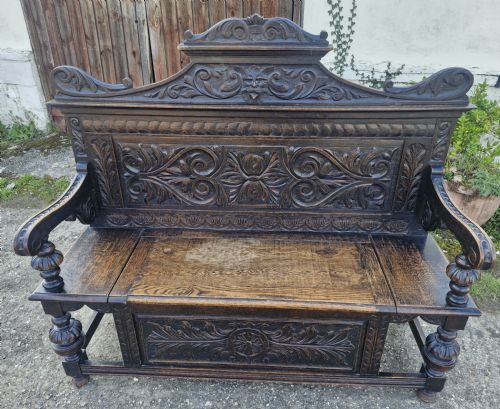


Antique Carved Chest Bench
An antique carved chest bench is a sturdy dual-purpose seat with hidden storage, offering tactile historical character to any hallway or room.
Antique Carved Chest Bench
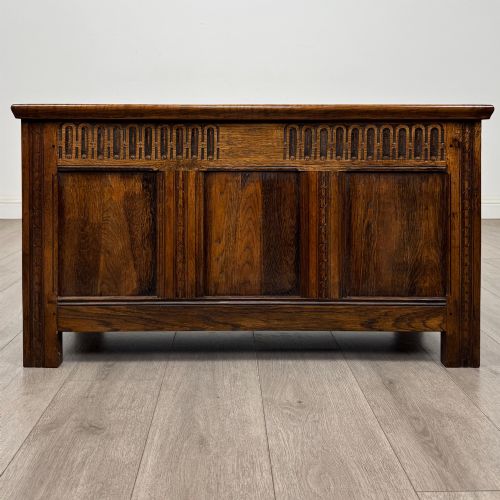
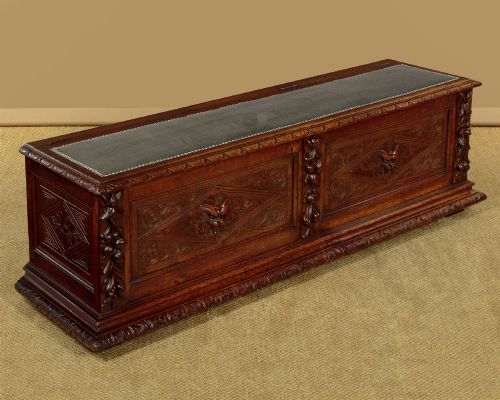
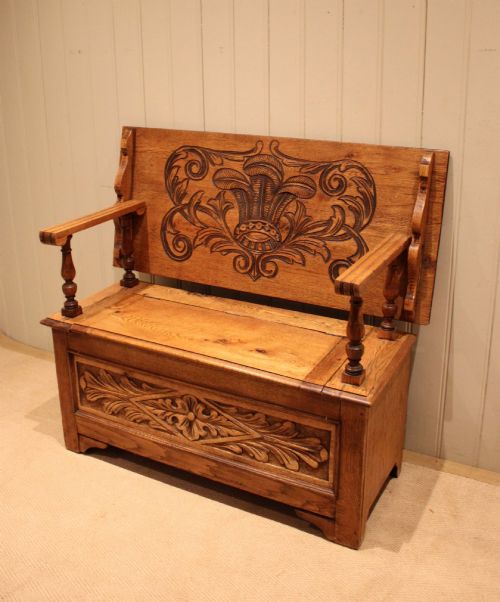
An antique carved chest bench combines a lidded storage box or coffer with a seat and backrest, functioning variously as a settle, monks bench, hall seat or mule chest. These versatile items served domestic needs across centuries by doubling as seating and practical trunk storage.
The selections available here span from the 18th century through to the early 20th century, encompassing robust oak formats alongside walnut and occasional painted or gilded wood variations. Common forms include Jacobean revival styles, Gothic revival pieces, and rustic farmhouse settles.
Buyers will most frequently encounter solid oak examples from the Victorian and Edwardian eras, often bearing rich surface carving such as Green Man motifs. Alongside these, earlier 18th-century coffers and blanket chests adapted for seating provide a deeper historical footprint.
What varies in quality
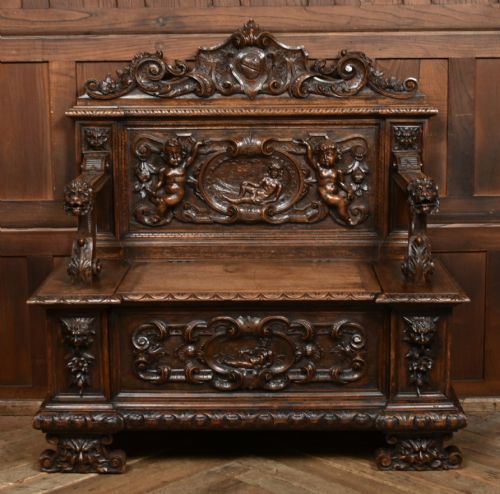
Quality rests heavily on the depth and crispness of the hand-carved detail, distinguishing master craftsmanship from simpler provincial work. Crisp relief work on panels and armrests indicates a higher grade of artisan input during manufacture.
The choice of timber grain and the integrity of the original construction also dictate value, with dense solid oak and well-preserved structural joinery outlasting heavily altered or later-assembled pieces.
Several pieces feature staring Green Man carvings, keeping a watchful wooden eye over your hallway.
The Antique Carved Chest Bench Glossary
- Settle
- A wooden bench with a high back, solid arms and a closed base, designed to keep out draughts in older homes. These often double as storage chests.
- Monks Bench
- A convertible piece of furniture featuring a hinged back that folds down over the arms to form a table top above a box seat. This multifunctional design suited smaller rooms.
- Mule Chest
- A traditional storage chest featuring one or more drawers built into the base beneath the main compartment. It evolved from simpler coffers to provide easier access to linens.
- Coffer
- A robust wooden chest traditionally used for storing valuables, textiles or documents before fitted wardrobes became common. Many later gained backrests to function as benches.
- Green Man
- A sculptural architectural ornament depicting a human face disgorged from or entwined with foliage and vines. It appears frequently in revivalist wood carvings.
Antique Carved Chest Bench: Frequently Asked Questions
How do I use a chest bench today?
These pieces fit naturally in entryways and hallways as a practical spot to sit while putting on shoes, while the internal compartment conceals blankets, boots or everyday clutter.
In living areas or bedrooms, they serve as striking statement seating that doubles as convenient linen storage for spare cushions and throws.
Are these benches comfortable for sitting?
Original wooden seats were built for utility rather than lounging, so they feature firm wooden boards and upright backs rather than modern upholstery.
Adding a custom loose cushion or squab pad easily softens the seat for everyday use while preserving the historic timber frame underneath.
How do I distinguish Victorian revival from earlier work?
Victorian and Edwardian revival pieces often display machine-assisted precision or very crisp, deep relief carving such as Green Man motifs, alongside cleaner internal secondary timbers.
18th-century and earlier examples typically show hand-pit-sawn marks, irregular pegged joinery and timber surfaces softened by centuries of handling and wax polish.