


Carved Wooden Handle Drawers
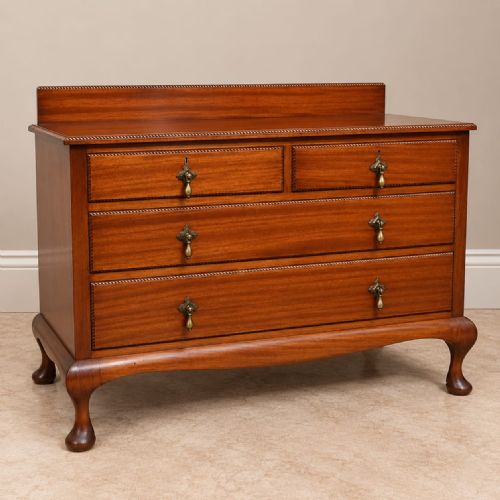
Carved wooden handle drawers are practical storage furniture items offering deep compartments and distinct tactile wooden pulls.

Carved Wooden Handle Drawers
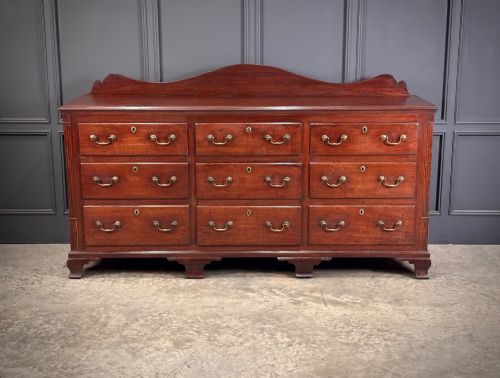
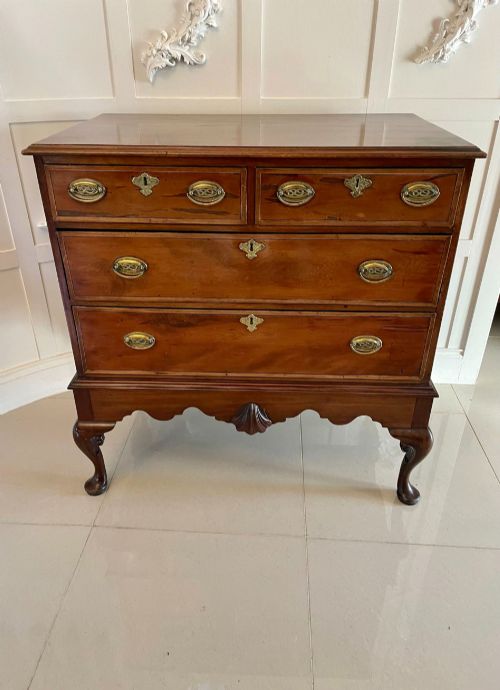
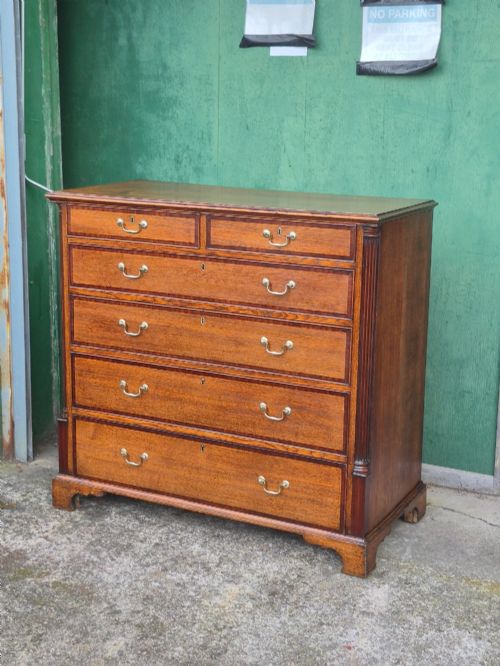
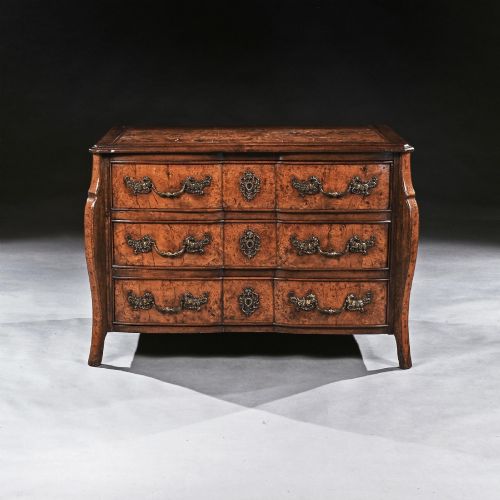
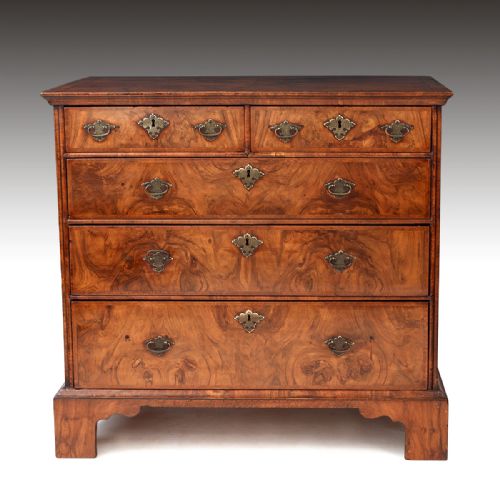
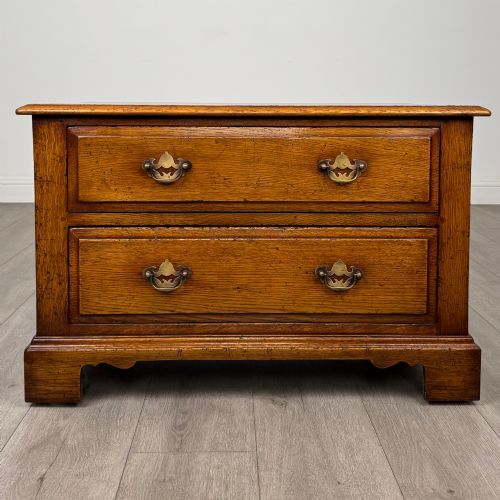
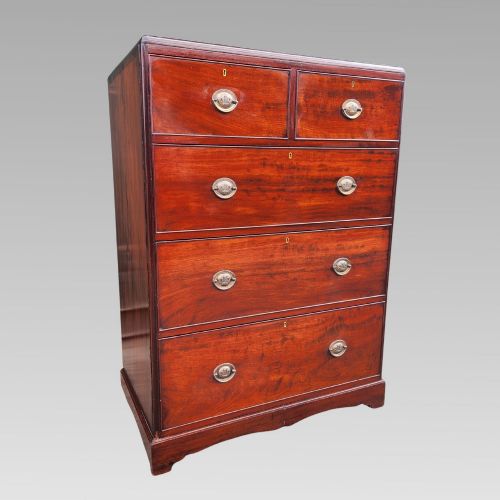
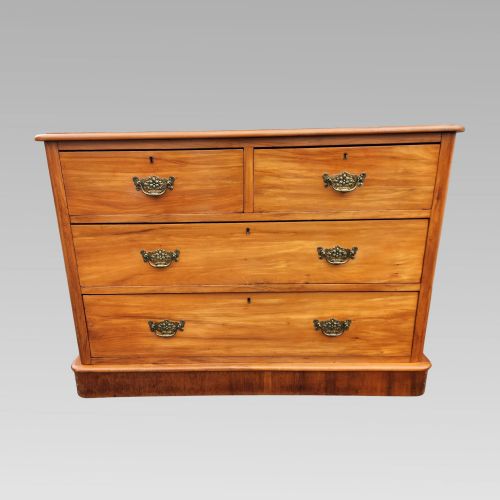
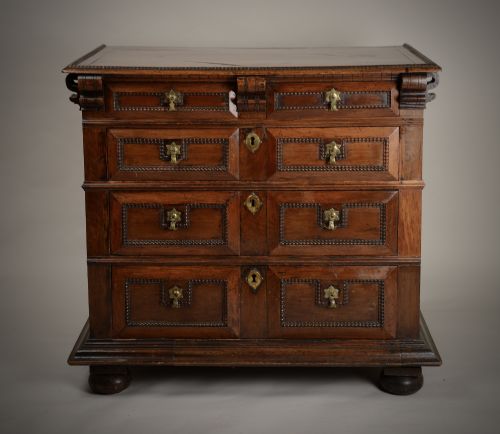
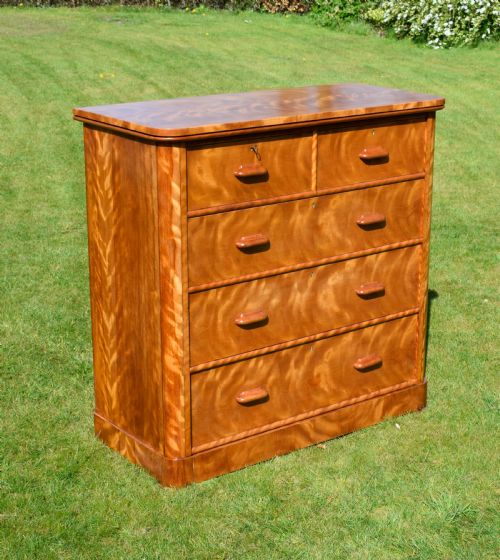
Carved wooden handle drawers encompass storage furniture such as chests of drawers, lowboys, commodes, and tallboys originating from periods spanning the seventeenth century through the early twentieth century. These pieces serve as primary bedroom and study storage, featuring multi-tiered drawer arrangements designed to hold clothing, linens, and domestic goods.
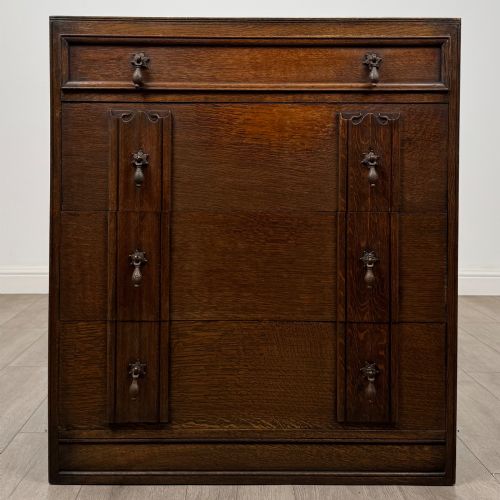
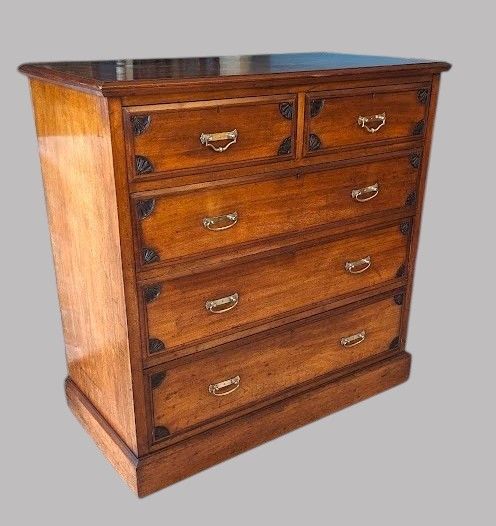
The selections available here lean heavily toward traditional British and European forms, incorporating regional variations like French provincial commodes and English oak pieces. Buyers encounter everything from compact low chests to large campaign tallboys and banks of drawers, constructed in woods like mahogany, oak, walnut, and satinwood.
Assessing Craftsmanship and Material Selection
Quality separates pieces through the careful selection of figured timbers, such as flame mahogany or burr walnut, matched across the entire drawer facade to create a cohesive visual texture. Superior examples display precise joinery in the drawer construction and carcass framing, ensuring smooth operation over centuries of daily use.
The refinement of the carving work on the wooden handles and drawer surrounds dictates the tier of craftsmanship, where crisply executed floral or linear motifs distinguish bespoke furniture from standard utilitarian production.
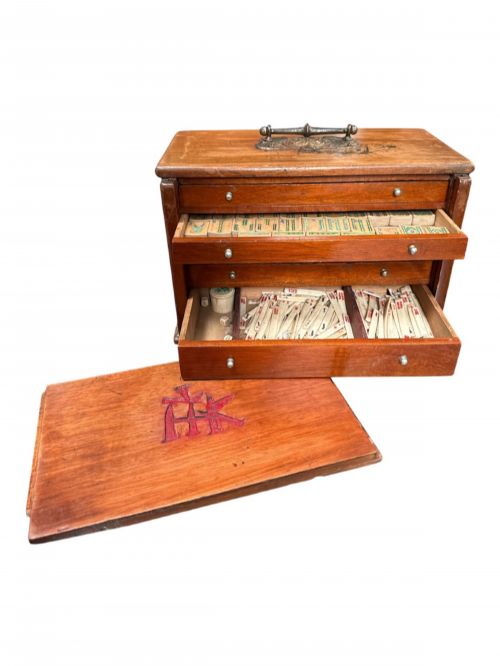
Some chests of drawers hide intricate games boxes and mahjong sets inside fitted wooden cabinets.
Maple and Co·Muirhead Moffat and Co
The Carved Wooden Handle Drawers Glossary
- Commode
- A low chest of drawers or cabinet originating in French furniture traditions, frequently featuring decorative wood veneers or carved details.
- Lowboy
- A small dressing table or low chest of drawers raised on relatively tall legs, typically dating from the seventeenth or eighteenth century.
- Tallboy
- A tall chest of drawers consisting of one chest stacked on top of another, providing substantial vertical storage space.
- Mahogany
- A durable tropical hardwood prized for its reddish-brown colour and stable grain, widely utilised in eighteenth and nineteenth century cabinet making.
- Burr Elm
- A distinctive wood obtained from the deformed growths on elm trees, exhibiting swirling grain patterns favoured for luxury furniture facades.
Carved Wooden Handle Drawers: Frequently Asked Questions
What periods do these drawers come from?
The pieces span multiple historical eras, starting from the late seventeenth century through the Georgian, Victorian, and Edwardian periods up to the early twentieth century.
Each era brings distinct architectural silhouettes and specific timber preferences, ranging from early oak constructions to refined mahogany and walnut designs.
How do I maintain wooden handle drawers?
Maintain the wood by applying appropriate natural waxes periodically to nourish the surface and protect the grain from drying out in indoor environments.
Avoid placing the furniture in direct sunlight or near heat sources to prevent timber warping and to preserve the original carved wooden handles.
What woods are most common?
Oak and mahogany appear most frequently across the collection, alongside substantial uses of walnut, satinwood, and cherry wood.
Finer examples incorporate decorative veneers such as burr walnut and flame mahogany to enhance the visual depth of the drawer fronts.
Are the handles original?
Many pieces retain their original carved wooden handles or period-appropriate brass hardware as documented in individual descriptions.
Inspecting the interior of the drawer fronts reveals how the handles were secured and whether they match the age of the surrounding carcass.