








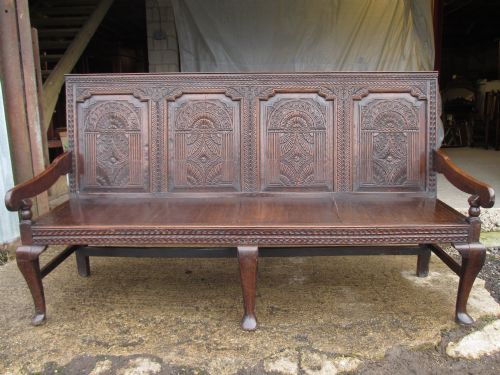
Carved Wooden Hall Settle
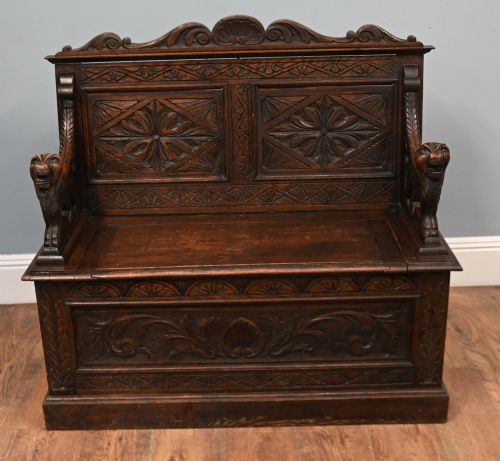
A carved wooden hall settle is a heavy timber seat designed for an entranceway, offering practical storage beneath and a high back to block cold draughts.
Carved Wooden Hall Settle
When you search for a carved wooden hall settle, you encounter substantial seating forms designed to stand in entranceways and passages. These pieces serve as functional hallway furniture that combines a bench with integrated storage or architectural presence. The selection spans centuries of regional cabinet-making, reflecting diverse domestic needs.
You meet Victorian and 19th-century examples most frequently on this page, alongside significant numbers of 18th-century and Edwardian pieces. These items appear under various descriptions including hall benches, box settles, and high-back seats. Oak dominates the offerings, supplemented by mahogany, pine, and hardwood.
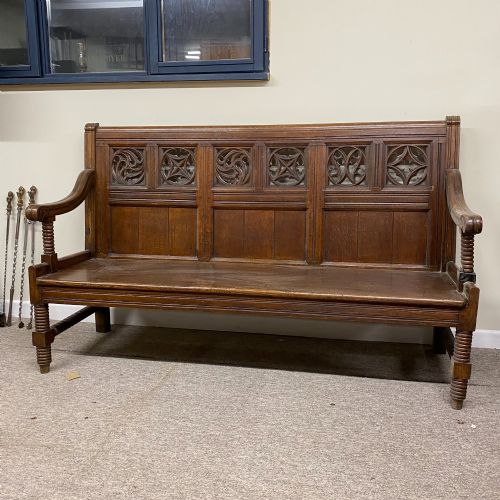
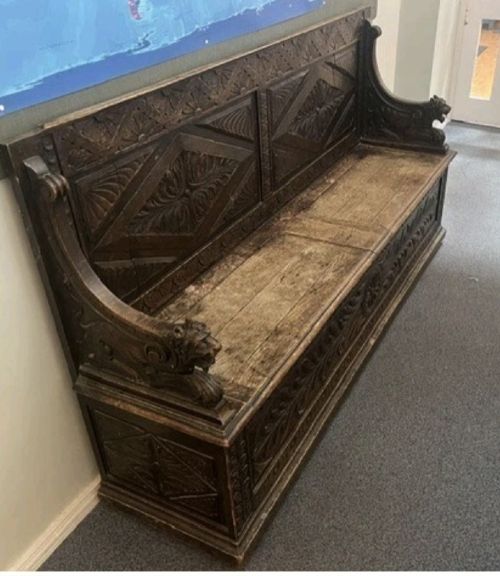
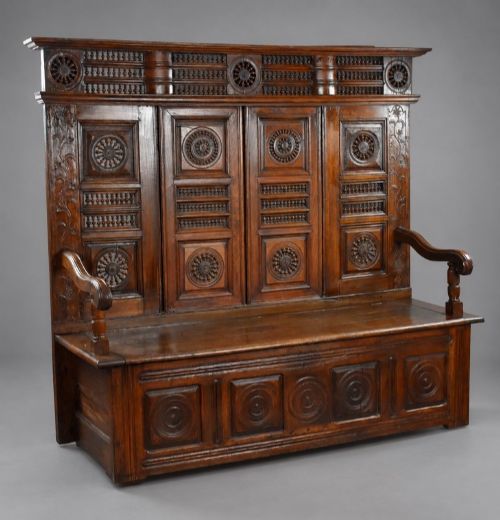
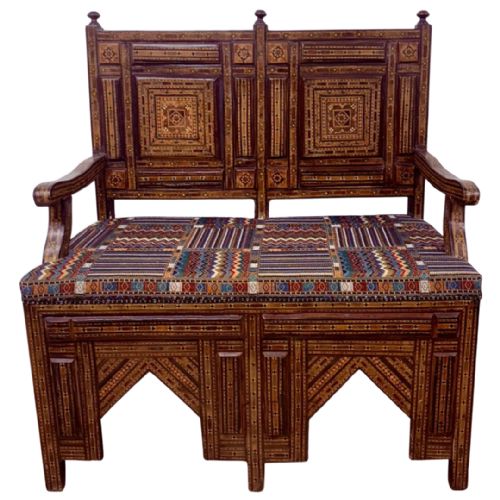
Regional styles range from English country and Gothic Revival to Jacobean Revival and Chinese carved imports. The forms vary from straight-backed benches to box settles with lift-up seats and architectural canopies. Each piece demonstrates the enduring utility of timber seating in domestic spaces.
How they were made
Joiners built these settles primarily using solid oak, mahogany, pine, and mixed hardwoods, relying on traditional frame-and-panel construction to accommodate seasonal wood movement. Artisans shaped panels with gouges and chisels, applying relief carving to backrests, arms, and friezes. Iron and brass hardware, such as hinges and brackets, secured lids and structural joints.
Makers finished surfaces with wax, polish, or natural oils to protect the timber while highlighting the grain. Box settles incorporated hinged seats or fold-over tops to access internal storage compartments cleanly. Structural integrity depended on pegged mortise and tenon joints rather than metal fixings.
Carved Wooden Hall Settle Retail Price Guide 2026
Typical asking prices for carved wooden hall settle among the pieces listed under this phrase on Sellingantiques today, from the lower quarter to the upper quarter. They describe what is for sale here now, not the wider market.
Several Chinese export pieces feature intricately carved dragons guarding the hallway from supernatural intruders.
What varies in quality
The depth of relief carving and the crispness of the chisel work distinguish standard village output from pieces commissioned for major houses. Finer examples display balanced proportions, integrated architectural elements such as canopies, and well-figured timber selection.
Originality of the structural components dictates the standing of a piece within its period. Alterations to storage boxes, replaced panels, or later additions of decorative carving diminish the integrity of the object compared to untouched survivals.
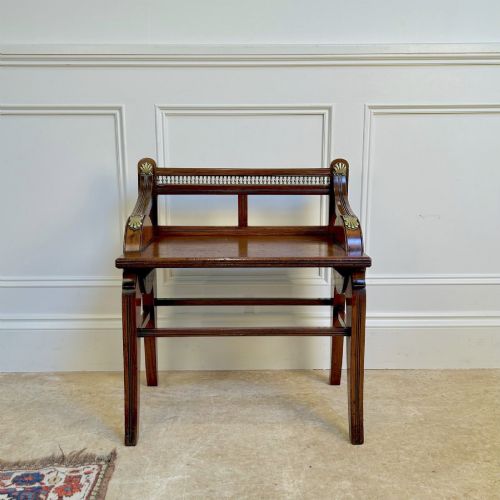
GIllows·Shapland & Petter·Liberty
The Carved Wooden Hall Settle Glossary
- Box settle
- A wooden bench featuring an enclosed compartment beneath the seat, accessed via a lift-up lid or hinged top.
- Monks bench
- A convertible furniture form that transforms from a settle with a high back into a table by folding the backrest forward.
- Gothic Revival
- A design movement drawing inspiration from medieval architecture, characterised by pointed arches, tracery, and heavy proportions.
- Cassapanca
- An Italian wooden bench with storage, often incorporating panelled backrests and armrests.
- Frieze
- The decorative horizontal band situated along the upper section of a settle back, frequently carved with foliage or geometric motifs.
Carved Wooden Hall Settle: Frequently Asked Questions
What is a hall settle?
A hall settle is a rigid wooden bench with a high back, designed specifically for placement in entrance halls and passages. It provided a place to sit while deterring draughts from front doors.
Many examples include a storage box beneath the seat for boots, blankets, or outdoor garments.
Where did settles go in a house?
Settles stood primarily in entrance halls, corridors, and large farmhouse kitchens where incoming air created cold currents. Their high panelled backs acted as windbreaks near exterior doors.
In larger country houses, they furnished grand reception spaces and waiting areas for visitors.
How do I tell an 18th-century settle apart from a Victorian one?
Eighteenth-century settles generally display hand-planed surfaces, pegged joints, and simpler, deeper patination developed through generations of use. Their construction reflects regional joinery traditions and older tool marks.
Victorian pieces often incorporate revival styles like Gothic or Jacobean, featuring machine-sawn timber elements alongside heavier, more mechanically precise relief carving.
How do I live with a wooden settle?
Position your settle against a stable interior wall away from direct heat sources and strong sunlight, which can dry out the timber. Apply a traditional beeswax polish occasionally to maintain the finish.
Utilise the internal storage compartment for items that benefit from enclosed timber housing, and add a simple cushion to the seat for comfort.