
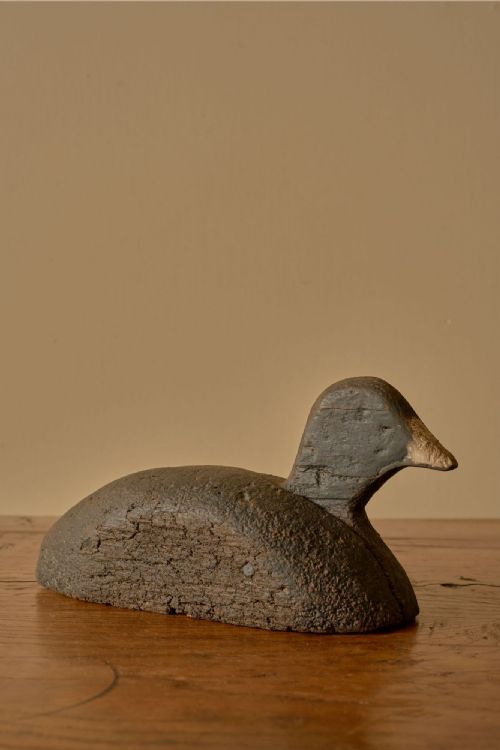
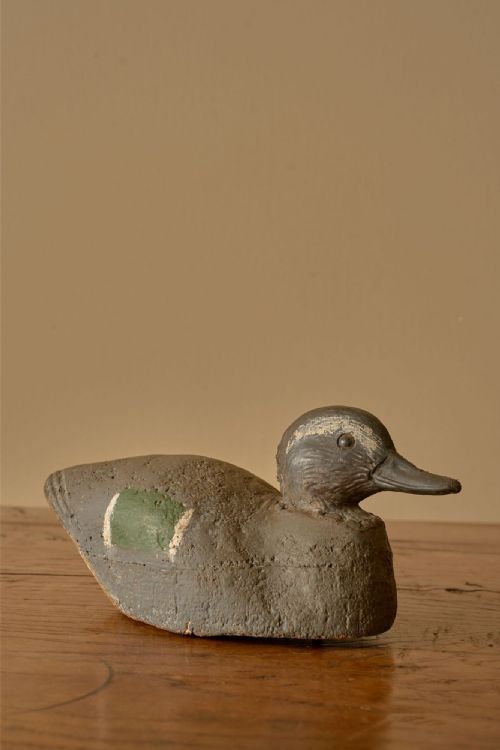
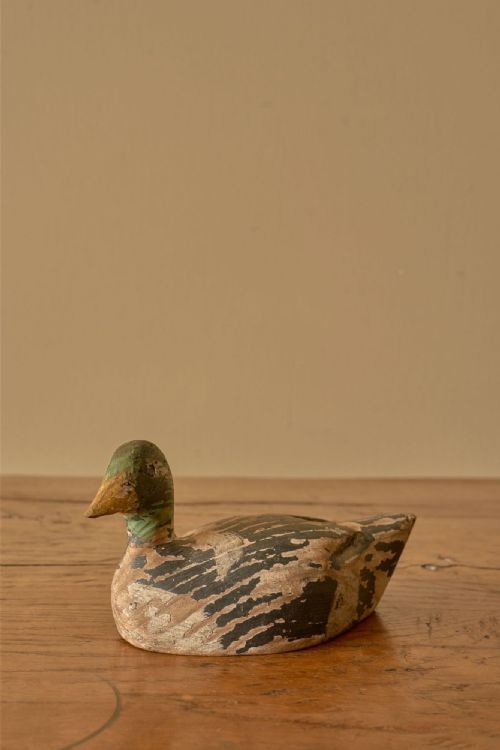
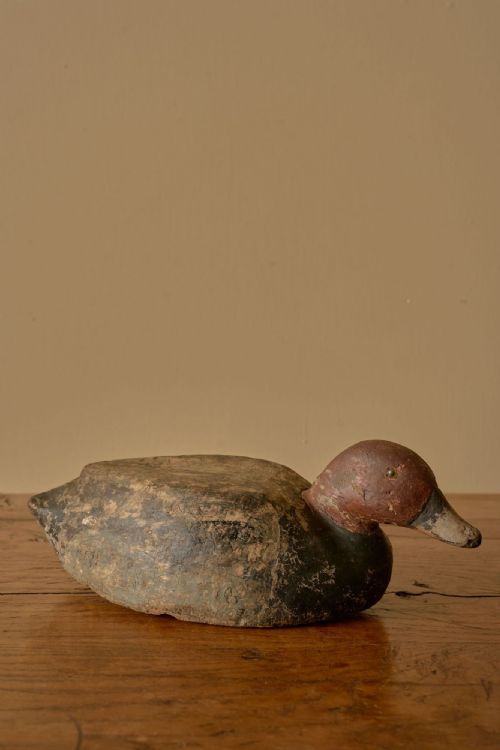
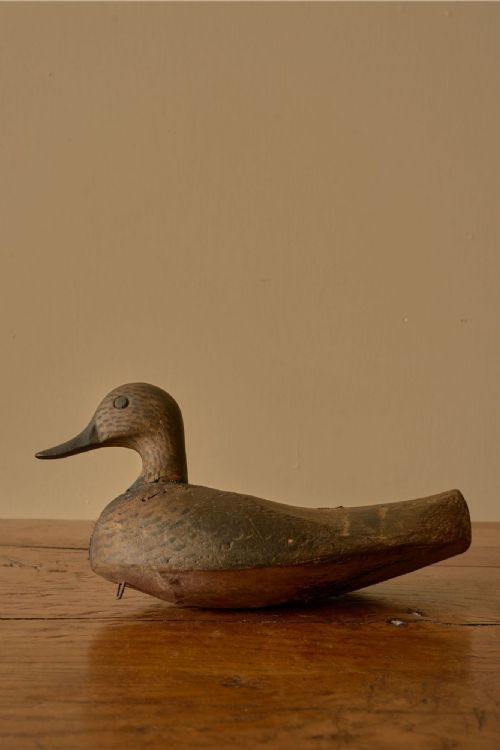
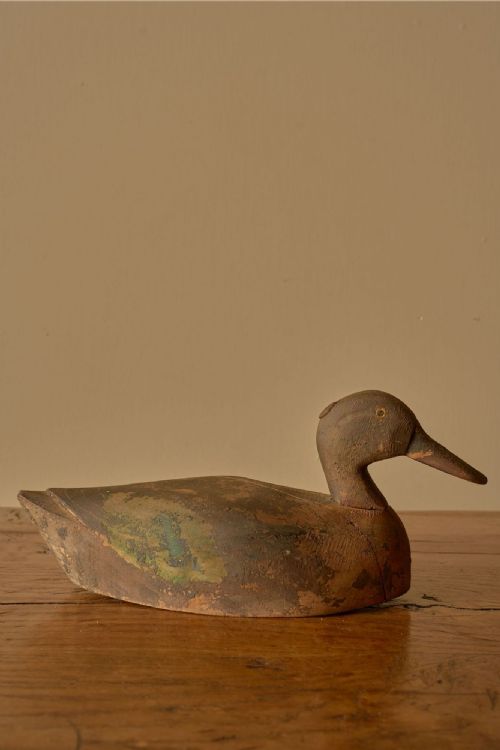
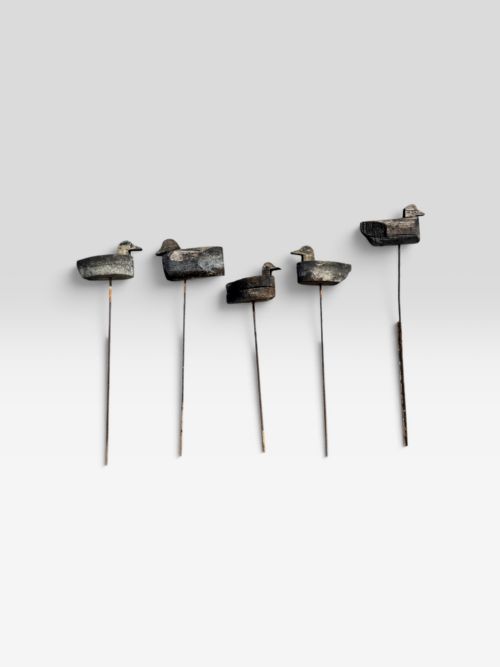
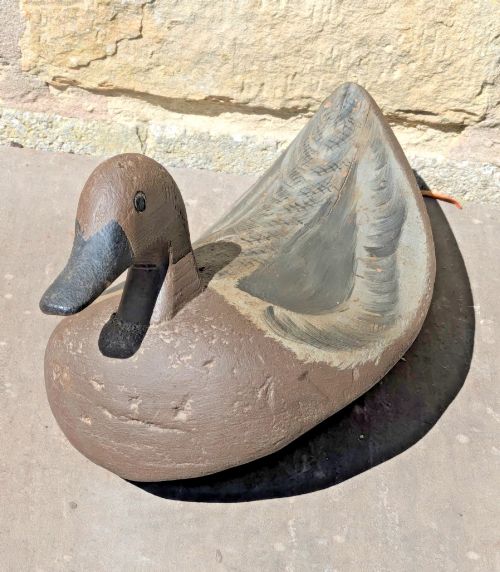
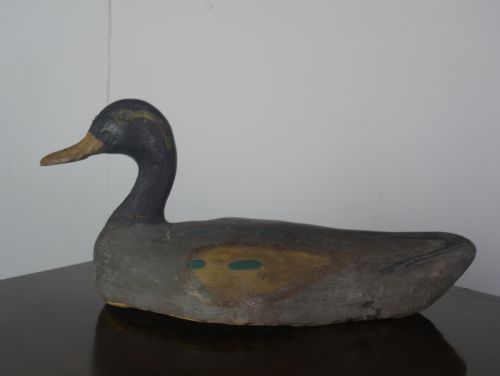


Carved Wooden Duck Decoy
These carved wooden duck decoy pieces are working water birds turned folk art, and you want one for the honest, rustic texture they bring to a room.
Carved Wooden Duck Decoy
When you search for a carved wooden duck decoy, you are looking at functional objects shaped to lure waterfowl that now survive as decorative sculptures and folk art. The pieces you will most likely meet on this page span the nineteenth century, the Edwardian era, and the early twentieth century.
Originating from English and French traditions, these works take the form of individual decoy ducks and water birds, sometimes appearing alongside chicks. They range from single examples to sets of three, reflecting their original working life on the water.
Categorised largely under decorative objects and folk art, these carvings capture the utilitarian charm of early twentieth-century and nineteenth-century craftsmanship. Each item brings a distinct rural character shaped by its age and past deployment.
How they were made
Makers shaped these water birds from timber, pine, and carved wood using manual carving tools to achieve realistic bird forms. Iron elements occasionally appear in the construction, whilst glass is utilised for eyes on specific examples.
Surface finish is central to the construction, with hand-painted layers applied directly over the wood to mimic natural plumage. Years of exposure to water and handling have left these paint layers with authentic weathering and patination.
One exceptional decoy travels with an accompanying chick, proving that even wooden ducks appreciated a bit of family company on the water.
What varies in quality
The distinction between ordinary and superior pieces rests largely on the character of the carving and the preservation of the original paint surface. Stronger examples display confident tool marks and balanced proportions that capture the lifelike posture of a swimming bird.
Surface integrity shifts noticeably across the range, with higher quality pieces retaining their early or original hand-painted pigments rather than later overpainting. The presence of integrated details like glass eyes or specific regional forms also lifts certain examples above standard utilitarian models.
The Carved Wooden Duck Decoy Glossary
- Decoy
- A carved or moulded figure used to attract wild birds or animals within range of a hunter. In this context, they are carved from timber and painted to resemble waterfowl.
- Edwardian
- Pertaining to the reign of King Edward VII, spanning from nineteen hundred to nineteen ten. Items from this period often display simpler lines and practical decorative qualities.
- Patina
- The surface sheen and colour acquired by materials like wood and paint through age, handling, and exposure to the elements. This gradual change signals genuine antiquity.
- Pine
- A softwood commonly utilised in vernacular woodwork and decoy manufacturing. It provides a lightweight body that floats easily upon the water.
Carved Wooden Duck Decoy: Frequently Asked Questions
What is a carved wooden duck decoy?
These items are traditional floating blocks shaped from timber and painted to resemble ducks or water birds. They were originally utilised by hunters to lure real birds onto the water.
Today, they are collected as decorative folk art sculptures. Their appeal lies in their rustic textures and authentic period character.
How do I date a decoy?
Dating relies on observing the tool marks, timber types, and the composition of the paint layers. Nineteenth-century examples often show heavier hand-working and deeper weathering compared to later twentieth-century pieces.
Style and construction methods also offer clues to the era of origin. Comparing the form to documented regional types helps narrow down the period.
Where should I display my decoy?
These carved birds suit rustic interiors, studies, or living spaces where natural materials take centre stage. Placing them on a shelf, mantelpiece, or side table allows their sculptural form to stand out.
Keep them away from direct heat sources and strong sunlight to protect the aged wood and painted surfaces. Simple, stable display conditions help preserve their historic character.
Are these decoys English or French?
The listings include both English and French examples, reflecting distinct regional folk art traditions. English pieces often show traditional country craftsmanship from the nineteenth and early twentieth centuries.
French pieces bring their own rustic character to water bird carving. Both origins share a utilitarian root that transformed into decorative sculpture over time.